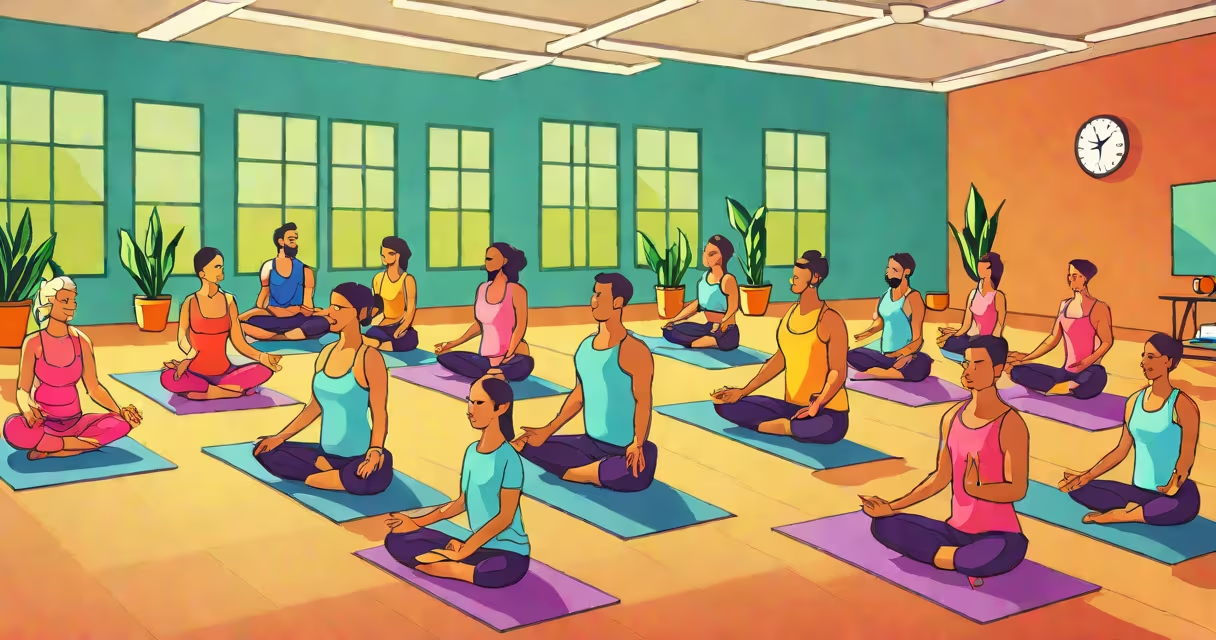
yoga meditation classes blend physical postures, controlled breathing, and focused awareness to cultivate mental stillness and emotional balance. These sessions typically last 60 to 90 minutes and are led by trained instructors who guide participants through sequences designed to prepare the body and mind for stillness.
Each class begins with gentle movement to release tension in the muscles and joints. This phase includes standing poses, forward folds, and slow spinal twists-movements that increase blood flow and quiet the nervous system. The transition into seated positions follows, often with legs crossed and spine upright. Here, the instructor introduces a meditation technique such as mindfulness of breath, mantra repetition, or body scan awareness.
Participants remain seated for 15 to 30 minutes while maintaining a steady focus. The goal is not to stop thoughts but to observe them without reaction. Instructors may use soft vocal cues or silence to support concentration. After the session, a brief period of lying down (Savasana) allows the body to integrate the effects of movement and stillness.
The effectiveness of yoga meditation classes stems from their integration of somatic and cognitive regulation. Physical movement activates the parasympathetic nervous system-the body's natural relaxation response. As heart rate slows and cortisol levels drop, mental chatter diminishes. This physiological shift creates space for sustained attention during meditation.
Research from the National Institutes of Health shows that consistent practice of yoga and meditation reduces symptoms of anxiety and depression. A 2021 study published in *JAMA Internal Medicine* found that participants who attended twice-weekly yoga and meditation sessions reported a 30% decrease in perceived stress after eight weeks compared to a control group.
These classes are not passive experiences. Participants actively engage by adjusting posture, regulating breath, and returning attention when distracted. This repeated act of refocusing strengthens neural pathways associated with attention and emotional regulation. Over time, practitioners develop greater resilience to daily stressors.
Not all yoga meditation classes are the same. Different styles emphasize distinct techniques and philosophical foundations. The most common formats include:
| Type | Focus | Typical Duration | Best For |
|---|---|---|---|
| Yin Yoga + Meditation | Long-held passive poses, deep connective tissue work | 75-90 min | Stress relief, joint mobility, introspection |
| Restorative Yoga + Breathwork | Supported poses using props, diaphragmatic breathing | 60-75 min | Recovery from fatigue, sleep improvement |
| Vipassana-Inspired Sessions | Body scanning, non-judgmental observation of sensations | 90 min | Developing equanimity, managing chronic pain |
| Mantra-Based Practice | Chanting sacred sounds, rhythmic breathing | 60 min | Mindfulness, spiritual connection, energy balancing |
A key distinction many beginners miss: yoga meditation classes are not about achieving a blank mind. The aim is not to eliminate thoughts but to observe them without attachment. This aligns with ancient Buddhist and yogic traditions, where awareness is cultivated through consistent, non-reactive attention.
Yoga meditation classes are offered in community centers, wellness studios, hospitals, and religious institutions. They serve both therapeutic and personal development purposes. In clinical settings, they're prescribed for patients recovering from trauma, dealing with chronic illness, or managing mood disorders.
For example, the Veterans Health Administration includes yoga meditation classes in treatment plans for PTSD. A 2020 pilot program at a VA clinic in San Diego showed that veterans attending weekly sessions had a 40% reduction in hyperarousal symptoms after 10 weeks. The program emphasized grounding through breath and mindful movement.
Outside medical contexts, people attend these classes to manage work-related stress, improve sleep quality, or deepen self-awareness. A 2023 survey by the American Psychological Association found that 68% of adults who practiced yoga meditation weekly reported better emotional regulation and improved decision-making under pressure.
Many assume yoga meditation classes require flexibility, prior experience, or spiritual belief. This is incorrect. Classes are accessible to all fitness levels and belief systems. Props like blocks, straps, and bolsters allow modifications for limited mobility. Instructors do not ask participants to adopt specific beliefs-only to show up with openness.
Another misconception is that meditation means "clearing the mind." In reality, the mind generates 60,000 thoughts per day, according to research cited by the Mind & Life Institute. The practice isn't about stopping thoughts-it's about learning to notice them without reacting. A single session can train the brain to disengage from automatic negative thinking patterns.
I once attended a beginner's yoga meditation class at a local community center. I sat on a cushion with my eyes closed, focusing on the sensation of air entering my nostrils. After five minutes, my mind wandered to a work email. Instead of frustration, the instructor gently reminded me: "Notice the thought. Return to the breath." That moment of redirection became the foundation of my ongoing practice.
Reputable centers offer structured curricula that progress from foundational to advanced practices. Two well-documented programs include:
Both centers publish detailed syllabi and participant testimonials. Attendance records show that 74% of students who complete the full program report measurable improvements in sleep quality and reduced rumination within six months.
When selecting a class, look for credentials: instructors should hold certifications from recognized organizations such as Yoga Alliance or the International Association of Yoga Therapists. Avoid programs that promise rapid results or claim to cure medical conditions.
Yoga meditation classes are not a quick fix. They are a consistent practice that builds mental endurance and emotional stability over time. The benefits emerge gradually-through repetition, patience, and presence. For those seeking deeper calm and clearer thinking, structured sessions provide a proven path forward.