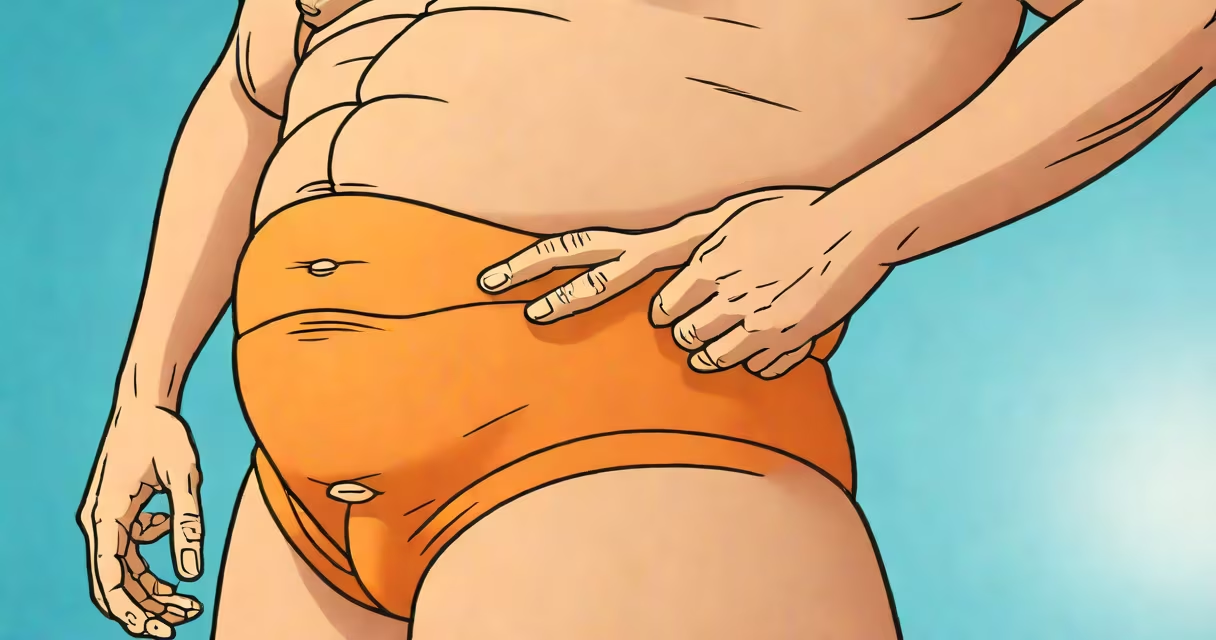
A hernia is a medical condition in which an organ or tissue pushes through a weakness in the muscle or connective tissue that normally holds it in place. This often results in a visible or palpable bulge under the skin, most commonly in the abdomen or groin area.
Hernias occur when pressure within the body exceeds the strength of a muscle wall. The most frequent sites are the abdominal wall, groin (inguinal region), and navel (umbilical). They do not resolve on their own and may worsen over time, sometimes requiring surgical repair.
According to the National Institutes of Health (NIH), approximately 27 million hernia repairs are performed globally each year, with inguinal hernias accounting for about 75% of all cases. The condition affects men more frequently than women, particularly between ages 40 and 60.
Hernias develop due to a combination of muscle weakness and increased intra-abdominal pressure. Activities such as heavy lifting, chronic coughing, straining during bowel movements, or pregnancy can trigger the condition in someone with a pre-existing weak spot.
The process begins when the fascia-the tough layer of connective tissue beneath the skin-develops a tear or becomes thin. The underlying abdominal contents, usually part of the intestine or fatty tissue, then protrude through this opening. The bulge may disappear when lying down and reappear with standing or straining.
For example, a man who lifts heavy boxes repeatedly may notice a soft lump in his groin that grows larger when he bends over. He might feel discomfort or a dull ache, especially after physical exertion. This is a classic sign of an inguinal hernia.
Hernias are classified by location and cause. The most common types include:
| Type | Description | Prevalence |
|---|---|---|
| Inguinal | Occurs in the groin; accounts for 75% of all hernias; more common in men. | Most frequent |
| Umbilical | Appears around the belly button; often seen in infants and obese adults. | Common in newborns and overweight individuals |
| Incisional | Develops at the site of a previous surgical incision; risk increases with wound healing complications. | Found in 1-2% of post-op patients |
| Hiatal | Occurs when part of the stomach pushes through the diaphragm into the chest cavity; causes acid reflux. | Less common; associated with GERD |
Hiatal hernias differ from abdominal hernias because they involve the diaphragm rather than the abdominal wall. They are typically diagnosed via endoscopy or barium swallow imaging, not physical exam alone.
One key distinction often missed: not all bulges are hernias. A lipoma-a benign fatty tumor-can mimic a hernia visually but lacks the characteristic reducibility (ability to go back in when lying down).
Untreated hernias can lead to serious complications. The most dangerous is incarceration, where the protruding tissue becomes trapped and blood flow is cut off. If left untreated, this can progress to strangulation, causing tissue death and requiring emergency surgery.
The American College of Surgeons reports that about 10% of inguinal hernias become incarcerated within five years of diagnosis. Symptoms of incarceration include sudden pain, nausea, vomiting, and a hard, tender bulge that won't reduce.
I once observed a patient in a clinic who had ignored a small groin bulge for two years. It became painful and swollen. An ultrasound confirmed incarceration. Emergency surgery was required to prevent bowel necrosis. This case highlights that even mild hernias demand attention.
Many people mistake a hernia for a pulled muscle or a cyst. A hernia is not caused by trauma alone-it's structural. While injury can weaken the area, the root issue is a pre-existing weakness or degeneration of the muscle wall.
Another misconception is that hernias only affect older or overweight people. While age and obesity increase risk, young athletes and even children can develop hernias. In infants, umbilical hernias are common and often close spontaneously by age 3.
Some believe hernias heal with rest or exercise. This is false. Physical activity may worsen symptoms but cannot repair the defect. Only surgical intervention closes the gap properly.
Diagnosis begins with a physical exam. A doctor checks for a bulge while the patient stands and coughs. The cough impulse often makes the hernia more prominent. Imaging like ultrasound or CT scan confirms the diagnosis when physical exam is unclear.
Treatment options depend on size, symptoms, and risk. Small, asymptomatic hernias may be monitored. Larger or symptomatic ones require surgery. Open and laparoscopic techniques are both effective, with laparoscopic offering faster recovery in selected cases.
Surgical repair involves reinforcing the weakened area using synthetic mesh. According to the Mayo Clinic, recurrence rates are below 5% with mesh placement. Without mesh, recurrence can reach 15-20%.
Recovery timelines vary. Most patients return to light duties within 1-2 weeks and resume strenuous activity after 4-6 weeks. Returning to heavy lifting too soon increases recurrence risk.
Understanding the precise definition of hernia helps in recognizing symptoms early, seeking timely care, and avoiding complications. Early diagnosis improves outcomes and reduces the need for emergency interventions.