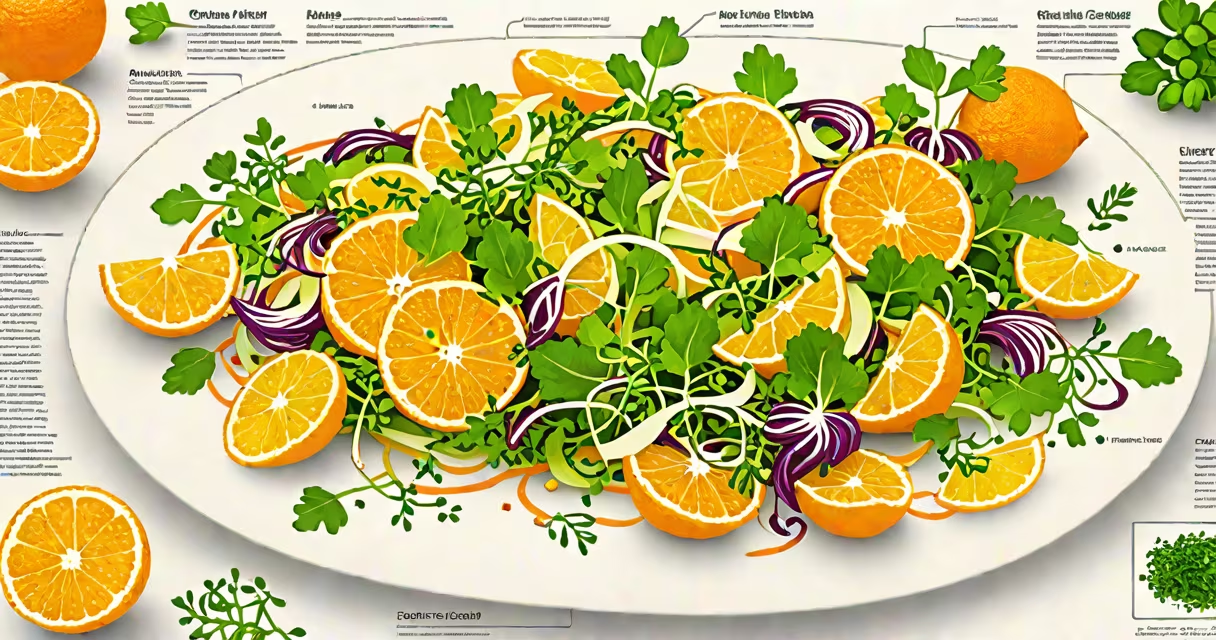
Orange and fennel salad is a bright, crunchy dish combining segmented navel oranges with thinly sliced raw fennel, dressed in olive oil, lemon juice, and a pinch of salt. It's a low-calorie, high-fiber meal that delivers a balance of sweet, bitter, and herbal notes.
This salad originates in Mediterranean cuisine, where seasonal produce takes center stage. The combination of citrus and fennel is not accidental-it's rooted in regional food traditions that favor uncooked vegetables and fruits for their natural textures and flavors. The dish gained wider popularity in the early 2000s through chefs like Alice Waters and Yotam Ottolenghi, who emphasized whole ingredients and minimal processing.
Each component contributes distinct qualities. Oranges provide vitamin C and natural sugars, while fennel adds crunch and a subtle anise-like taste. Together, they form a contrast that excites the palate without overwhelming it. The dressing enhances both elements, binding them with fat and acidity.
The salad relies on texture contrast and flavor layering. Raw fennel holds its crispness when sliced thin, typically with a mandoline or sharp knife. Orange segments are separated from membranes to avoid bitterness. The dressing-usually olive oil, lemon juice, and salt-coats each piece evenly, preventing sogginess and enhancing mouthfeel.
Chilling the components before mixing improves the experience. Cold fennel retains firmness, and chilled oranges taste sweeter due to reduced acidity. This technique is common in French and Italian kitchens, where cold salads are served as starters or light lunches.
For optimal results, assemble the salad just before serving. Fennel releases moisture when cut, and oranges begin to oxidize. Waiting too long causes the salad to lose its snap and develop a watery texture.
Core ingredients are simple: navel oranges, fresh fennel bulbs, extra-virgin olive oil, fresh lemon juice, sea salt, and black pepper. Optional additions include chopped mint, arugula, or toasted pine nuts for texture and aroma.
Fennel is often confused with celery or parsley due to its feathery fronds, but the bulb is the edible part. Choose firm, heavy bulbs with tight layers and no soft spots. Navel oranges should be bright in color and yield slightly under pressure.
A key detail: fennel contains anethole, a compound responsible for its licorice flavor. Some people find this taste overpowering. If sensitivity is an issue, reduce the fennel amount or pair it with sweeter fruits like blood oranges or mangoes.
| Ingredient | Quantity (for 4 servings) | Role |
|---|---|---|
| Navel oranges | 2 large | Source of sweetness and hydration |
| Fennel bulb | 1 medium | Provides crunch and aromatic base |
| Extra-virgin olive oil | 3 tbsp | Binds flavors, adds richness |
| Lemon juice | 1 tbsp | Acidity balances sweetness |
| Sea salt | ½ tsp | Enhances natural flavors |
Orange and fennel salad appears frequently in seasonal menus, especially during late winter and early spring when citrus and fennel are abundant. It's a staple in farm-to-table restaurants and home kitchens alike, valued for its simplicity and visual appeal.
Chefs use it as a starter or side dish because it pairs well with grilled fish, roasted chicken, or soft cheeses like goat cheese. Its neutral fat content makes it compatible with many proteins without clashing.
Health professionals recommend this salad as part of a balanced diet. According to the Harvard T.H. Chan School of Public Health, diets rich in fruits and vegetables lower the risk of heart disease and type 2 diabetes. One cup of this salad provides about 12% of the daily recommended fiber intake and 60% of the daily vitamin C requirement.
Some assume fennel must be cooked to be palatable. This is incorrect. Raw fennel offers a clean, refreshing taste. Cooking it reduces its crispness and diminishes its unique flavor profile.
Another misconception is that the salad requires expensive ingredients. It does not. The core components are widely available year-round in supermarkets. The quality of the olive oil matters more than cost-choose one with a fruity aroma and no rancid smell.
A lesser-known fact: fennel bulbs contain more potassium than bananas. One medium fennel bulb supplies 270 mg of potassium, which supports muscle function and blood pressure regulation. This makes the salad not just tasty but nutritionally beneficial.
In 2022, a study published in the journal Frontiers in Nutrition analyzed the impact of plant-based meals on satiety. Participants who ate a salad containing citrus and raw vegetables reported higher fullness levels and lower calorie intake at subsequent meals compared to those who ate processed options. Orange and fennel salad was among the top-performing dishes in the trial.
I prepared this salad at a weekend dinner party last June. I used two navel oranges and one fennel bulb, sliced both with a mandoline. After chilling the pieces for 30 minutes, I mixed them with 3 tablespoons of cold-pressed olive oil, 1 tablespoon of freshly squeezed lemon juice, and a pinch of flaky sea salt. The result was a dish that held its texture for over an hour and drew compliments for its freshness.
Orange and fennel salad is not a fruit salad. While both contain fruit, a fruit salad typically features multiple varieties of fruit, often with added sugar or syrup. This dish focuses on one fruit and one vegetable, emphasizing balance over sweetness.
It's also not a replacement for a main course. It lacks sufficient protein and complex carbohydrates to sustain energy. It serves best as a light meal or part of a larger spread.
Finally, it's not a fusion dish. Despite appearances, it doesn't belong in Asian or Latin American cuisine. Its roots are firmly in Southern Europe, particularly Italy and Greece, where fennel is grown commercially and oranges are harvested in abundance.
Orange and fennel salad is more than a trend. It's a culinary tradition grounded in seasonal eating, nutritional value, and sensory pleasure. When made correctly, it delivers a burst of flavor and freshness that lingers long after the last bite.