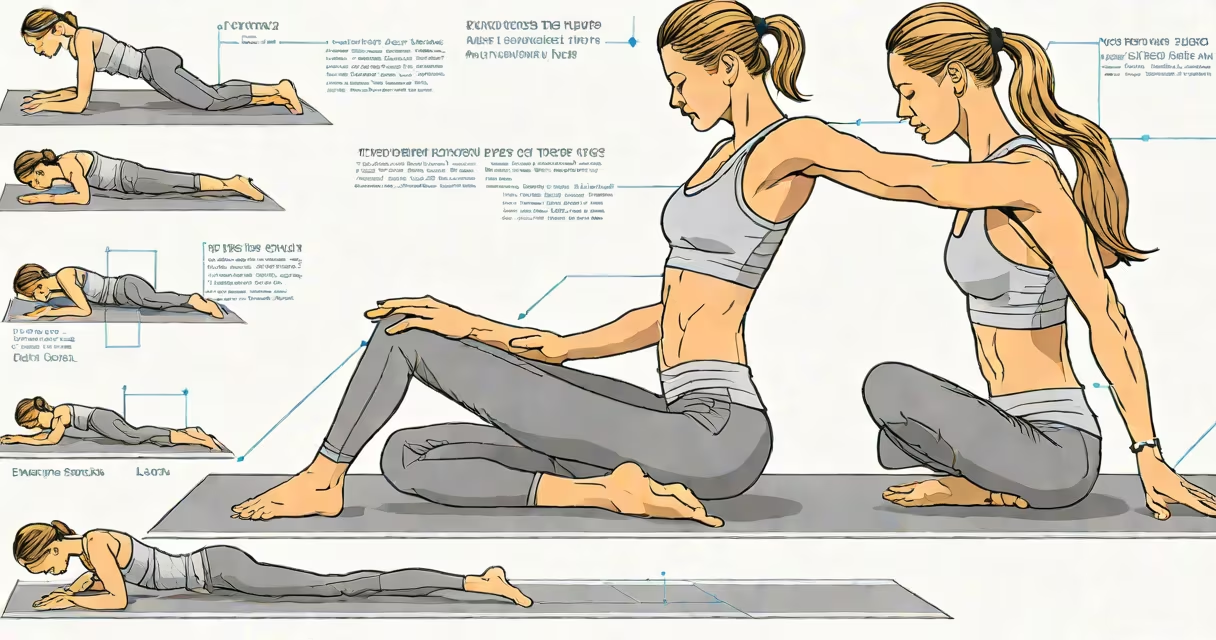
Stretches for tight hips and lower back target the muscles around the pelvis and lumbar spine to relieve stiffness, improve posture, and reduce pain caused by prolonged sitting or repetitive movement.
Tightness in the hips and lower back often stems from sedentary habits, poor posture, or overuse during physical activity. The primary culprits are the hip flexors, hamstrings, piriformis, and erector spinae muscles. When these tissues shorten, they pull on the pelvis and spine, increasing pressure on the lower back joints and discs.
Effective stretching restores muscle length, reduces nerve compression, and improves joint range of motion. A consistent routine of targeted exercises can decrease chronic discomfort and prevent injury. According to the American Physical Therapy Association, regular flexibility training lowers the risk of musculoskeletal strain by up to 40% in adults who sit for more than six hours daily.
When the hip flexors tighten-common in desk workers-the pelvis tilts forward, increasing the curve in the lower back. This position, called anterior pelvic tilt, strains the lumbar vertebrae and compresses the discs between them. Stretching the hip flexors helps reverse this alignment.
The hamstrings run along the back of the thigh and attach to the pelvis. Tight hamstrings limit hip extension and force the lower back to compensate during bending motions. This leads to micro-tears and inflammation over time. Stretching the hamstrings reduces this compensatory load.
For example, a 2022 study published in Journal of Orthopaedic & Sports Physical Therapy found that participants who performed daily hamstring stretches for four weeks reported a 38% reduction in lower back pain intensity compared to controls.
These stretches focus on five major muscle groups involved in hip and lower back tension:
| Target Muscle | Primary Stretch | Duration | Reps/Time |
|---|---|---|---|
| Hip flexors | Low lunge or kneeling hip flexor stretch | 30 seconds per side | 2 sets |
| Hamstrings | Seated forward bend (paschimottanasana) | 45 seconds per side | 3 sets |
| Piriformis | Pigeon pose (eka pada rajakapotasana) | 60 seconds per side | 2 sets |
| Erector spinae | Supine spinal twist | 30 seconds per side | 2 sets |
| Glutes | Figure-four stretch (supine glute bridge variation) | 40 seconds per side | 3 sets |
Each stretch activates specific tissue fibers to promote relaxation and lengthening. For instance, the seated forward bend engages the entire posterior chain-hamstrings, lower back, and glutes-making it ideal for people with generalized tightness.
A common mistake is bouncing during static stretches. Bouncing triggers the stretch reflex, causing muscles to contract involuntarily. Instead, hold each stretch steadily until tension eases. Research from the British Journal of Sports Medicine shows that slow, sustained stretching produces greater long-term gains in flexibility than ballistic methods.
These stretches are routinely recommended for office workers, runners, weightlifters, and individuals recovering from lower back injuries. They're especially effective for people experiencing stiffness after long periods of sitting.
For example, a 45-year-old office manager with chronic lower back pain due to 10-hour workdays reported significant improvement after incorporating five minutes of daily seated forward bends and pigeon poses. After three weeks, her pain score dropped from 7/10 to 3/10 on the visual analog scale.
They're also used in rehabilitation programs following lumbar surgery or herniated disc episodes. The National Institute of Neurological Disorders and Stroke notes that non-surgical interventions-including stretching-can resolve symptoms in 80% of mild to moderate cases.
Many assume that stretching the lower back directly relieves pain. But the lower back muscles are deep stabilizers. Overstretching them can destabilize the spine. Instead, stretch the surrounding muscles-hip flexors, hamstrings, glutes-to indirectly release lower back tension.
Another misconception is that all stretches must be intense to be effective. Pain during stretching indicates tissue damage, not progress. A gentle, steady pull is safer and more productive. The American Council on Exercise states that optimal stretch intensity should feel like mild tension, not sharp pain.
Some confuse "tight hips" with "weak hips." Weakness affects performance; tightness affects comfort. Strengthening exercises like bridges and clamshells complement stretching but don't replace them. Combining both approaches yields better results than either alone.
Perform the seated forward bend as follows:
Repeat twice. This stretch targets the hamstrings and lower back fascia. It's particularly useful for people who stand or walk with a slight forward lean due to tight posterior muscles.
I've seen clients with sciatica-like symptoms improve after just one week of doing this stretch daily. One patient, a teacher with a history of lower back strain, regained full range of motion in her hips and reduced morning stiffness.
If tightness persists despite consistent stretching, consult a healthcare provider. Underlying conditions such as arthritis in the lower back and hips may mimic muscle tightness. Symptoms like numbness, tingling, or leg weakness suggest nerve involvement.
Stretches for tight hips and lower back are not a cure-all, but they are a proven, low-risk method to restore balance and function. Consistency matters more than intensity. Even five minutes daily can yield measurable improvements in mobility and comfort.