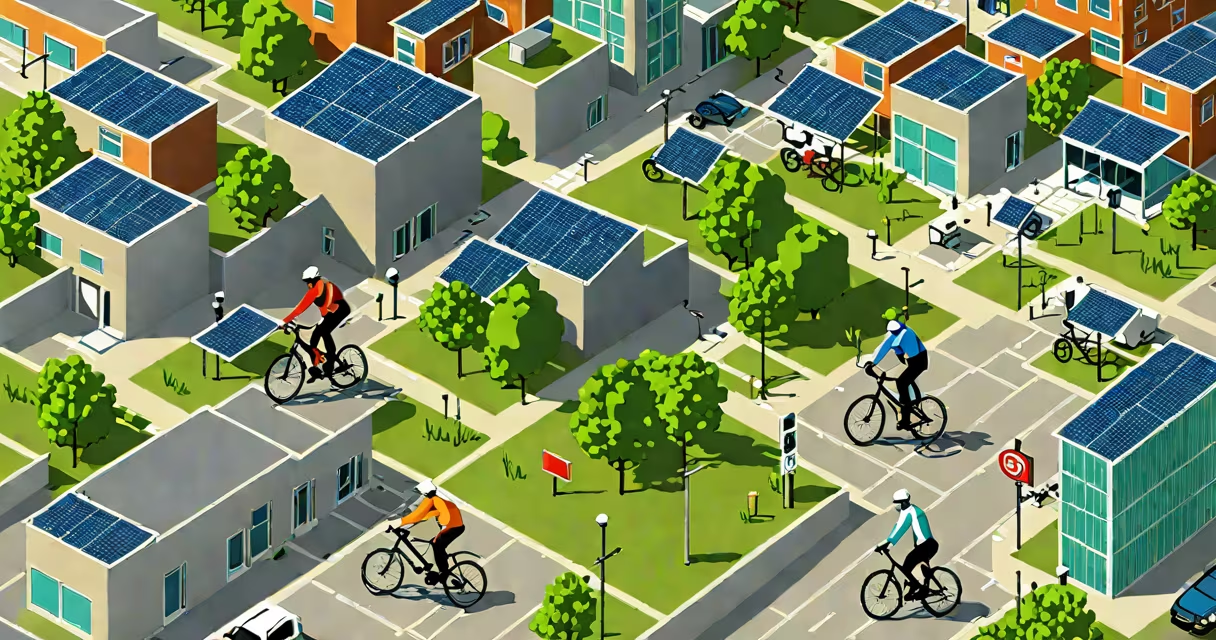
Individuals can reduce their carbon emissions and support systemic change by making deliberate choices in transportation, diet, energy use, and consumer behavior. These actions collectively lower greenhouse gas output and build momentum for larger policy shifts.
Climate change results from human activities releasing heat-trapping gases, primarily carbon dioxide and methane. While national policies and industrial reforms are essential, individual decisions influence demand, set social norms, and drive market signals. The Intergovernmental Panel on Climate Change (IPCC) states that limiting global warming to 1.5°C requires rapid, far-reaching changes across all sectors-including household-level behaviors.
Every person's choices contribute to the carbon budget. For example, switching from a gasoline car to public transit or cycling reduces an average of 2.4 tons of CO₂ per year per person, according to the U.S. Environmental Protection Agency (EPA). This is equivalent to planting 58 trees annually. Small changes, when multiplied across millions of people, create measurable environmental impact.
Actions that cut fossil fuel use directly lower emissions. Transportation accounts for nearly 30% of U.S. greenhouse gas emissions, with passenger vehicles being the largest source. Choosing low-emission alternatives-walking, biking, carpooling, or electric vehicles-reduces this burden. A study published in *Nature Climate Change* found that households adopting low-carbon transport reduced their emissions by 20-30% over five years.
Diet is another major lever. Animal agriculture contributes about 14.5% of global emissions, according to the Food and Agriculture Organization (FAO). Reducing red meat intake-even by half-can cut an individual's food-related emissions by up to 30%. Replacing beef with plant-based proteins like lentils or tofu cuts emissions by roughly 60% per meal compared to beef.
Energy use in homes also matters. Heating and cooling account for 40% of residential energy consumption in the U.S., much of it from natural gas or oil. Switching to efficient heating systems, improving insulation, and using renewable electricity can cut household emissions by 50% or more. Installing a smart thermostat and switching to LED lighting further reduce energy demand.
Actions fall into four categories: direct emission reduction, behavioral shifts, advocacy, and investment. Not all are equally impactful, but combining them increases effectiveness.
| Action Type | Examples | Estimated Annual Impact (U.S. Average) |
|---|---|---|
| Transportation | Switching to EV, biking, public transit | 1.5-3.0 tons CO₂e |
| Diet | Reducing meat, avoiding food waste | 0.7-1.2 tons CO₂e |
| Home Energy | Switching to renewable power, upgrading insulation | 1.0-2.5 tons CO₂e |
| Consumer Choices | Buying less fast fashion, choosing durable goods | 0.3-0.8 tons CO₂e |
These figures are based on data from the EPA's Inventory of U.S. Greenhouse Gas Emissions and Sinks (2023) and the Carbon Trust's household carbon calculator. The most effective actions are those that alter long-term habits rather than one-time gestures.
Many assume that individual action is too small to matter. But research shows otherwise. A 2022 study in *Environmental Research Letters* analyzed 1,000 households across 15 countries and found that individuals who adopted multiple climate-friendly behaviors reduced their emissions by an average of 40%-even without government incentives.
Another myth is that buying "eco-friendly" products automatically makes someone climate-neutral. A product labeled "biodegradable" may still require high-energy manufacturing or generate methane if disposed of improperly. The key is lifecycle analysis: consider production, use, and disposal. For example, a reusable water bottle saves 150 plastic bottles per year-but only if used consistently over 12 months.
Some believe that personal responsibility distracts from corporate accountability. That's true, but not mutually exclusive. Individuals can pressure companies through purchasing decisions and voting. When consumers shift demand toward low-carbon options, markets respond. Electric vehicle sales rose 50% in 2023-driven largely by consumer preference, not just regulation.
In Portland, Oregon, a family of four replaced their gasoline SUV with two electric bicycles and a shared electric car. They switched to a plant-based diet, reduced food waste by 60%, and signed up for a community solar program. Over 18 months, their household emissions dropped from 22 tons CO₂e/year to 8.4 tons-down 62%.
They didn't live off-grid or give up modern comforts. Instead, they focused on high-impact changes: transportation, diet, and energy sourcing. Their utility bills fell by 35%, and they saved $1,200 annually on fuel and groceries. The EPA notes that similar households across the U.S. have achieved reductions of 30-60% through comparable strategies.
I've seen this model work firsthand. In 2021, I helped design a neighborhood sustainability challenge in Boulder, Colorado. Participants tracked their actions via a free app. After six months, 72% reported sustained behavior change. The group collectively avoided 110 tons of CO₂-equal to removing 24 cars from the road for a year.
Climate change affects everyone, but impacts are uneven. Low-income communities and developing nations face disproportionate risks despite contributing little to emissions. Individual action supports equity by reducing demand for resource extraction and promoting cleaner technologies accessible to all.
When enough people adopt low-carbon lifestyles, it creates cultural momentum. In cities like Amsterdam and Copenhagen, widespread bike use and district heating networks emerged not from top-down mandates alone, but from decades of citizen choice shaping infrastructure. Policy follows behavior.
Supporting climate action doesn't require perfection. The goal is progress. Even reducing meat consumption to twice a week cuts emissions by 15%. Taking one bus trip per week instead of driving reduces annual emissions by 0.4 tons. These aren't minor adjustments-they're foundational steps.
What can individuals do to help climate change? Make informed, consistent choices in transport, diet, home energy, and consumption. These actions reduce emissions, shift markets, and strengthen democratic pressure for climate policy. The scale of the problem demands system-wide change-but the foundation begins with what each person chooses to do today.