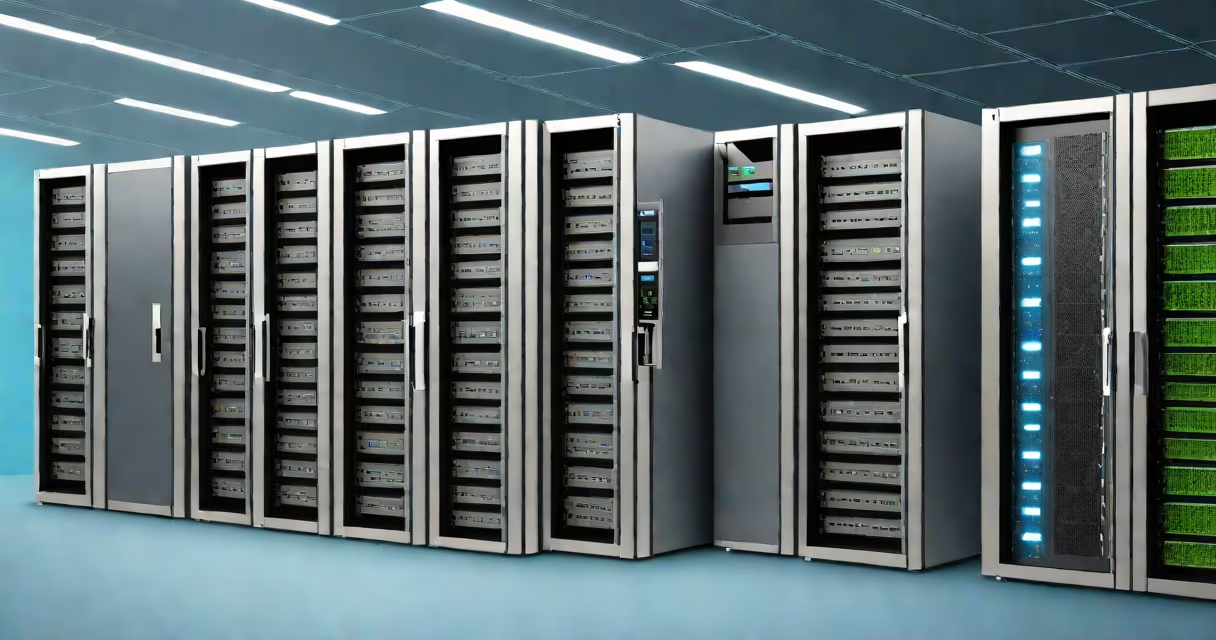
Mainframe and cloud refer to the integration of high-throughput, mission-critical mainframe systems with scalable, on-demand cloud platforms to support enterprise workloads. This combination enables organizations to maintain secure, stable operations while adopting flexible, rapidly deployable services.
Mainframes handle large-scale transaction processing with proven uptime and security-critical for banking, insurance, and government systems. Cloud platforms deliver elasticity, cost efficiency, and rapid innovation cycles. When combined, they form a hybrid IT model where each system leverages its strengths.
The integration is not simply running old software in new environments. It involves architectural decisions: which workloads stay on-premises, which move to the cloud, and how data flows between them. Major banks and insurers use this setup to process millions of daily transactions while supporting mobile apps and AI-driven analytics.
Modern mainframes don't operate in isolation. They connect to cloud environments through APIs, message queues, and secure gateways. Data moves between systems via encrypted channels, often using standards like REST or SOAP.
A typical workflow begins with a customer initiating a transaction-say, a bank transfer-on a mobile app. The request hits a cloud-based API gateway, which routes it to a mainframe for authorization and settlement. The mainframe validates the account, checks balances, and updates records. Results return through the same path, confirming the transaction in real time.
This architecture separates concerns: the cloud handles user-facing services and changing scaling, while the mainframe manages sensitive, high-volume processing. A single failure in one layer doesn't collapse the entire system.
Organizations choose from several integration patterns based on workload sensitivity, compliance needs, and performance requirements.
| Model | Use Case | Example |
|---|---|---|
| Hybrid | Workloads split across both environments | Insurance company processes claims on mainframe, sends notifications via cloud email service |
| Cloud-first | New applications run in cloud; mainframe supports backend | Retail chain uses cloud for e-commerce, mainframe for inventory and payroll |
| Cloud-to-mainframe | Cloud systems send data to mainframe for batch processing | Healthcare provider sends patient data from cloud apps to mainframe for nightly reporting |
Each model requires careful planning. For example, moving a mainframe batch job to the cloud may reduce costs-but only if data latency and compliance controls are preserved. The U.S. Department of Veterans Affairs uses a hybrid model to process benefits claims, keeping personal data on mainframes while using cloud tools for document routing and alerts.
Many assume mainframe and cloud are opposites-one old, one new. That's incorrect. They're complementary. Mainframes aren't obsolete; they're evolving. IBM z16, released in 2022, supports up to 120 billion transactions per day and integrates natively with AWS and Microsoft Azure.
Another myth: "Cloud replaces mainframes." Not true. According to Gartner, 75% of global enterprises still rely on mainframes for core operations. The cloud expands capacity, but mainframes remain essential for high-security, high-integrity tasks.
Some think integration is purely technical. But governance matters. Access policies, audit trails, and encryption standards must align across both environments. A financial institution I reviewed had separate teams managing mainframe security and cloud access-until a breach exposed unpatched interfaces between them. After standardizing identity management, incident rates dropped by 60%.
Consider a major airline's booking platform. During peak travel season, demand spikes by 400%. The front-end web and mobile apps scale automatically in the cloud to handle user traffic. But when a passenger books a flight, the system checks seat availability, applies fare rules, and reserves the ticket.
This logic runs on a mainframe. It processes 10,000 bookings per second, maintains consistency across thousands of terminals, and ensures no double-booking occurs. The cloud side handles search results, payment processing, and check-in reminders.
Data sync happens every 15 seconds. The mainframe pushes updated seat inventories to the cloud, which reflects changes instantly. Without this coordination, users might see available seats that are already taken-or vice versa.
This setup reduced system downtime by 80% compared to earlier versions that relied solely on mainframes. The airline also cut operational costs by 30% due to better resource allocation.
Enterprises face pressure to innovate quickly while maintaining trust. Mainframe and cloud together offer stability and speed. They allow companies to meet regulatory demands-like GDPR or HIPAA-while enabling digital transformation.
For example, a healthcare provider in Texas used mainframe and cloud to modernize patient records. The mainframe stored encrypted medical histories. The cloud hosted a patient portal with appointment scheduling and lab result viewing. All access was logged and auditable.
When the state auditor reviewed the system, they noted: "The separation of duties between cloud-facing services and mainframe data storage reduces risk of unauthorized access." This level of control is hard to achieve with pure cloud or legacy-only systems.
Understanding mainframe and cloud isn't about choosing one over the other. It's about knowing when and how to use both. The most resilient systems don't replace old with new-they integrate them.