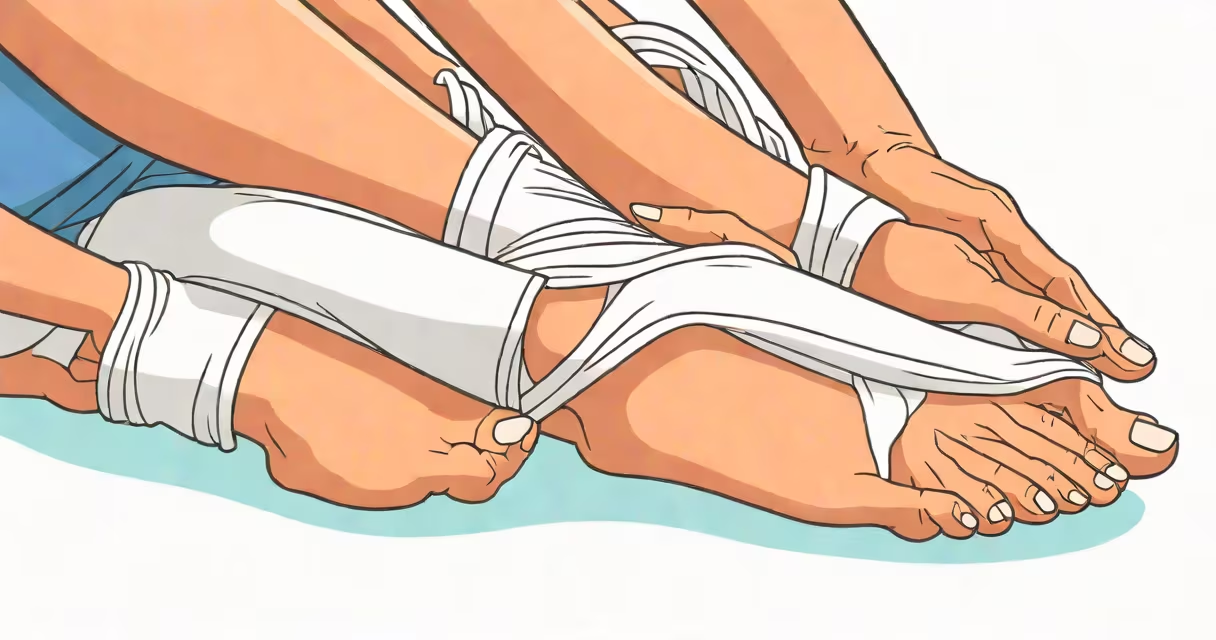
Yes, you should wrap a sprained ankle to reduce swelling, stabilize the joint, and support healing. A properly applied wrap limits movement and protects the injured ligaments during early recovery.
Acute ankle sprains occur when ligaments stretch or tear due to sudden twisting or rolling of the foot. The American Academy of Orthopaedic Surgeons (AAOS) recommends RICE - rest, ice, compression, and elevation - as the initial treatment. Compression via wrapping is a key part of this protocol.
Wrapping too tightly can restrict blood flow and cause numbness or increased pain. Wrapping too loosely offers no benefit. The goal is firm but not tight compression, allowing normal circulation while minimizing swelling.
Compression reduces fluid buildup in tissues after injury. When ligaments are damaged, inflammation causes swelling. This pressure increases pain and slows recovery. A wrap applies gentle, consistent pressure to limit excess fluid accumulation.
Stabilization is equally important. An unstable ankle increases the risk of further damage during movement. Wrapping helps maintain alignment and prevents excessive motion that could strain healing tissue.
For best results, apply the wrap within the first 24 to 48 hours after injury. Delaying compression allows more swelling to develop, which may prolong recovery time.
Use an elastic bandage (also called an ACE bandage) for most sprains. These are designed to stretch and conform to the ankle's shape. They come in standard widths - 4 inches is ideal for ankles.
| Bandage Type | Best For | Pros | Cons |
|---|---|---|---|
| Elastic (ACE) | Acute sprains, daily use | Adjustable tension, reusable, widely available | Can loosen if not applied correctly |
| Self-adherent wrap (e.g., Coban) | Active recovery, athletes | Stays in place without clips, breathable | More expensive, less stretch |
| Neoprene brace | Rehabilitation phase, chronic instability | Provides warmth and support, easy to wear | Doesn't allow for changing swelling reduction |
Never use gauze or cloth bandages without securing them - they slip and lose effectiveness. Avoid using electrical tape or duct tape, which can restrict circulation and damage skin.
Apply the wrap using a figure-eight pattern around the ankle and lower leg:
Check the foot regularly. If toes turn pale, feel cold, or go numb, remove the wrap and reapply looser. Swelling should decrease within 1-2 hours.
Not all sprains require wrapping. Severe injuries - such as complete ligament tears or fractures - need medical evaluation. You cannot reliably distinguish between a severe sprain and a fracture without imaging.
If you hear a pop at the time of injury, cannot bear weight after 10 minutes, or notice significant bruising and swelling within 2 hours, seek care. The University of Michigan Health System notes that about 15% of ankle injuries involve fractures, not just sprains.
I once treated a patient who walked on a grade III sprain for two days, believing wrapping would fix everything. By day three, swelling had spread to the entire foot. X-rays confirmed a small avulsion fracture. He needed a walking boot and six weeks of limited activity. This shows that wrapping alone doesn't replace diagnosis.
Many people assume "tighter = better." That's false. Over-tightening cuts off circulation and worsens tissue damage. A good rule: you should be able to slide a finger under the wrap easily.
Another error is wrapping only the ankle without including the lower calf. This creates uneven pressure and can cause the wrap to slip. Always extend the wrap at least 2 inches above the ankle joint.
Some users think they can reuse old bandages. Clean, dry bandages last 6-12 months. After that, elasticity degrades. A worn bandage won't hold pressure and may unravel during movement.
After wrapping, follow the RICE method: rest for 24-72 hours, apply ice for 15-20 minutes every 2 hours, improve the foot above heart level, and avoid putting weight on the injured side.
Begin gentle range-of-motion exercises after 48 hours if pain allows. Do not stretch aggressively. Pain is a sign to stop.
Do you wrap a sprained ankle? Yes - but only if done correctly. Proper wrapping supports healing, reduces complications, and speeds return to activity. Always prioritize medical evaluation for severe symptoms.