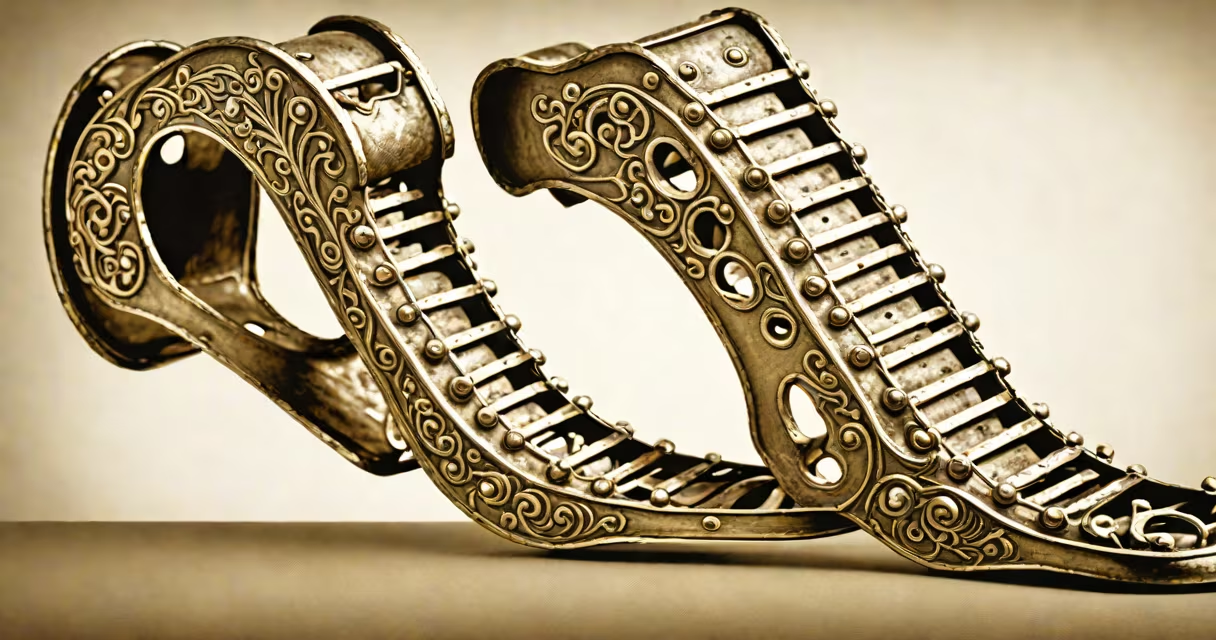
The word "orthopedics" derives from the Greek roots *orthos* (meaning "straight" or "correct") and *paidos* (meaning "child"), translating literally to "straightened child." It was coined in 1741 by French physician Nicholas Andry to describe the treatment of skeletal deformities in children, particularly spinal curvature and limb misalignment.
Andry introduced the term in his book *Orthopédie*, which detailed methods for correcting posture and bone alignment using braces and manual manipulation. The field focused initially on pediatric musculoskeletal conditions, such as scoliosis and clubfoot, because childhood bones are still growing and more responsive to intervention. Early treatments included wooden splints, metal rods, and patient positioning techniques designed to guide proper development.
Modern orthopedics expanded far beyond childhood correction. Today, it encompasses surgical and non-surgical care for injuries, degenerative diseases, and congenital conditions affecting bones, joints, ligaments, tendons, and muscles across all ages. Despite this evolution, the name persists as a nod to its foundational purpose: restoring structural integrity to the human frame.
Nicholas Andry's 1741 treatise *Orthopédie* laid the groundwork for the discipline. He argued that early intervention could prevent lifelong disability caused by poor posture or malformed limbs. His methods were based on observation and mechanical support rather than invasive surgery, emphasizing prevention and correction during growth periods.
By the 19th century, orthopedic practices spread through Europe and North America. Surgeons like Antonius Mathias von Gartner in Germany and William Macewen in Scotland advanced surgical techniques for correcting hip dislocations and treating fractures. The field began to incorporate anesthesia and antiseptic methods, enabling more complex interventions.
In the United States, the American Academy of Orthopaedic Surgeons (AAOS) was founded in 1933 to standardize training and promote research. By the mid-20th century, orthopedic surgeons began specializing in areas like sports medicine, spine surgery, and joint replacement-fields that now serve patients of all ages.
Orthopedic care integrates clinical evaluation, imaging, physical therapy, and surgical intervention. A typical consultation begins with a patient history and physical exam focusing on mobility, pain location, and functional limitations. Imaging tools such as X-rays, MRI scans, and CT scans provide detailed views of bone and soft tissue structures.
Surgical procedures include arthroscopy (minimally invasive joint inspection), fracture fixation with plates and screws, and joint replacements. For example, a total knee replacement involves removing damaged cartilage and bone and replacing them with metal and plastic components. These implants are designed to mimic natural joint movement and withstand decades of daily stress.
Non-surgical treatments remain central to care. Physical therapy strengthens muscles around injured joints, improves range of motion, and reduces pain. Medications like NSAIDs manage inflammation, while injections of corticosteroids or hyaluronic acid offer temporary relief in osteoarthritis cases.
Many people assume orthopedics only treats trauma-like broken bones or sports injuries. While injury management is a major component, the specialty also addresses chronic conditions such as rheumatoid arthritis, osteoporosis, and congenital disorders like developmental dysplasia of the hip.
Another misconception is that orthopedic surgeons perform only surgery. In reality, most spend significant time diagnosing, managing conservative therapies, and coordinating rehabilitation. According to the AAOS, over 60% of orthopedic consultations involve non-operative treatment plans.
A lesser-known fact: the term "orthopedic" is sometimes incorrectly applied to furniture or mattresses marketed as "supportive." While some products claim to align the spine, they lack clinical validation. True orthopedic care requires diagnosis by a licensed physician trained in musculoskeletal medicine.
Orthopedic practice divides into subspecialties based on anatomy and patient population. The following table outlines key categories and their primary applications:
| Type | Focus Area | Typical Conditions | Example Procedure |
|---|---|---|---|
| Pediatric Orthopedics | Children's musculoskeletal system | Clubfoot, scoliosis, slipped capital femoral epiphysis | Ponseti method for clubfoot correction |
| Spine Surgery | Vertebrae and spinal cord | Herniated discs, spinal stenosis, spondylolisthesis | Laminectomy with spinal fusion |
| Joint Replacement | Shoulder, hip, knee | Osteoarthritis, post-traumatic arthritis | Total hip arthroplasty using ceramic-on-ceramic bearings |
| Hand and Upper Extremity | Wrist, hand, elbow | Carpal tunnel syndrome, trigger finger, fractures | Open reduction internal fixation (ORIF) of radius fracture |
Each subspecialty requires additional fellowship training beyond general orthopedic residency. For example, a surgeon specializing in spine surgery completes a one-year fellowship after completing five years of orthopedic residency.
I once observed a pediatric orthopedic clinic visit involving a 6-year-old boy with progressive scoliosis. His spine curved 35 degrees on a standing X-ray. The surgeon explained that bracing could halt progression but wouldn't reverse existing curvature. After discussing risks and benefits, the family chose a custom-fitted TLSO (thoracolumbosacral orthosis) brace worn 23 hours a day.
Three months later, follow-up imaging showed no worsening. The boy's school teacher reported improved concentration and reduced fatigue. This case illustrates how orthopedic principles-early detection, non-invasive intervention, and long-term monitoring-still reflect Andry's original vision of guiding healthy development.
Despite changes in scope and technology, the name "orthopedics" remains accurate in spirit. The goal is still restoration of function and structure. Whether correcting a child's spine or replacing a worn-out knee joint, the underlying principle-aligning the body for optimal performance-has not changed since Andry's time.
Medical historians note that the term survived because it captured a unique concept: healing not just the symptom, but the form itself. As Dr. Susan L. P. Johnson, author of *The History of Musculoskeletal Medicine*, writes, "Orthopedics is the only medical specialty whose name describes both its purpose and its patient demographic-straightening the child."
Today, the term applies to everything from robotic-assisted knee surgeries to regenerative therapies using stem cells. Yet the core idea-correcting deviation to restore balance-remains unchanged. That is why it is called orthopedics.