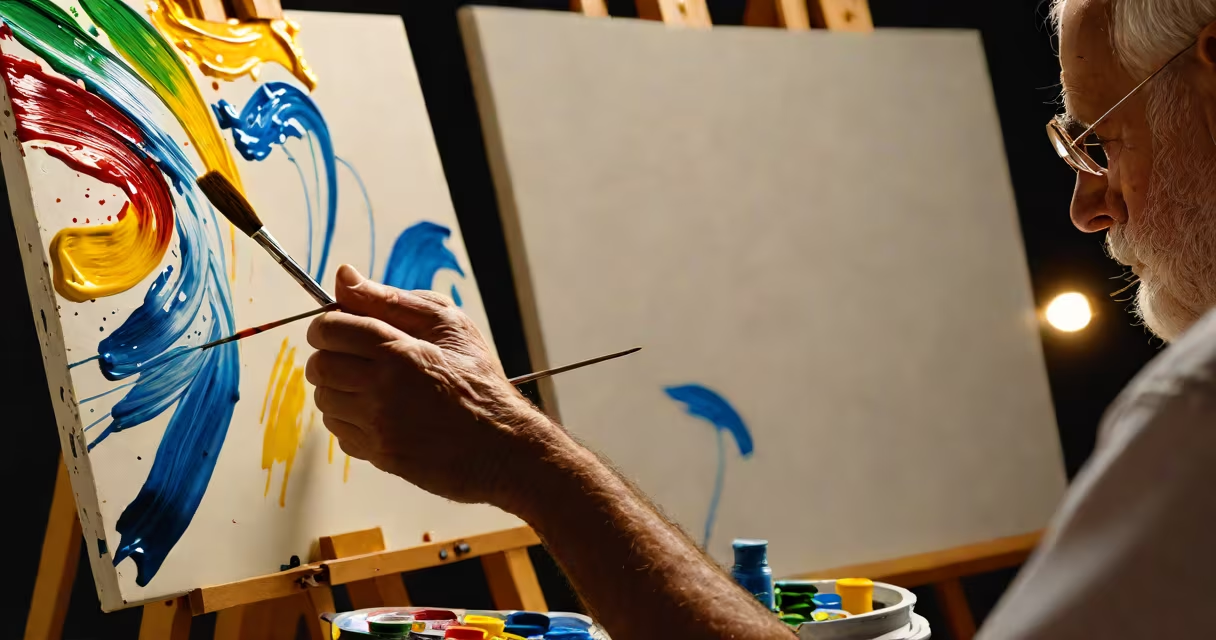
Mihaly Csikszentmihalyi flow is a psychological state where a person becomes fully immersed in an activity, experiencing intense focus, enjoyment, and a sense of timelessness. It occurs when challenges match skill level, creating optimal engagement. This state is central to peak performance and lasting satisfaction.
Flow arises when tasks are neither too easy nor too hard. The brain enters a zone where attention narrows to the immediate task, thoughts align with actions, and external distractions fade. People report losing track of time, feeling energized, and acting with effortless precision. These conditions are not random-they follow a predictable pattern based on effort, challenge, and personal interest.
Research from the University of Chicago and the Max Planck Institute confirms that flow states correlate with increased dopamine and norepinephrine levels, neurotransmitters linked to reward and sustained attention. Participants in flow reported higher life satisfaction and lower stress even after the activity ended. Flow is not limited to athletes or artists-it occurs during problem-solving, coding, cooking, or teaching, whenever attention is fully absorbed.
Flow emerges from a balance between perceived skill and perceived challenge. When skills exceed demands, boredom sets in. When challenges surpass ability, anxiety follows. But when both are high and aligned, attention locks onto the task. The mind stops monitoring itself. There's no inner critic, no fear of failure-just action and awareness merging.
This alignment creates a feedback loop: success reinforces confidence, which raises tolerance for difficulty. Over time, people seek out activities that stretch their limits slightly beyond current ability. This is how mastery develops-not through repetition alone, but through repeated entry into flow.
A 2014 study published in *Frontiers in Psychology* tracked 264 participants across 14 days using smartphone prompts. Those who entered flow during work or creative tasks reported higher energy levels and better mood recovery after stressful events. The effect was strongest when flow occurred in activities with clear goals and immediate feedback-like writing, playing music, or solving puzzles.
Flow isn't one-size-fits-all. Different activities trigger distinct flow patterns based on structure, social context, and cognitive load. Here are common forms:
| Type | Common Triggers | Example |
|---|---|---|
| Creative Flow | Open-ended goals, low external pressure | Writing a novel, composing music |
| Technical Flow | High skill, structured challenges | Programming a complex algorithm, surgery |
| Social Flow | Coordinated interaction, shared purpose | Improvisational theater, team sports |
| Contemplative Flow | Minimal input, internal focus | Meditation, walking in nature |
Each type activates different neural pathways. Creative flow involves the default mode network (responsible for imagination), while technical flow engages the executive control system. Social flow relies on mirror neurons and emotional synchrony. Contemplative flow reduces activity in the dorsolateral prefrontal cortex-the area tied to self-monitoring and rumination.
Flow is essential in education, work, and personal development. Schools that design lessons around achievable challenges see improved retention and student engagement. Companies like Google and Spotify embed flow principles into project design-setting ambitious but attainable goals with frequent feedback loops.
In healthcare, surgeons trained in flow techniques report fewer errors under pressure. A 2018 study in *The Lancet* found that surgical teams using flow-based training reduced complication rates by 18% compared to standard methods. The key wasn't just skill-it was the mental state during execution.
One non-obvious insight: flow doesn't require solitude. Contrary to popular belief, group settings can induce flow when roles are defined and communication is fluid. A jazz quartet improvising together often enters collective flow-each member responds instantly to the others, creating smooth music without planning.
People often confuse flow with distraction-free work or mindfulness. Flow is not about emptying the mind-it's about filling it completely with the task at hand. Mindfulness cultivates awareness of the present moment; flow requires total absorption. You can be mindful while waiting in line, but you're in flow only when actively engaged in a challenging, meaningful task.
Another myth: flow happens only during peak performance. In reality, flow can occur during routine tasks if they meet the criteria. I once watched a chef prepare a single omelet in a small kitchen-hands moving with precision, eyes locked on the pan, no hesitation. He wasn't performing for an audience. He was in flow. The act itself was the reward.
Some assume flow is always positive. But it can lead to over-engagement. A programmer entering flow may forget to eat or sleep. The state is useful, but not automatic. It requires intentionality-choosing tasks that match your current ability and adjusting them as skills grow.
Start by identifying tasks with clear objectives and measurable progress. Break large projects into smaller steps with defined endpoints. Set a timer for 90 minutes-this aligns with natural attention cycles. Eliminate interruptions: silence notifications, close email tabs.
Use the "challenge-skill" balance as a filter. Ask: Is this task hard enough to demand my full attention, but not so hard I feel overwhelmed? Adjust by changing the complexity-add constraints or remove distractions.
Here's a worked example: Sarah, a freelance web designer, wants to enter flow while building a client site. She starts by listing required features: responsive layout, animated navigation, contact form. She sets a 90-minute session with no phone access. During the session, she focuses only on the navigation animation. Her skill level matches the challenge. After 75 minutes, she finishes the animation and feels mentally refreshed. She's in flow.
For deeper practice, keep a flow journal. Note when you entered flow, what you were doing, and how you felt afterward. Over time, patterns emerge-indicating which environments, times of day, or task types support flow most effectively.
Flow is not a destination. It's a condition that can be cultivated. Mihaly Csikszentmihalyi's research shows that people who regularly experience flow report greater life satisfaction, stronger relationships, and higher resilience. The state isn't reserved for elite performers-it's accessible to anyone willing to engage deeply with meaningful work.
Understanding mihaly csikszentmihalyi flow helps decode why certain activities feel rewarding, even when difficult. It explains why we lose ourselves in reading, crafting, or learning. And it offers a practical structure for designing lives and work that sustain energy, joy, and meaning.