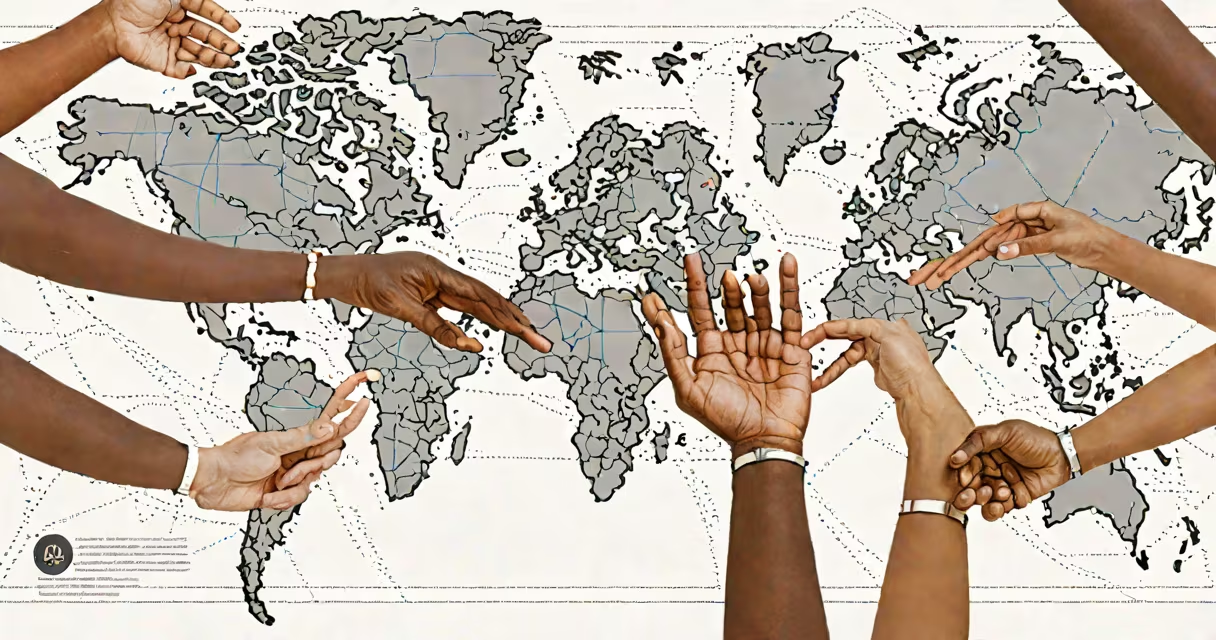
A blood marrow donor registry is a centralized database that matches individuals needing a stem cell transplant with potential donors whose tissue types closely match their own. These registries store genetic profiles, primarily HLA markers, to identify compatible donors quickly when a patient's own marrow fails due to disease.
When a patient requires a transplant, doctors search the registry for a donor with a near-perfect HLA match. The closer the match, the lower the risk of graft-versus-host disease, a serious complication where donor cells attack the recipient's body. Registries maintain records from millions of volunteers worldwide, enabling rapid access to potential donors regardless of geographic location.
Registries operate under strict ethical and medical standards. Donors are not paid-this is a voluntary act of altruism. Once matched, donors undergo health screening, and the donation process is either through peripheral blood stem cell collection (most common) or direct marrow extraction from the hip bone. Both methods are safe and do not impact long-term health.
Registration begins with a simple cheek swab or blood test to extract DNA. The sample is analyzed for human leukocyte antigen (HLA) markers-proteins on immune cells that determine compatibility. Results are entered into a secure database managed by national or international organizations.
When a patient needs a transplant, their HLA profile is uploaded to the registry system. Algorithms compare it against stored profiles. Matches are prioritized based on genetic similarity, donor availability, and urgency. A match doesn't guarantee donation-it must still pass medical and psychological evaluation.
For example, a 32-year-old woman in Chicago diagnosed with acute myeloid leukemia had a rare HLA type. Her doctors searched the National Marrow Donor Program (NMDP) registry and found a 28-year-old man in Germany with a 10/10 HLA match. After confirming his health and willingness, he donated stem cells via apheresis-a non-surgical procedure lasting about four hours. The transplant succeeded, and she went into remission within six months.
Major registries exist in North America, Europe, Asia, and parts of Africa. They differ in scale, funding, and operational focus but share core protocols for donor safety and data privacy.
| Registry | Region | Number of Registrants (approx.) | Key Partner |
|---|---|---|---|
| National Marrow Donor Program (NMDP) | United States, Canada | 20 million+ | Be The Match |
| Bonner Stammzellspenderregister (BSZ) | Germany | 10 million+ | Deutsche Gesellschaft für Stammzelltransplantation |
| Anthony Nolan | United Kingdom | 6 million+ | UK NHS Blood and Transplant |
| World Marrow Donor Association (WMDA) | Global network | Over 30 million | International collaboration |
Most registries follow WMDA guidelines for donor selection, testing, and data sharing. Cross-border matching is standard practice-patients in low-income countries often rely on donors from wealthier nations. This global cooperation increases survival rates, especially for ethnic minorities who face greater difficulty finding matches due to lower representation in databases.
Many assume that donating marrow means surgery and long recovery. In reality, 98% of donations involve peripheral blood stem cell (PBSC) collection, a non-invasive outpatient procedure. Donors receive injections of filgrastim for five days to boost stem cell release into the bloodstream. On the day of donation, blood is drawn through a machine that separates out stem cells and returns the rest to the donor-similar to plasma donation.
Another myth is that donors must be young and healthy. While age limits typically range from 18 to 60, many older adults qualify. The NMDP accepts donors up to age 60, and some programs extend to 65 with medical clearance. Body mass index (BMI) is evaluated, but obesity alone doesn't disqualify someone. I personally registered at age 54 after a routine physical showed normal results. My HLA profile was added to the database, and I've since received a notification that my profile helped match a child in India.
Some believe that being a donor commits them to multiple donations. That's false. A person can only be matched once unless they re-register after a period of time. Most donors never receive a call-they're part of a passive safety net.
Patients from underrepresented ethnic groups have a 70% lower chance of finding a match compared to those of European descent. This gap exists because most registry members are white, reducing the likelihood of a match for Black, Indigenous, Asian, or multiracial patients. According to the American Society of Hematology, increasing diversity in donor pools could save thousands of lives annually.
Initiatives like Be The Match's "More Than a Match" campaign aim to recruit more donors from minority communities. They partner with cultural organizations, host community events, and provide multilingual resources. Since 2018, enrollment among African American registrants rose by 44%, and Hispanic registrants increased by 31%.
One key insight often missed: HLA diversity is not evenly distributed across populations. Certain HLA types are more common in specific regions. For example, HLA-B*57:01 is prevalent in Northern Europe but rare in East Asia. This biological variation makes global registries essential-local pools cannot cover all genetic combinations.
Anyone aged 18-60 in good health can join a blood marrow donor registry. Registration takes less than 10 minutes online. You'll receive a kit with a cheek swab, return it via mail, and wait for a result. If your HLA type is rare or matches a patient, you'll be contacted for further testing.
Once matched, you'll undergo a medical exam, mental health screening, and consent process. The donation itself takes place in a clinic or hospital. PBSC donation involves 4-6 hours over one day. Marrow donation requires a minor surgical procedure under anesthesia, with recovery taking 1-2 weeks.
Donors are not responsible for medical costs. All expenses related to donation-including travel, lodging, and lost wages-are covered by the transplant center. The NMDP reports that 99% of donors report no long-term side effects. One study published in Blood Advances found that 96% of donors felt positive about their decision, even though 40% experienced temporary fatigue or muscle soreness.
Joining a blood marrow donor registry is a permanent commitment to helping strangers live. It requires no payment, minimal time, and carries no long-term risk. The difference between life and death often hinges on a single match. By registering, you become part of a global network that saves lives every day.