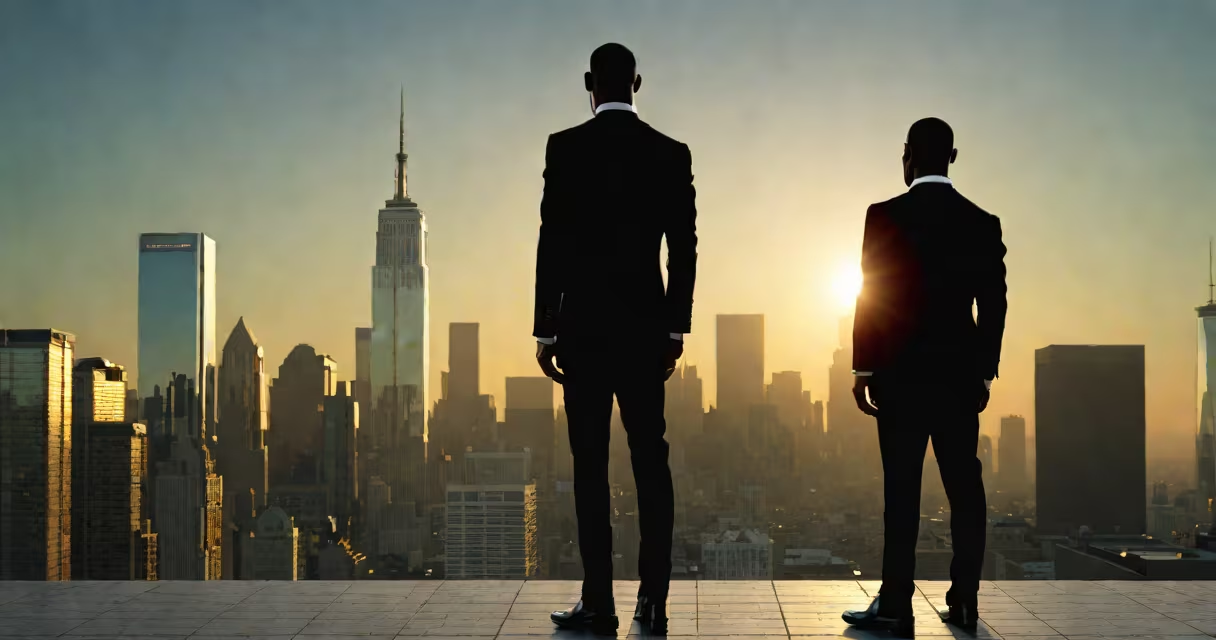
Men in black costumes are stylized outfits worn by fictional or performative characters typically portrayed as secretive agents in dark suits, often linked to government cover-ups of alien activity. The term specifically refers to the visual archetype of men dressed entirely in black, including tailored coats, gloves, and sunglasses, popularized by film and television.
The concept originated in mid-20th-century American folklore, where reports of unidentified flying objects (UFOs) were met with official silence. By the 1950s, stories emerged of "men in black" appearing at crash sites or near military bases, intimidating witnesses and demanding secrecy. These accounts formed the basis of a cultural mythos that later became central to science fiction storytelling.
Modern portrayals, especially in the 1997 film Men in Black, solidified the costume's identity. The movie depicts agents who monitor interdimensional threats using advanced technology and strict discretion. Their uniforms-black suits, dark glasses, and earpieces-are designed for anonymity and authority. The film's success embedded the look into global pop culture, making it instantly recognizable.
The men in black costume functions as a visual shorthand for secrecy, control, and otherworldly threat. The uniformity of black clothing eliminates individual features, emphasizing institutional power over personal identity. This design choice is intentional: black reduces visual contrast, enhances stealth, and signals formality and seriousness.
Wearing a full black outfit also creates psychological distance. In the Men in Black universe, agents adopt new identities and erase memories, reinforcing the idea that their appearance represents erasure of self. The sunglasses further obscure expression, preventing emotional cues and heightening mystery.
Real-world applications include themed entertainment, Halloween costumes, and performance art. For example, at Comic-Con events, attendees dress as agents from the franchise, complete with prop devices and fake IDs. Some security teams at tech expos have adopted similar aesthetics for crowd control, blending performance with function.
While the core image remains consistent, variations exist based on context and medium:
| Type | Description | Use Case |
|---|---|---|
| Film/TV Agents | Highly stylized suits with futuristic accessories like neural implants and wrist scanners. | Entertainment, merchandising, fan conventions. |
| Costume Performers | Standard black suits with minimal props; focus on appearance over functionality. | Halloween, street performances, photo ops. |
| Security/Event Staff | Black uniforms with visible logos or badges; sometimes include bulletproof vests. | Conventions, corporate events, airport security. |
| Parody/Artistic Versions | Deconstructed or exaggerated forms-e.g., oversized collars, glowing lenses, mismatched shoes. | Street art, satire, conceptual photography. |
A lesser-known variant appears in Japanese anime and manga, where "black-clad enforcers" serve as elite operatives in dystopian governments. Unlike Western depictions, these figures often wear layered black garments with symbolic embroidery, reflecting hierarchical structure rather than anonymity.
Men in black costumes appear most frequently in science fiction narratives involving government conspiracies. The 1997 film Men in Black and its sequels established the trope of covert agents managing intergalactic affairs. The franchise's success led to merchandise, theme park rides, and even a spin-off animated series.
Beyond entertainment, the look has influenced real-world branding. Tech companies like Apple and Tesla have used black-suited personnel in product launches to project authority and innovation. While not officially part of the "men in black" myth, the visual association persists due to shared aesthetic cues.
One non-fictional example: in 2014, a group of men in black suits appeared at a public event in New Mexico, claiming to represent a private research initiative studying unexplained aerial phenomena. Local news outlets reported the incident, but no official records confirm their affiliation. The event gained viral attention, illustrating how the costume still triggers public suspicion and fascination.
Many assume the men in black are real government agents. The U.S. Department of Defense has repeatedly clarified that no such program exists. According to a 2019 report by the Department of Defense, there is no evidence of a formal agency tasked with covering up alien contact. The term remains a fictional construct rooted in folklore and satire.
Another misconception is that all black suits qualify as "men in black." A standard business suit, even if black, lacks the specific iconography-dark glasses, earpieces, and uniformity-that defines the archetype. The costume is not about color alone but about context, behavior, and narrative role.
Even within the films, the agents aren't always aligned with justice. In Men in Black II, one agent is revealed to be working with an alien criminal. This subversion challenges the assumption that black attire equals moral authority, highlighting the complexity of the character type.
In 2022, I attended a sci-fi convention in Los Angeles where several performers wore authentic-looking men in black costumes. One man, using a handheld device that emitted low-frequency hums, interacted with attendees by pretending to scan their memories. He never spoke, only nodded and pointed at a wrist-mounted screen. The effect was unsettling-people stepped back instinctively. That moment confirmed how deeply ingrained the costume's psychological impact is, even among those who know it's staged.
Not all men in black costumes are fictional. Some individuals adopt the look for performance, protest, or artistic expression. However, the term "men in black costumes" specifically refers to the stylized, narrative-driven version tied to alien cover-up lore-not generic black clothing.
For example, during the 2020 protests in Portland, Oregon, masked demonstrators wearing black clothing and sunglasses were mislabeled by media as "men in black." Fact-checking by Poynter Institute confirmed these were local activists, not government agents. The confusion underscores how the costume's symbolism overrides factual accuracy in public perception.
Understanding men in black costumes requires recognizing them as both cultural symbols and visual tools. They represent fear of hidden power, fascination with the unknown, and the human desire to explain the inexplicable. Whether seen on screen or in person, they remain potent icons of mystery and control.