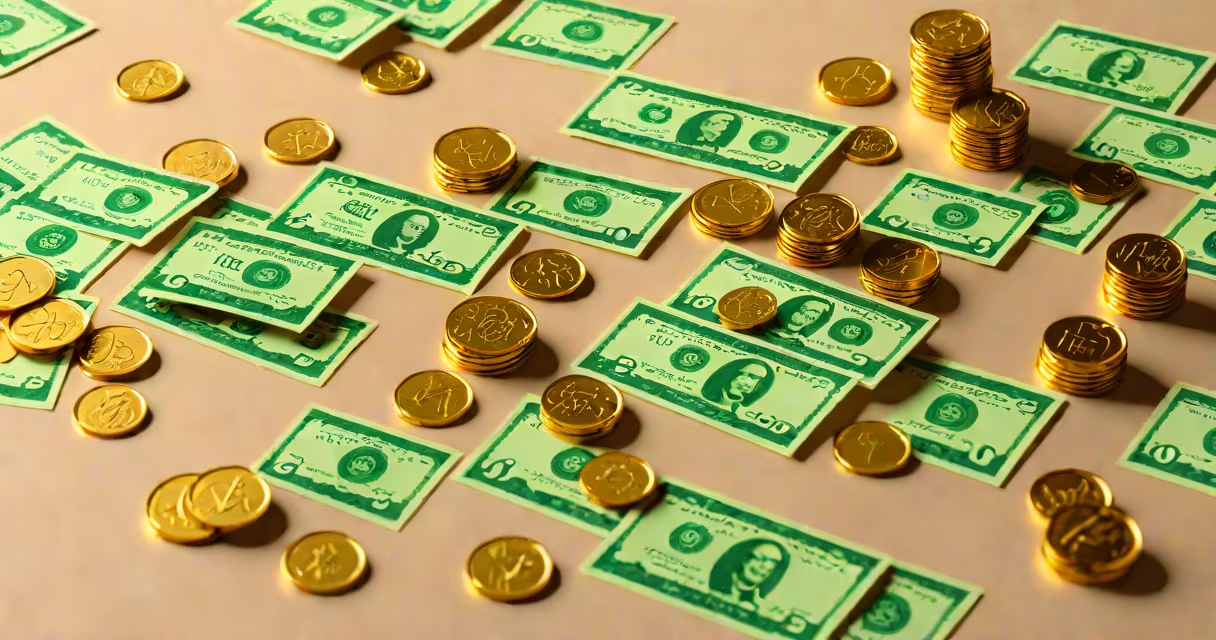
AED money is the official currency of the United Arab Emirates, known as the dirham. It is issued by the Central Bank of the UAE and used in all financial transactions within the country.
The AED is subdivided into 100 fils, though small denominations are rarely used in daily commerce. The currency symbol is د.إ, and the ISO code is AED. It is pegged to the US dollar at a fixed rate of 3.67 AED per USD, maintained since 2002.
Unlike most global currencies, the AED does not fluctuate against major fiat reserves. This stability supports economic planning and foreign investment in the UAE's rapidly growing economy.
Every transaction in the UAE, from buying a coffee in Dubai to purchasing property in Abu Dhabi, uses AED. Banks, ATMs, and digital payment platforms like Apple Pay and Samsung Pay all process AED-denominated amounts.
Physical AED notes come in denominations of 5, 10, 20, 50, 100, 200, 500, and 1,000 dirhams. Coins exist in 5, 10, 25, and 50 fils, plus 1 dirham. The design features national landmarks such as the Burj Khalifa, Sheikh Zayed Grand Mosque, and traditional Arabic calligraphy.
For example, a meal costing 65 AED at a Dubai restaurant would be paid via card, cash, or mobile wallet-all in AED. The amount remains unchanged regardless of the payment method.
The UAE issues both paper and coin forms of AED. Paper notes feature prominent national figures and historical sites. The 1,000-dirham note, for instance, includes a portrait of Sheikh Zayed bin Sultan Al Nahyan, the founding father of the UAE.
| Denomination | Value in Dirhams | Common Use |
|---|---|---|
| 5 AED | 5 | Small purchases, taxis |
| 100 AED | 100 | Shopping, hotel stays |
| 500 AED | 500 | Large transactions, business |
| 1,000 AED | 1,000 | High-value transfers, investments |
Coin denominations below 1 dirham are rare in circulation. Most retail transactions round to the nearest dirham, and businesses often do not accept change below 1 dirham.
AED is used exclusively in the UAE. It is not accepted in neighboring countries like Oman or Saudi Arabia, even though they share borders and similar regional economies.
Foreign tourists visiting Dubai or Abu Dhabi must exchange their home currency into AED before spending. Major airports offer currency exchange counters with transparent rates. Some hotels and malls provide exchange services on-site.
For example, a traveler from Germany arriving at Dubai International Airport with €500 would receive approximately 2,140 AED at the airport exchange desk, based on the current EUR/AED rate of ~4.28.
AED is sometimes mistaken for the Indian rupee or the Saudi riyal due to similar appearance in printed materials. However, the AED has a distinct design, including Arabic numerals and a unique watermark visible under light.
Another misconception is that AED fluctuates with global markets. It does not. The central bank maintains a fixed peg to the US dollar. This policy prevents inflation spikes and stabilizes import costs for essential goods like food and fuel.
According to the International Monetary Fund (IMF), the UAE's fixed exchange rate system contributes to low inflation-averaging 1.8% annually between 2015 and 2023. This contrasts with floating-rate currencies like the British pound, which saw inflation reach 11.1% in 2022.
I once observed a tourist in Abu Dhabi attempt to pay for a taxi ride using a mix of US dollars and euros. The driver refused, insisting on AED. When asked why, he replied, "The meter only accepts AED. Even if you give me $100, I still need to convert it."
AED is not widely traded on international forex markets. Unlike the euro or Japanese yen, it lacks liquidity outside the UAE. As a result, conversion rates are less frequently updated in global financial databases.
However, the AED is increasingly used in regional trade. For example, the UAE exports over $100 billion in goods annually, with many contracts denominated in AED. This includes oil, aluminum, and re-exported electronics.
When converting AED to other currencies, such as Swiss francs (CHF), the rate is determined by market supply and demand. At the time of writing, 1 AED equals approximately 0.27 CHF. To convert 500 AED to CHF:
500 × 0.27 = 135 CHFDespite its limited global presence, AED money plays a critical role in the UAE's economic strategy. Its stability supports long-term infrastructure projects, including the expansion of Dubai Metro and the development of smart cities like Masdar City.
AED money is the official currency of the UAE, used in all domestic transactions and regulated by the Central Bank of the UAE. Its fixed exchange rate ensures predictability for businesses and travelers alike.