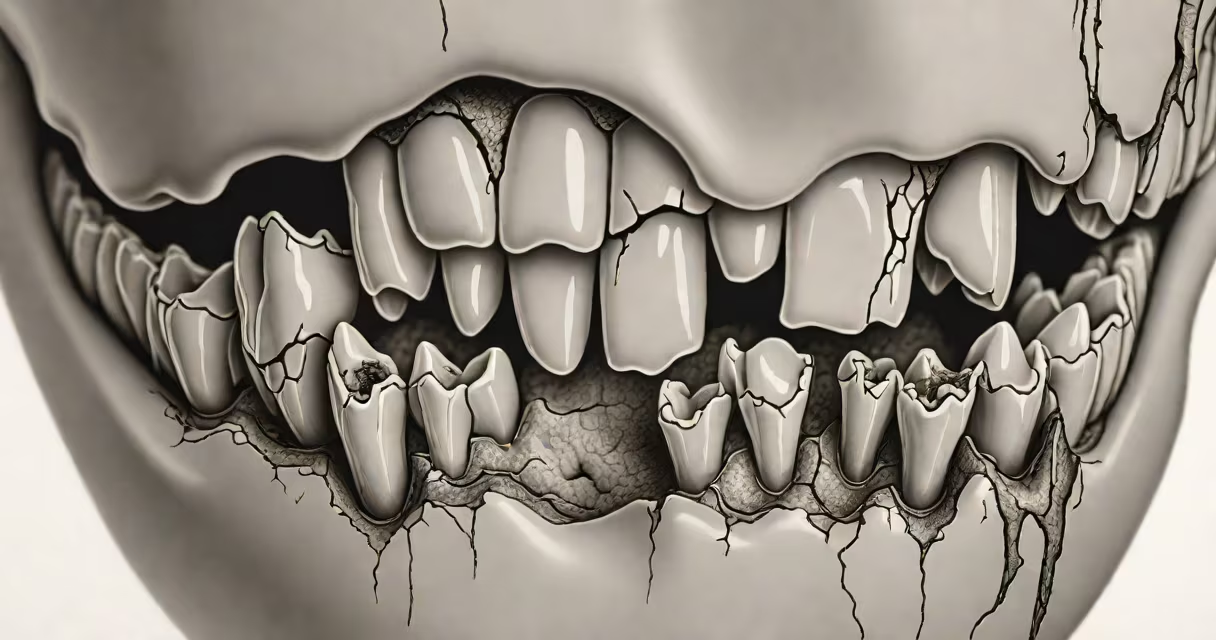
A tooth falling apart results from structural breakdown due to decay, trauma, or enamel erosion. This process begins beneath the surface and progresses silently until visible damage appears. The most common causes are untreated cavities, acid exposure, bruxism, and aging-related wear.
Tooth structure relies on three layers: enamel, dentin, and pulp. Enamel-the hardest substance in the human body-protects the tooth from physical and chemical damage. When enamel erodes, dentin becomes exposed. Dentin is softer and more porous than enamel, making it vulnerable to rapid deterioration. Once decay reaches the dentin, it spreads quickly, weakening the tooth's internal structure. Without treatment, the tooth can fragment under normal chewing pressure.
According to the American Dental Association (ADA), nearly 90% of adults aged 20-64 have had at least one cavity. The Centers for Disease Control and Prevention (CDC) reports that untreated dental caries affect 1 in 5 children aged 6-11. These statistics show how widespread tooth breakdown is-and how often it goes unnoticed until significant damage occurs.
Tooth decay starts when bacteria in plaque metabolize sugars and produce acids. These acids dissolve minerals in enamel, creating microscopic holes. Over time, these holes grow larger and deeper. As decay advances into the dentin, the tooth loses structural integrity. The dentin contains tiny tubules that transmit sensations-this is why decay often causes sharp pain when eating hot, cold, or sweet foods.
Once decay reaches the pulp-the innermost layer containing nerves and blood vessels-pain becomes constant and severe. At this stage, the tooth may crack or chip during routine biting. A tooth that feels loose or has visible crumbling edges is likely nearing complete failure.
For example, a patient reported waking up with a piece of their molar missing after eating a hard pretzel. Upon examination, the dentist found a large cavity extending from the chewing surface into the root canal. The tooth had no remaining structural support and required extraction. This case illustrates how a seemingly minor incident can trigger collapse in a weakened tooth.
Many people assume that tooth pain means a cavity. While cavities are a major cause, they're not the only reason teeth break down. Other factors include:
One misconception is that healthy teeth don't need fluoride. Fluoride strengthens enamel and reverses early decay. The CDC states that fluoridated water reduces tooth decay by 25% in both children and adults. Skipping fluoride-even in toothpaste-increases long-term risk.
Not all tooth breakdown is the same. Understanding the difference between types helps identify the correct treatment.
| Type | Origin | Signs | Treatment |
|---|---|---|---|
| Cavity (dental caries) | Bacterial acid attack on enamel and dentin | Dark spots, sensitivity, visible hole | Filling, crown, or root canal if infection spreads |
| Enamel erosion | Acidic foods/drinks or acid reflux | Translucent appearance, thinning edges, sensitivity | Fluoride treatments, dietary changes, desensitizing toothpaste |
| Tooth fracture | Trauma, grinding, or weakened structure | Sharp edge, pain when biting, visible crack | Onlay, crown, or extraction if irreparable |
Cracks differ from cavities. A crack doesn't start with bacteria-it begins with mechanical stress. A tooth with a hairline fracture may seem intact but can split under pressure. The American Association of Endodontists notes that 50% of cracked teeth are misdiagnosed as cavities initially.
If you notice any of these signs, seek care within 48 hours:
I once treated a patient who ignored a small chip for six months. It grew into a vertical fracture that extended below the gumline. Despite antibiotics and root canal therapy, the tooth couldn't be saved. Extraction was necessary. This case shows how delaying care worsens outcomes.
Early intervention prevents complications. A dentist can restore a tooth with a filling or crown if decay hasn't reached the nerve. Once the pulp is infected, treatment becomes more invasive and costly. The ADA estimates that saving a tooth with a root canal costs $1,000-$1,500, while extraction and replacement with an implant averages $3,000-$4,500.
Preventing tooth breakdown starts with consistent oral hygiene and diet control. Brush twice daily with fluoride toothpaste, floss daily, and limit acidic beverages. Avoid using teeth as tools-opening bottles or tearing packaging damages enamel.
For those with bruxism, a night guard reduces wear. A 2021 study in the Journal of Oral Rehabilitation showed that patients who wore custom guards experienced 70% less enamel loss over five years. Regular dental checkups every six months catch early issues before they progress.
Understanding why your tooth is falling apart isn't about fear-it's about action. Identifying the root cause allows targeted treatment. Whether it's decay, erosion, or trauma, addressing it early preserves function and reduces long-term cost.
Ignoring symptoms leads to irreversible damage. If you're experiencing pain, sensitivity, or visible crumbling, schedule a dental evaluation immediately. Early diagnosis of why your tooth is falling apart improves chances of saving it.