Silicon is not a metal. It is a metalloid-a chemical element with properties between metals and nonmetals. Its position on the periodic table (group 14, period 3) reflects this dual nature. Silicon forms covalent bonds, conducts electricity under specific conditions, and is essential in semiconductors.
Silicon's classification as a metalloid explains why it behaves differently from typical metals like iron or copper. Unlike metals, which lose electrons easily to form cations, silicon shares electrons in covalent networks. This atomic behavior enables its role in solid-state electronics. The International Union of Pure and Applied Chemistry (IUPAC) recognizes silicon as a metalloid due to its intermediate electronegativity (1.90 on the Pauling scale) and semiconductor properties.
Despite common mislabeling, silicon does not belong in the category of metals. Its electrical conductivity increases with temperature-opposite to metals-and it forms oxides that are amphoteric. These traits confirm its non-metallic identity. Misunderstanding silicon as a metal leads to errors in material selection for industrial applications.
Silicon's ability to conduct electricity under controlled conditions makes it ideal for transistors, integrated circuits, and photovoltaic cells. When doped with trace elements like boron or phosphorus, silicon's electron flow becomes controllable. This doping process transforms intrinsic silicon into n-type or p-type semiconductors, forming the basis of diodes and logic gates.
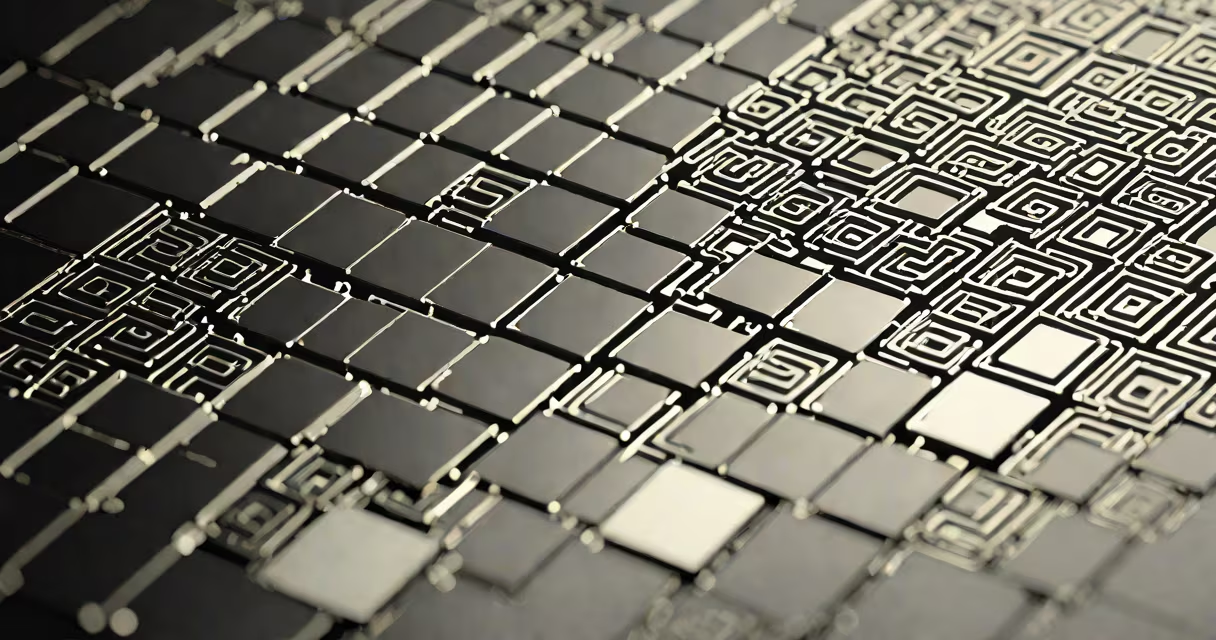
For example, a silicon wafer used in microprocessors begins as a single-crystal ingot grown via the Czochralski method. After slicing into thin wafers, layers of oxide and metal are deposited using photolithography. A single 300mm wafer can host over 100 million transistors. This precision manufacturing relies on silicon's predictable crystal structure and stable bandgap (1.12 eV).
Without silicon's semiconducting behavior, modern computing would not exist. The Intel 4004 processor, released in 1971, contained 2,300 transistors fabricated on a silicon substrate. Today's chips exceed 100 billion transistors per die, all built on silicon-based technology.
Silicon is categorized by purity and intended application. High-purity forms are essential for electronics; lower-purity grades serve industrial purposes. The distinction lies in processing methods and acceptable impurity levels.
| Type | Purity Level | Primary Use | Impurity Threshold |
|---|---|---|---|
| Metallic-grade silicon | 98-99% | Alloys, aluminum production | ≤2% impurities |
| Metallurgical-grade silicon | 98-99% | Aluminum alloying, ferrosilicon | ≤2% oxygen, carbon |
| Electronic-grade silicon | 99.9999999% (9N) | Integrated circuits, solar cells | ≤10 ppb boron, phosphorus |
| Ultra-high-purity silicon | 99.999999999% (11N) | Research, quantum computing | ≤1 ppb contaminants |
Electronic-grade silicon requires multiple purification stages. Starting from quartz sand (SiO₂), it undergoes carbothermic reduction in an arc furnace at ~2,000°C to produce SiCl₄. This compound is then purified via fractional distillation and reduced with hydrogen to yield high-purity polycrystalline silicon. The entire process removes trace metals and gases to meet semiconductor standards.
A key fact often missed: even 1 part per billion (ppb) of boron in silicon can disrupt transistor performance. The semiconductor industry uses mass spectrometry and secondary ion mass spectrometry (SIMS) to detect such levels. Without this precision, modern devices would fail at scale.
Many assume silicon is a metal because of its shiny appearance and use in electronics. However, visual similarity does not imply chemical class. Aluminum, titanium, and tungsten are metals-silicon is not. Its brittleness, lack of malleability, and inability to form free ions distinguish it from metallic elements.
Another confusion arises from the term "silicon chip." While widely used, this phrase is misleading. Chips are made from silicon wafers, not silicon metal. The term persists due to historical naming conventions but obscures the material's actual nature. For clarity, engineers refer to "silicon substrates" or "semiconductor-grade silicon."
I once observed a student in a materials science lab incorrectly label a silicon sample as "metal" during a presentation. The error was corrected when the instructor demonstrated that silicon did not conduct electricity in bulk at room temperature-unlike copper or aluminum. This hands-on test clarified the difference between metals and metalloids.
Confusing silicon with metals leads to flawed engineering choices. Using silicon in place of copper for wiring causes failure due to poor conductivity. Conversely, substituting aluminum with silicon in alloys results in brittle components prone to cracking. Correct classification ensures proper material selection across industries.
In solar energy, silicon's bandgap determines efficiency. Monocrystalline silicon cells convert ~22% of sunlight into electricity-higher than most alternatives. Polycrystalline variants achieve ~18%, while thin-film technologies like cadmium telluride reach ~16%. These numbers show why silicon remains dominant despite newer materials.
Silicon is not a metal. It is a metalloid whose unique electronic structure powers modern technology. Understanding its true nature prevents design flaws and supports innovation in computing, renewable energy, and nanoelectronics.