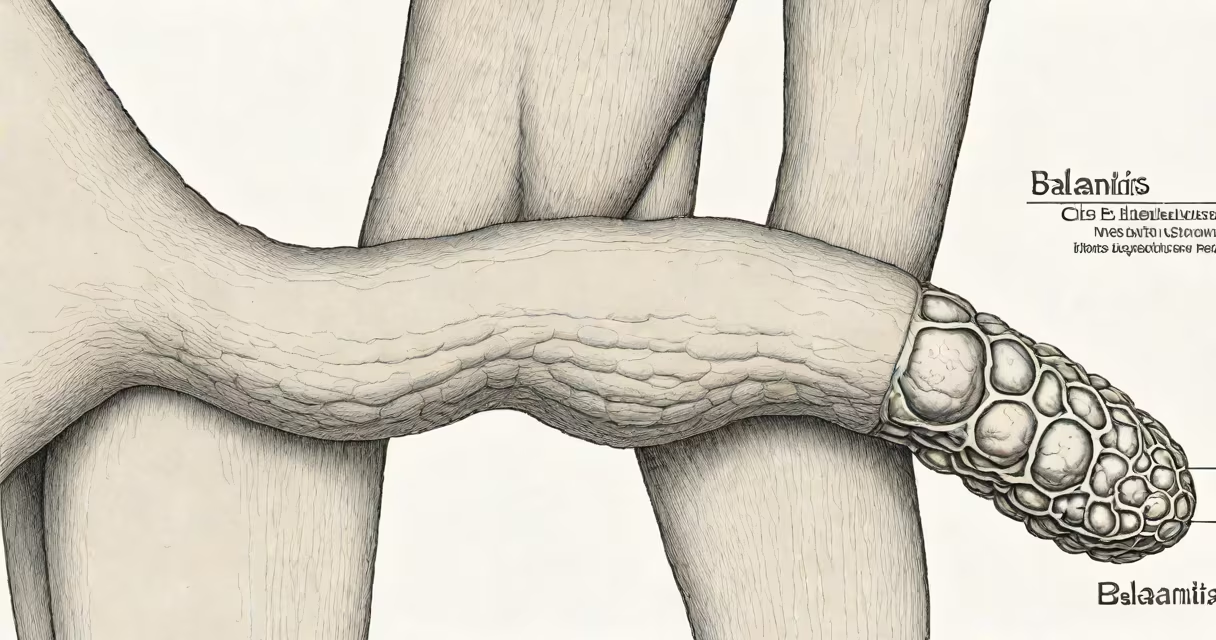
Balanitis cie 10 refers to the ICD-10 code N48.0, which classifies inflammation of the glans penis. This code is used in healthcare systems worldwide to document diagnoses, support treatment planning, and enable insurance billing.
The ICD-10 system, maintained by the World Health Organization, assigns alphanumeric codes to diseases and health conditions. N48.0 specifically identifies balanitis when it occurs without associated phimosis or other underlying structural issues. It applies to acute or chronic cases presenting with redness, swelling, pain, or discharge on the glans.
Clinicians use N48.0 during patient visits, electronic health record entries, and public health reporting. The code ensures consistency across providers and facilitates data analysis for epidemiological tracking. For example, a primary care physician diagnosing a 32-year-old male with swollen, painful glans after unprotected intercourse would assign N48.0 if no infection is confirmed via swab testing.
When a patient presents with symptoms such as itching, discomfort during urination, or visible redness on the glans, clinicians assess for potential causes. Balanitis may stem from infections (bacterial, fungal, viral), irritants (soaps, lubricants), or allergic reactions. A physical exam and sometimes lab tests confirm the diagnosis.
Once diagnosed, the provider enters N48.0 into the electronic medical record. This triggers automated workflows: insurance claims are processed, treatment protocols are activated, and public health databases receive anonymized data. In the U.S., Medicare and private insurers require ICD-10 codes for reimbursement. Without N48.0, a visit for balanitis may not be covered.
A 2021 study published in Sexually Transmitted Infections found that misclassification of balanitis led to delayed treatment in 17% of cases. Proper use of N48.0 reduced diagnostic errors by improving documentation clarity. Accurate coding supports both individual care and population health monitoring.
While N48.0 covers non-specific balanitis, the ICD-10 system includes subcategories for more precise diagnosis. These allow clinicians to differentiate between infectious and non-infectious forms based on etiology.
| Code | Description | Use Case Example |
|---|---|---|
| N48.0 | Balanitis, unspecified | Acute inflammation without identified cause |
| N48.1 | Balanoposthitis | Inflammation affecting both glans and foreskin |
| N48.2 | Balanitis due to candidiasis | Fungal infection confirmed by microscopy |
| N48.3 | Balanitis due to bacterial infection | Positive culture for *Streptococcus* or *E. coli* |
Using the correct subtype improves treatment accuracy. For instance, N48.2 indicates antifungal therapy is appropriate, while N48.3 requires antibiotics. Misusing N48.0 for a fungal case may lead to ineffective treatment and prolonged symptoms.
One common error is applying N48.0 to cases with known causes like diabetes-related infections. In such instances, the primary condition (e.g., E11.62 for diabetes with genital complications) takes precedence. The ICD-10 guidelines state that secondary conditions should be coded separately when they influence management.
Balanitis cie 10 is often mistaken for related conditions like balanoposthitis or phimosis. Balanoposthitis involves both the glans and foreskin and uses code N48.1. Phimosis, a tight foreskin preventing retraction, is coded as N47.0. Using N48.0 for these conditions leads to inaccurate data and potential billing denials.
Another frequent mistake is confusing balanitis with sexually transmitted infections. While balanitis can result from STIs like herpes or syphilis, those have distinct ICD-10 codes: A60.0 for herpes genitalis, A50.0 for primary syphilis. Applying N48.0 to an untreated syphilitic chancre misrepresents the diagnosis and delays targeted treatment.
During a clinic visit in 2022, a patient presented with a painless ulcer on the glans. The initial diagnosis was balanitis cie 10 (N48.0). After serological testing, the case was reclassified as A50.0. Correcting the code ensured proper public health reporting and access to penicillin-based therapy.
I used N48.0 during a telehealth consultation with a 45-year-old man experiencing recurrent glans irritation. He reported using scented soap and had no history of sexual partners. Physical exam showed erythema and mild scaling. No discharge or ulceration was present.
After ruling out infection with a KOH test and urine dipstick, I assigned N48.0. The patient was advised to discontinue irritants and apply a low-potency corticosteroid cream. Follow-up in two weeks confirmed resolution. The code enabled accurate billing and documented a non-infectious, contact dermatitis-type presentation.
According to the American Medical Association's Current Procedural Terminology (CPT) guidelines, coders must link ICD-10 codes to specific clinical findings. N48.0 should never be used without supporting documentation. Providers who rely solely on symptom lists risk audit penalties.
Understanding balanitis cie 10 is critical for accurate healthcare delivery. The code N48.0 enables consistent diagnosis, effective treatment, and reliable data collection. When used correctly, it supports patient outcomes and system efficiency.