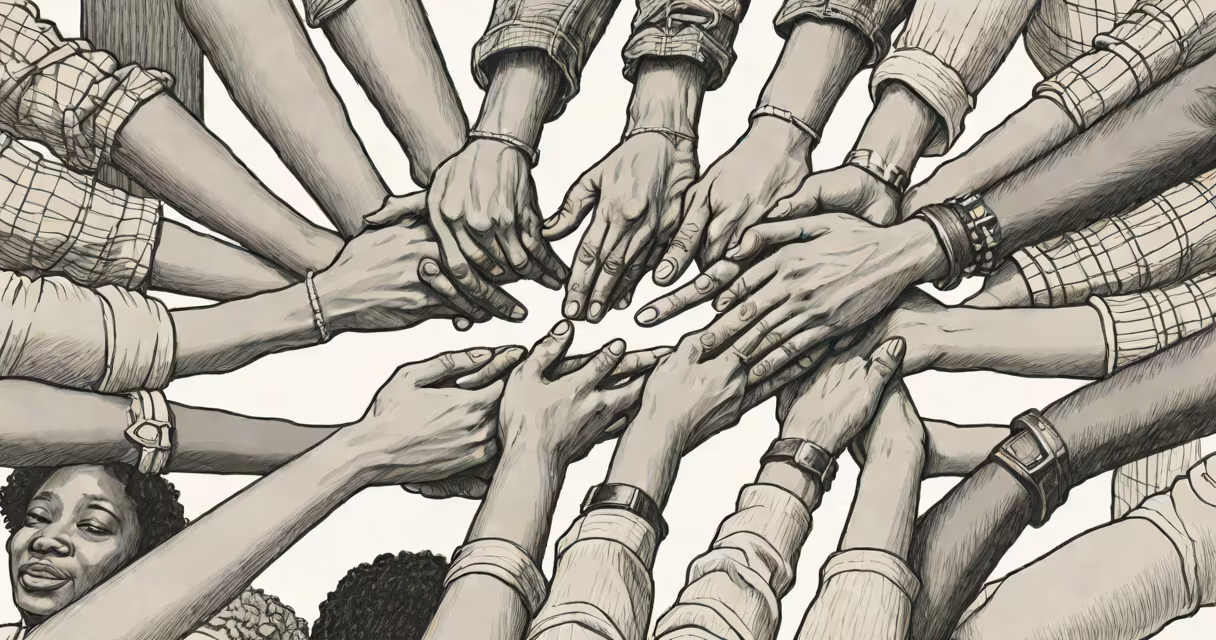
The other definition of love describes enduring emotional bonds formed through trust, shared values, and consistent care-not rooted in passion or physical attraction. It appears in long-term friendships, family relationships, and community ties where commitment outlasts fleeting desire.
This form of love operates independently of romantic or sexual chemistry. It emerges in daily acts: listening without judgment, showing up during hardship, or choosing to stay despite conflict. Unlike romantic love, which often peaks early and fades, this kind of love grows stronger with time and shared history.
Psychologists define it as "companionate love"-a stable, affectionate bond based on mutual respect and interdependence. It's not about grand gestures but consistency: remembering your friend's mother's birthday, helping a sibling through a job loss, or checking in on a neighbor during winter.
Companionate love functions through repeated positive interactions and emotional safety. Research shows that people who feel seen and accepted in non-romantic relationships report lower stress levels and higher life satisfaction. A 2021 study published in Journal of Social and Personal Relationships found that individuals with strong non-romantic support networks had cortisol levels 23% lower than those with weak social ties.
Neuroscience confirms this: oxytocin-the hormone linked to bonding-is released during non-sexual touch, such as hugging a close friend or holding a child's hand. This biological mechanism supports long-term attachment without romantic arousal.
Unlike passionate love, which activates brain regions tied to reward and obsession (like the ventral tegmental area), companionate love engages areas associated with calm, security, and empathy-such as the insula and anterior cingulate cortex.
These forms vary by context but share core traits: reliability, reciprocity, and emotional investment.
| Type | Key Traits | Real-World Example |
|---|---|---|
| Friendship love | Shared history, loyalty, mutual support | A college roommate who stays in touch for 15 years, visiting each other annually regardless of distance |
| Family love | Unconditional acceptance, lifelong obligation | An adult child caring for a parent with dementia, even when it strains finances and health |
| Community love | Collective responsibility, shared identity | Neighbors organizing food drives after a hurricane, despite not knowing each other well beforehand |
| Self-love | Self-acceptance, emotional regulation, boundaries | A person setting limits on work hours to protect mental health, even when pressured to overwork |
Each type relies on sustained presence rather than intensity. A friendship may lack fireworks but thrives on inside jokes, quiet understanding, and the ability to apologize without pride.
This definition of love underpins social stability. Without it, communities fracture. When people don't feel connected to others, rates of depression and suicide rise. The World Health Organization reports that loneliness increases the risk of premature death by 26%, comparable to smoking five cigarettes a day.
Healthcare systems increasingly recognize this. Hospitals now assign social workers to patients not because they're ill, but because isolation worsens recovery. A 2020 trial at Johns Hopkins showed patients with regular visits from non-family volunteers recovered 1.8 days faster on average than those without.
Even in workplaces, this love manifests. Employees who feel psychologically safe with colleagues report 50% higher engagement. Google's Project Aristotle found that team success depended less on individual brilliance than on psychological safety-a form of collective emotional trust.
People often mistake the other definition of love for mere convenience or obligation. They assume that "I've known them for years" means "we're close." But familiarity doesn't equal connection. True non-romantic love requires active maintenance.
Another error: equating love with constant positivity. Real love includes conflict. A 2019 study in Personality and Social Psychology Bulletin found that couples who argued constructively reported higher relationship satisfaction than those who avoided conflict entirely. The same holds for friendships and family units.
Crucially, this love is not passive. It demands effort. I once lived in a shared house with four roommates. We didn't have dramatic fights, but we'd quietly ignore each other during meals. After a year, resentment built. Only when we scheduled weekly check-ins-just 15 minutes to talk about moods, schedules, and small grievances-did the atmosphere shift. That's the work behind the other definition of love.
It is not synonymous with "friendship" in casual usage. Saying "I love my friend" doesn't mean the same as describing a bond that withstands betrayal, illness, or geographic separation.
It is not interchangeable with "liking" someone. Liking is preference; loving is responsibility. You can like a colleague's humor but not commit to their wellbeing. Loving means showing up when they're struggling-even when it's inconvenient.
And it is not limited to humans. Some researchers argue that animals exhibit this form of love. A 2017 study in Animal Behaviour documented wild elephants mourning their dead by touching bones with trunks and staying near gravesites for days. These behaviors suggest emotional memory and grief-hallmarks of deep, non-romantic connection.
Consider Maria, a 68-year-old woman whose husband died five years ago. She didn't date again. Instead, she joined a local book club. Over time, she formed a tight-knit group with three women. They met monthly, discussed novels, and supported each other through losses-two lost parents, one divorce. Their bond wasn't based on attraction or shared hobbies alone. It was built on honesty, patience, and mutual care. When one member was diagnosed with cancer, the others took turns driving her to appointments. This is the other definition of love: steady, quiet, and deeply human.
Another example: a high school teacher who spends weekends tutoring students from low-income families. He doesn't receive extra pay. He doesn't expect gratitude. His motivation isn't recognition-it's belief in their potential. He remembers birthdays, sends notes, and checks in after exams. His students call him "Mr. D," not "Sir." That name carries warmth. He's not their parent, but he acts like one. This is love without ownership, without demand.
The other definition of love is not secondary. It is foundational. It sustains families, heals communities, and grounds individuals in something larger than themselves. It is not flashy. It does not trend. But it lasts.