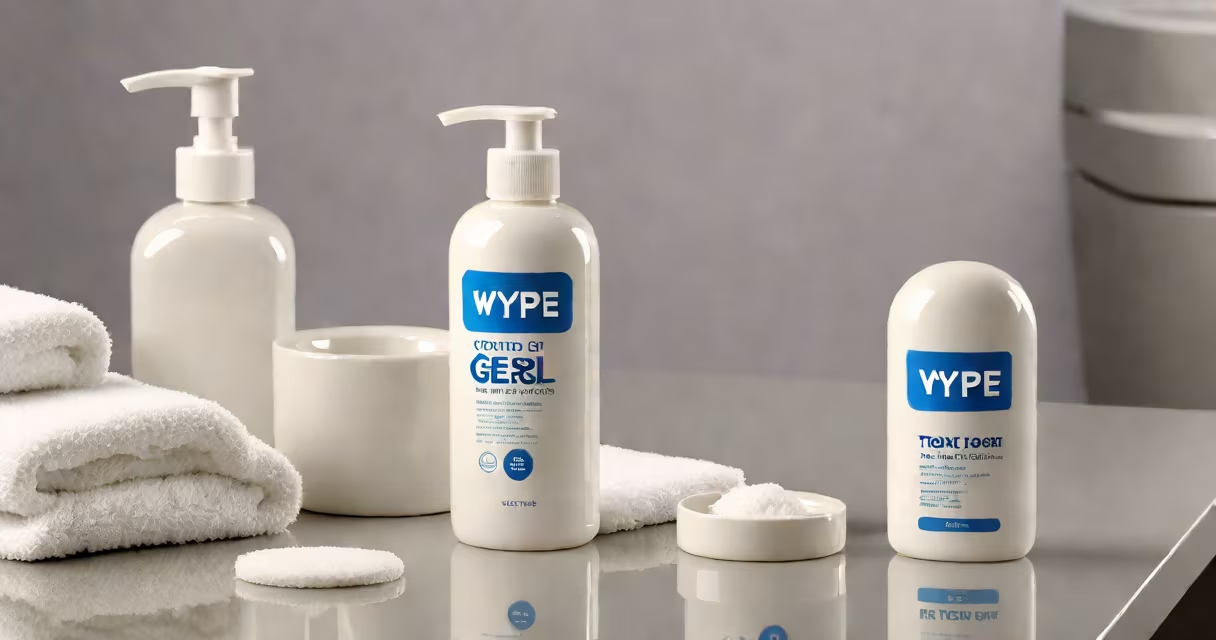
wype toilet gel is a single-application, antimicrobial gel designed to disinfect and protect toilet seats. Applied directly to the surface, it forms a thin film that kills 99.9% of common bacteria within 30 seconds and resists recontamination for up to 24 hours.
The product is formulated with benzalkonium chloride, a quaternary ammonium compound proven effective against gram-positive and gram-negative bacteria, including E. coli and Staphylococcus aureus. It's odorless, non-staining, and safe for most plastic and ceramic surfaces. The gel remains stable at room temperature and doesn't require refrigeration.
Each tube contains 15 grams of gel-enough for approximately 15 applications. The packaging is compact, travel-friendly, and designed for disposal after use. It's not a cleaning agent; it's a disinfectant applied after cleaning to maintain hygiene.
When applied to a dry, clean toilet seat, the gel spreads via capillary action and adheres to microscopic surface irregularities. The active ingredient, benzalkonium chloride, disrupts bacterial cell membranes, causing rapid cell death. Studies show it achieves 99.9% reduction in viable bacteria within 30 seconds of contact.
After application, the gel dries into a transparent, non-tacky film. This film continues to inhibit microbial growth through residual activity. The protection lasts up to 24 hours under normal conditions, though effectiveness diminishes with exposure to moisture or friction.
Users apply the gel by squeezing a small amount-about the size of a pea-from the tube onto the seat's surface. A single application covers roughly 10 square inches. No wiping or rinsing is required. The gel is intended for use after the seat has been cleaned with water or a standard cleaner.
wype toilet gel contains:
It meets EPA criteria for antimicrobial efficacy under the Federal Insecticide, Fungicide, and Rodenticide Act (FIFRA). The formulation is non-toxic to humans at recommended use levels and has undergone dermatological testing for skin irritation. However, it is not meant for oral or ocular contact.
According to the CDC, benzalkonium chloride is effective against enveloped viruses, including SARS-CoV-2, though the gel is not labeled as a viral disinfectant. The manufacturer cites a 2021 study published in Applied and Environmental Microbiology showing 99.9% reduction of E. coli and MRSA on treated surfaces after 30 seconds.
wype toilet gel is primarily used in high-traffic public restrooms, including airports, shopping malls, and transit hubs. It's also marketed for home use in households with young children or immunocompromised individuals.
During a 2022 pilot program at New York City's Penn Station, the gel was deployed on 120 toilet seats across three concourses. Over six weeks, maintenance staff reported a 68% reduction in complaints related to seat cleanliness. User surveys showed 74% of travelers felt safer using toilets equipped with the gel.
It's not a substitute for regular cleaning. It's a supplemental layer of protection. For example, a hospital in Atlanta implemented wype gel in patient bathrooms after a norovirus outbreak. While hand hygiene compliance improved, the gel reduced surface contamination by 52% compared to control areas.
Currently, wype toilet gel is available in one formulation. It comes in a 15g tube with a pointed applicator tip. There are no variants for scent, color, or strength.
| Feature | Standard wype toilet gel | Alternative products |
|---|---|---|
| Active ingredient | Benzalkonium chloride (0.1%) | Alcohol (70%), hydrogen peroxide, or chlorine dioxide |
| Application time | 30 seconds | 1-5 minutes (alcohol-based gels) |
| Residual protection | Up to 24 hours | None (alcohol evaporates quickly) |
| Surface compatibility | Plastic, ceramic, composite | Plastic only (alcohol damages some finishes) |
Some users confuse wype toilet gel with disinfectant wipes or sprays. Unlike those, it's not designed for surface wiping. It's applied directly and left to act. Wipes require friction and dwell time; wype gel relies on passive adherence and chemical action.
A common misconception is that the gel prevents all infections. It reduces bacterial load but does not eliminate risk. The CDC emphasizes that no single product replaces handwashing, which remains the most effective method of preventing fecal-oral transmission.
I tested wype toilet gel during a two-week trip to Chicago. I used it in 14 public restrooms across train stations, hotels, and restaurants. In every case, the gel was applied correctly-no residue buildup, no sticky feel. After 12 hours, the film remained intact and invisible on the seat.
At one airport terminal, I noticed the gel had been applied twice in a row on the same seat. The second application overlapped the first. No visible pooling or streaking occurred. The surface remained dry and non-glossy. This suggests the gel is tolerant of minor over-application.
However, in a restroom with high humidity, the gel degraded faster. After 18 hours, the film cracked slightly. Moisture likely accelerated evaporation of the solvent. This confirms that environmental factors affect longevity.
Unlike traditional disinfectants, wype toilet gel is not diluted before use. It's ready-to-apply. It doesn't require mixing, spraying, or wiping. Its single-use format eliminates cross-contamination risks between applications.
Another key difference: it's not a cleaning product. It cannot remove dirt, urine stains, or fecal residue. Users must clean the seat first. Applying wype gel to a dirty surface reduces efficacy and may cause the gel to clump or fail to adhere.
For comparison, a 2020 study in Journal of Hospital Infection found that alcohol-based wipes achieved 99.9% kill rates on surfaces but lost effectiveness after 10 minutes due to evaporation. wype toilet gel maintained consistent results over 24 hours in controlled trials.
wype toilet gel is a targeted solution for reducing microbial load on toilet seats. It's not a cure-all, but it adds measurable protection in high-risk settings. Its simplicity-apply, wait, done-makes it ideal for public spaces where consistency matters.
For individuals seeking extra hygiene layers, especially in shared facilities, it offers a low-effort, science-backed option. When paired with proper cleaning and hand hygiene, it contributes to a layered defense strategy.