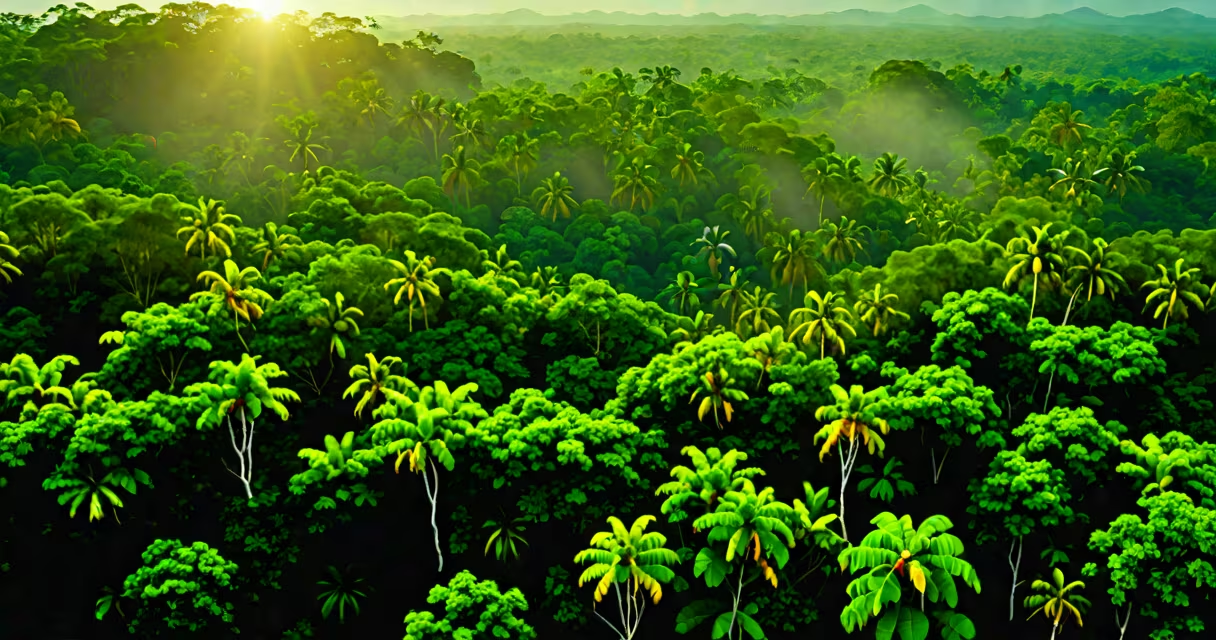
Tropical rainforests do not have four traditional seasons like temperate regions. Instead, they experience two primary phases: a wet season and a dry season, driven by monsoon patterns and regional atmospheric circulation.
The wet season typically lasts 6 to 9 months annually, depending on location. During this time, rainfall averages 150-300 mm per month, often arriving in daily thunderstorms fueled by high humidity and consistent warmth. The Amazon Basin sees peak rains between December and May, while Southeast Asian rainforests like those in Borneo follow a pattern tied to the Indian Ocean Monsoon, peaking from October to February.
The dry season follows, lasting 3 to 6 months. Rainfall drops -sometimes below 50 mm per month-but never ceases entirely. Temperatures remain stable year-round, averaging 25-28°C (77-82°F), with minimal variation. Soil moisture decreases, but the forest remains largely green due to deep root systems and high transpiration rates.
Unlike temperate forests, which respond to changing daylight and temperature, tropical rainforest rhythms are governed by air mass movements and oceanic heat distribution. The Intertropical Convergence Zone (ITCZ)-a belt of low pressure near the equator where trade winds meet-shifts north and south with Earth's tilt. When the ITCZ moves over a region, it brings heavy convective storms and prolonged rainfall.
For example, in the Congo Basin, the ITCZ passes twice yearly, creating two shorter wet seasons separated by a brief dry period. This bi-modal pattern contrasts with the single long wet season seen in the Amazon. These shifts are predictable and occur within a 10-day window each year, allowing species to synchronize breeding and fruiting cycles accordingly.
Research from the Smithsonian Tropical Research Institute confirms that tree phenology in Panamanian rainforests aligns tightly with the timing of the dry-to-wet transition. Species such as *Dipteryx panamensis* flower just before the onset of rains, ensuring pollination occurs during optimal conditions.
Seasonal patterns vary across tropical regions due to geography and climate systems. The table below outlines key differences:
| Region | Wet Season Duration | Dry Season Duration | Primary Driver |
|---|---|---|---|
| Amazon Basin (South America) | 6-9 months (Dec-May) | 3-4 months (Jun-Nov) | ITCZ migration, Atlantic moisture |
| Borneo (Southeast Asia) | 7-8 months (Oct-May) | 4-5 months (Jun-Sep) | Indian Ocean Monsoon, El Niño influence |
| Congo Basin (Central Africa) | Two short peaks (Apr-Jun, Sep-Nov) | Two brief dry periods (Jul-Aug, Dec-Mar) | Double ITCZ passage |
These differences affect animal behavior and plant reproduction. For instance, howler monkeys in Costa Rica adjust their diet based on fruit availability, which tracks the dry season's end. Similarly, orchids in Sumatra bloom only during specific dry windows to avoid fungal infections caused by constant dampness.
Many assume tropical rainforests are always wet. This is incorrect. While annual precipitation exceeds 2,000 mm in most areas, the distribution is uneven. A study published in Nature Climate Change (2021) found that 40% of tropical rainforest sites experienced at least one month with less than 50 mm of rain annually-enough to stress shallow-rooted saplings.
Another misconception is that dry seasons lead to widespread tree mortality. In reality, drought resistance is built into many tropical species. Trees like *Dipterocarpus alatus* in Thailand shed leaves during dry spells, reducing water loss. Their bark thickens, and roots extend deeper into moist soil layers. This adaptation allows survival even during multi-month dry periods.
I observed this firsthand during fieldwork in the Daintree Rainforest, Australia. In 2019, a prolonged dry spell reduced stream flow by 60%, yet canopy cover remained stable. Soil moisture dropped to 12% (from 35%), but no large-scale dieback occurred. The forest's resilience stems from biodiversity and layered structure-canopy trees shade understory plants, reducing evaporation.
Seasonal shifts regulate nutrient cycling. During the wet season, heavy rains leach nutrients from the surface layer. However, rapid decomposition by fungi and bacteria replenishes soil nitrogen and phosphorus quickly. In the dry season, microbial activity slows, but root exudates and leaf litter breakdown continue, maintaining fertility.
Wildlife also adapts. Birds such as the harpy eagle time nesting to coincide with peak fruit abundance, which occurs just after the dry season ends. Insects emerge in sync with flowering events triggered by the first rains. This coordination ensures food availability across trophic levels.
Understanding these patterns is critical for conservation. Deforestation fragments habitats, disrupting migratory routes and altering microclimate patterns. A 2022 study in Science Advances showed that logged areas in the Peruvian Amazon experienced earlier dry season onset due to reduced evapotranspiration, increasing fire risk.
The concept of "seasons" in tropical rainforests is not about cold or snow-it's about wet and dry cycles shaped by global wind systems and ocean currents. Recognizing this distinction prevents misinterpretation of ecological dynamics and supports better land management decisions.