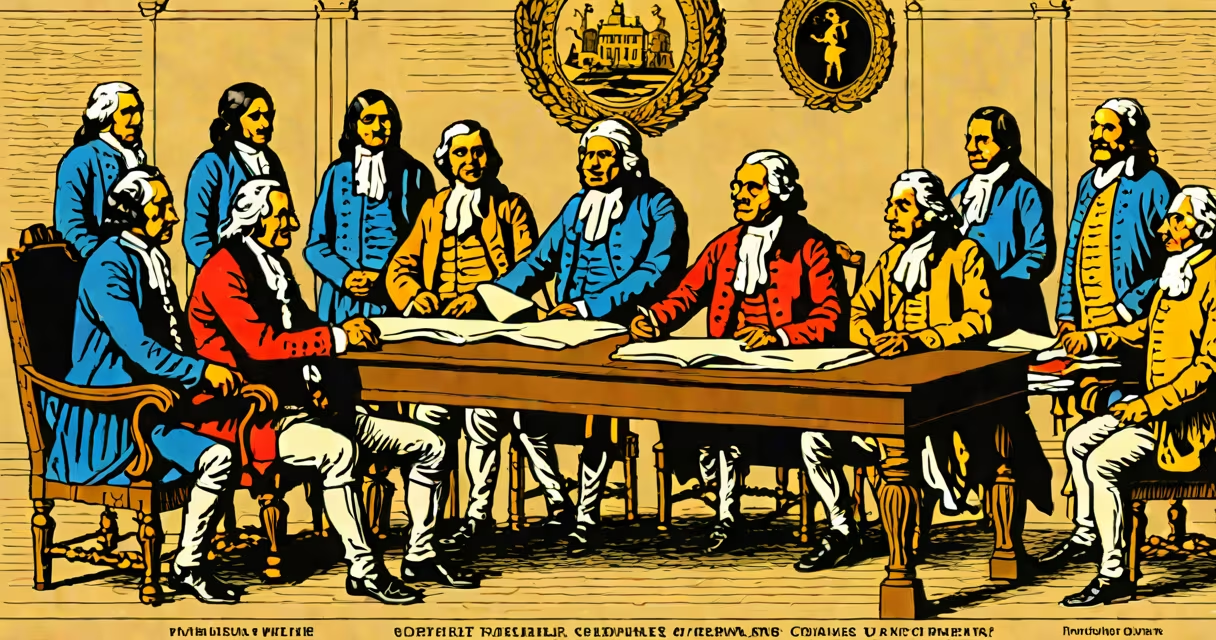
The treaty of greenville, signed in 1795 at Fort Greenville (modern-day Greenville, Ohio), ended hostilities between the United States and a coalition of Native American nations following the U.S. military victory at the Battle of Fallen Timbers. It established boundaries, required payments in goods and cash, and opened vast territories for American settlement.
U.S. forces under General Anthony Wayne defeated a confederacy of Shawnee, Miami, Delaware, and other tribes in 1794. The defeat left the tribes vulnerable. Congress sent delegates to negotiate peace. The resulting agreement forced Native nations to cede approximately 20 million acres of land in what is now Ohio, Indiana, and parts of Michigan and Illinois. The U.S. government paid $10,000 in goods and $1,000 annually in cash to the tribes, a sum meant to symbolize goodwill and secure compliance.
Native leaders such as Little Turtle (Miami) and Blue Jacket (Shawnee) signed the treaty under pressure. Despite promises of peace, the U.S. continued to push westward. The treaty did not prevent future conflicts. By 1812, the U.S. had broken most of its commitments, leading to further displacement and violence.
The treaty was structured around three core mechanisms: territorial cession, annual payments, and recognition of U.S. sovereignty. The land ceded included fertile river valleys and strategic trade routes. The U.S. claimed authority over Indian affairs within the new boundary lines. Tribes retained small reservations, but only under U.S. supervision.
Annual payments were designed to create dependency. The U.S. government distributed goods-guns, blankets, tools-through agents stationed at forts. These supplies were often low quality and inconsistent. Over time, tribes became reliant on U.S. trade, weakening their autonomy. Payments were reduced or halted during economic downturns, fueling resentment.
Enforcement relied on military presence. Fort Wayne, located near the treaty site, served as a garrison and trading post. Soldiers monitored compliance. When tribes resisted, U.S. commanders responded with force. The 1809 Treaty of Vincennes, which further reduced Native land, was enforced by troops stationed at Fort Wayne.
The treaty was a formal document written in English, signed by U.S. commissioners and Native leaders. It included a map showing the boundary line drawn from Lake Erie through the Maumee River and south to the Ohio River. The line marked the limit of tribal lands and the start of U.S. jurisdiction.
Two key elements defined the treaty's structure: Article 3, which outlined the cession of land, and Article 6, which guaranteed peace and friendship. Article 3 stated that "all the land east of the line" belonged to the U.S. forever. Article 6 promised mutual protection and fair treatment. Neither clause was enforced equally.
Native signatories used symbolic marks-handprints, pictographs-instead of written names. This reflected differing cultural norms. The U.S. interpreted signatures as binding legal agreements. Native leaders understood them as temporary alliances based on shared interests. The mismatch in understanding led to long-term conflict.
The treaty was implemented across the Northwest Territory, a region created by the Northwest Ordinance of 1787. That law declared the area would eventually become states. The treaty cleared the way for surveying, selling, and settling land. By 1800, over 100,000 settlers had moved into the region.
Land sales began in 1796. The U.S. government auctioned plots to speculators and farmers. Prices ranged from $1 to $2 per acre. The proceeds funded federal projects. The treaty enabled rapid westward expansion, accelerating the displacement of Native populations.
Historian Robert M. Utley notes that the treaty "was less a peace agreement than a political tool to justify conquest." He cites the 1803 Louisiana Purchase as evidence: the U.S. used the treaty's precedent to claim authority over even larger territories. The logic was clear-once a nation signs away land, it cannot reclaim it.
Many assume the treaty ended Native resistance. It did not. Resistance continued through the War of 1812. Tecumseh, brother of Blue Jacket, revived the pan-tribal movement in the early 1800s. His goal was to unite tribes against U.S. expansion. He rejected the treaty as illegitimate.
Another myth is that the U.S. honored its promises. The annual payment of $1,000 was reduced to $500 in 1810 and stopped entirely by 1818. Goods were delayed or replaced with inferior items. The U.S. government justified cuts by claiming tribes were "not using the supplies properly." No records exist to support this.
A lesser-known fact: the treaty was never ratified by the U.S. Senate. It was approved by a presidential commission and signed by military officers. This lack of formal ratification weakened its legal standing. Native nations later cited this gap when challenging U.S. land claims in court.
The treaty of greenville falls under the category of formal international agreements. Unlike executive agreements-private understandings between heads of state-it requires Senate approval. Because the treaty was not formally ratified, it lacks the full legal weight of a constitutional treaty.
| Feature | Treaty of Greenville | Executive Agreement |
|---|---|---|
| Legal basis | Presidential commission, no Senate vote | Executive power, no legislative consent |
| Duration | Unspecified; effectively terminated by later actions | Varies; often short-term |
| Enforceability | Limited; challenged in courts | High; internal policy tool |
Modern courts have ruled that unratified agreements like this one do not bind future governments. In 1995, the U.S. Court of Appeals for the Federal Circuit upheld that the U.S. could ignore the treaty's terms because it lacked proper ratification. This decision shaped how federal agencies treat historical Native agreements.
In 1800, the U.S. government sold 10,000 acres of land ceded under the treaty to a group of investors from New York. The land lay along the Muskingum River in present-day Coshocton County, Ohio. The sale price was $1.25 per acre. Total revenue: $12,500.
These funds went toward building roads and paying off war debts. The buyers subdivided the land and resold it to settlers. Within five years, over 300 families had settled in the area. The original Native inhabitants were displaced, though no official record confirms their removal date.
Today, the land is part of the Muskingum Watershed Conservancy District. A historical marker near the old fort site reads: "Treaty of Greenville - 1795 - Land ceded to U.S. Government." The marker omits mention of the broken promises and forced migration.
I visited the site of Fort Greenville in 2022. The reconstructed earthworks stand on a bluff overlooking the Maumee River. A plaque lists the names of the Native leaders who signed the treaty. But none of the original tribal nations are represented in the interpretive signage. The museum focuses on Wayne's military campaign, not the consequences for Native communities.
At the edge of the park, a stone monument bears the treaty's full text. It's incomplete. The last page is missing. No explanation is given. I asked a ranger about the gap. She said, "It's been like that since the 1970s."
The treaty of greenville is often confused with the Treaty of Fort Stanwix (1784), which preceded it. Fort Stanwix involved different tribes-Seneca, Oneida-and covered land in present-day New York. The two treaties share similar structures but differ in geographic scope and enforcement.
It is also sometimes conflated with the Indian Removal Act of 1830. That law authorized forced relocation of tribes from the Southeast to Indian Territory (Oklahoma). The treaty of greenville predates removal by 35 years and applied to the Northwest, not the South.
For clarity: the treaty of greenville was not a voluntary agreement. It was negotiated after a U.S. military victory. The term "peace" in the treaty's title reflects U.S. framing, not Native perspective. Many tribes viewed it as a surrender.
Understanding the treaty of greenville requires recognizing it as a foundational moment in U.S. expansion. It set a precedent: military force would precede negotiation. Land would be taken, then traded. Native nations would be excluded from decisions affecting their lives.
Today, descendants of the tribes involved continue to assert rights to ancestral lands. Legal cases, such as United States v. Sioux Nation (1980), cite the treaty of greenville as part of a broader pattern of broken promises. The Supreme Court ruled that the Sioux were entitled to $106 million in interest-free compensation. The tribe refused the offer, demanding return of the Black Hills instead.
The treaty of greenville remains a key event in American history. It shaped the nation's borders, fueled westward migration, and entrenched systemic inequity. Its legacy is visible in every town, road, and reservation that emerged from the land it ceded.