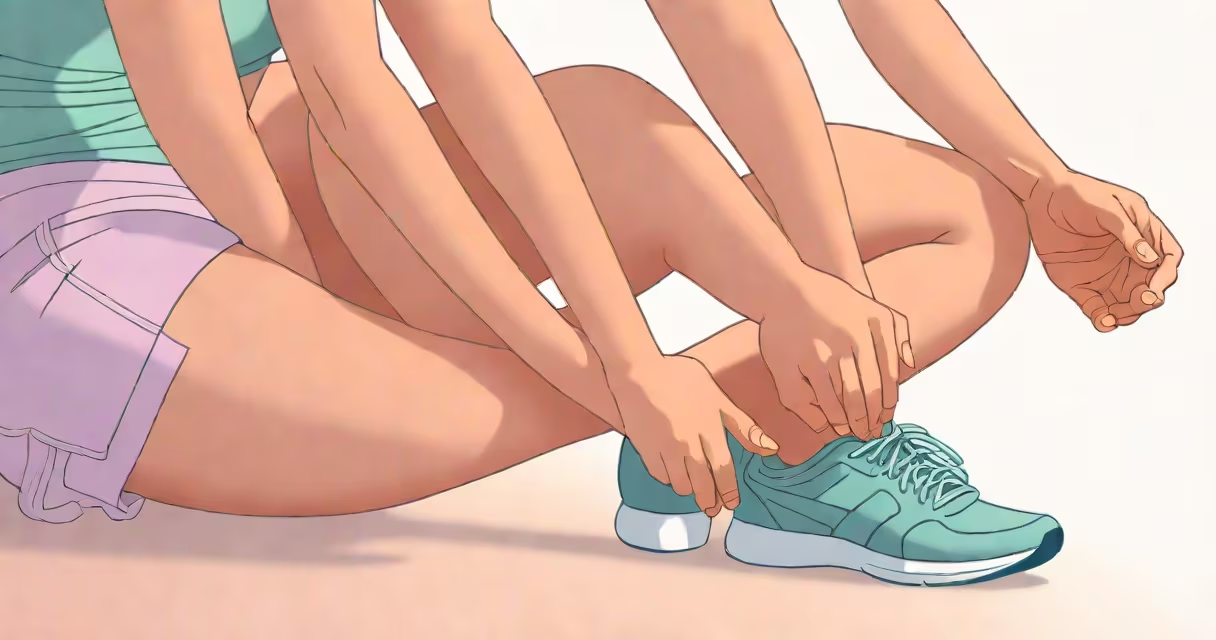
Sore and tight hamstrings refer to discomfort and stiffness in the group of muscles running along the back of the thigh, often caused by overuse, inadequate warm-up, or muscle imbalances. These muscles control knee flexion and hip extension, making them critical during walking, running, and jumping.
When strained or overstretched, they develop localized pain, reduced range of motion, and a persistent tightness that may worsen with activity. This condition affects athletes and non-athletes alike, especially those who sit for long periods or engage in sudden bursts of movement.
According to the American Council on Exercise (ACE), hamstring injuries account for 15-20% of all athletic muscle strains, with most occurring during sprinting or sudden directional changes. The injury typically presents as a dull ache that sharpens with movement, particularly when bending forward or lunging.
Hamstring strain occurs when muscle fibers tear under excessive load. A grade 1 strain involves minor tearing and mild pain, while a grade 3 strain results in a complete rupture requiring surgical repair. Most cases fall between grades 1 and 2, with recovery taking 2-6 weeks depending on severity.
Chronic tightness arises from repetitive stress or prolonged sitting. When seated, the hips remain flexed, shortening the hamstrings. Over time, this leads to reduced elasticity and increased resting tension. A 2021 study in the Journal of Sports Physical Therapy found that individuals who sit more than 8 hours daily have a 34% higher risk of developing hamstring tightness compared to those who move regularly.
Common triggers include sudden sprints, improper warm-ups, poor running form, and lack of changing stretching. For example, a runner who skips a proper cooldown may experience delayed-onset muscle soreness (DOMS) in the hamstrings within 24-72 hours after a long run.
Hamstring issues fall into two categories: acute injuries and chronic tightness. Acute injuries involve sudden trauma, while chronic tightness stems from ongoing mechanical stress.
| Type | Onset | Pain Level | Recovery Time | Common Causes |
|---|---|---|---|---|
| Grade 1 Strain | Sudden, during activity | Mild to moderate | 1-2 weeks | Quick acceleration, jumping |
| Grade 2 Strain | Acute, with audible pop | Sharp, severe | 3-6 weeks | Overstretching, heavy lifting |
| Chronic Tightness | Gradual, over days/weeks | Dull, persistent | 2-4 weeks with treatment | Prolonged sitting, poor posture |
One key distinction often missed is that tightness doesn't always mean injury. A tight hamstring can exist without structural damage-this is often due to neural sensitivity or altered motor control, not muscle shortening. Research from the University of Queensland shows that up to 60% of people reporting "tight hamstrings" have normal muscle length on ultrasound imaging, suggesting the sensation is neurological rather than physical.
Many assume that stretching alone resolves tight hamstrings. While static stretching helps temporarily, it doesn't address underlying causes like weak glutes or poor hip mobility. Over-reliance on stretching can even increase injury risk by reducing neuromuscular control.
Another misconception is that soreness equals progress. Delayed onset muscle soreness (DOMS) is normal after intense training, but persistent soreness beyond 72 hours indicates tissue breakdown or inflammation. Ignoring it increases the chance of a larger strain.
I once observed a client who trained five days a week, stretching her hamstrings daily. She reported constant tightness and occasional sharp pain. After a physical assessment, we discovered she had weak glute medius muscles, forcing her hamstrings to overwork during squats and deadlifts. Strengthening her glutes reduced her hamstring strain by 80% within four weeks-without adding more stretching.
Self-assessment begins with the straight leg raise test. Lie flat, lift one leg straight while keeping the other bent. If you feel pulling or pain in the back of the thigh above the knee, it's likely a hamstring issue. Pain below the knee suggests a different problem, such as sciatica or calf strain.
Treatment depends on severity. For mild soreness, apply ice for 15 minutes every 2-3 hours during the first 48 hours. Use heat after that to promote blood flow. Perform gentle changing stretches like leg swings and walking lunges, avoiding bouncing or overreaching.
For persistent tightness, incorporate eccentric strengthening. Stand on a step, lower your heels slowly, then rise on both feet. Repeat 3 sets of 10 reps. This builds resilience without high impact. A 2020 randomized trial published in the British Journal of Sports Medicine showed that participants using eccentric loading had a 45% lower recurrence rate of hamstring injury over 12 months.
If pain persists beyond a week or worsens, consult a physical therapist. Imaging like MRI is rarely needed unless there's suspicion of a complete tear or avulsion fracture.
Prevent recurrence by integrating changing warm-ups before activity. Examples: high knees, butt kicks, leg swings. These prepare the nervous system and increase blood flow to the muscles.
Address posture and sitting habits. Set a timer to stand and walk every 30 minutes. Use a standing desk if possible. Even brief movement resets muscle tone and reduces tension buildup.
Strengthen supporting muscles. Focus on glutes, core, and posterior chain stability. Exercises like bridges, single-leg deadlifts, and planks improve neuromuscular coordination and reduce hamstring dependency.
One non-obvious fact: hydration affects muscle function. Dehydration reduces cellular fluid volume, increasing the risk of cramping and stiffness. The National Academy of Sports Medicine recommends drinking 500 mL of water 2 hours before exercise and 150-250 mL every 15 minutes during prolonged activity.
For ongoing management, track symptoms using a simple log. Note when pain appears, what activity triggered it, and how long it lasts. This data helps distinguish between normal soreness and early signs of injury.
Understanding sore and tight hamstrings isn't about eliminating discomfort-it's about recognizing signals and responding correctly. Addressing root causes like strength imbalances and movement patterns prevents long-term setbacks.