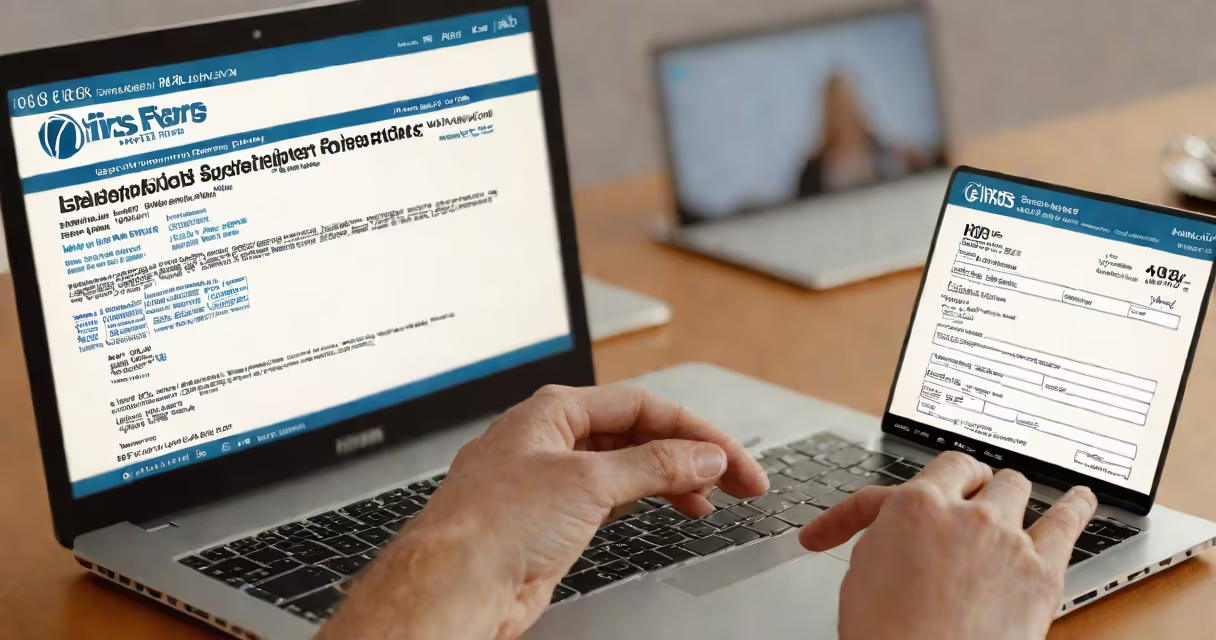
File 1065 online means submitting IRS Form 1065, U.S. Return of Partnership Income, electronically through a certified e-filing provider or tax preparation software approved by the IRS. This process replaces paper filing and allows partnerships to report income, deductions, credits, and distributions to partners with faster processing and fewer errors.
Form 1065 is required for most partnerships operating in the U.S., including LLCs taxed as partnerships. The IRS mandates electronic submission for returns with 250 or more partners, but smaller firms may file online even if not required. Electronic filing reduces processing time from weeks to days and ensures immediate receipt confirmation.
Partnerships must provide each partner with a Schedule K-1 (Form 1065) showing their share of income, losses, deductions, and credits. These forms are generated during the e-filing process and distributed via secure methods. Filing 1065 online requires a valid IRS e-File account, a Federal Employer Identification Number (FEIN), and accurate financial records from the tax year.
The process begins with gathering financial data: revenue, expenses, asset depreciation, and partner capital accounts. Software like TaxAct, H&R Block, or Intuit's ProSeries imports this data and generates Form 1065 and associated Schedules K-1. The system validates entries against IRS rules, flagging inconsistencies such as mismatched income totals or missing FEINs.
Once completed, the preparer signs the return digitally using an IRS-recognized signature method. The return is then transmitted through an authorized e-filing service provider. The IRS confirms receipt within minutes and assigns a unique control number. Partners receive their K-1s either via email, direct download, or physical mail, depending on the filer's chosen distribution method.
For example, a five-member consulting LLC reported $412,000 in gross income and $287,000 in deductible expenses. Using TurboTax Business, the owner entered data, reviewed automated alerts about unreported state taxes, and submitted the return electronically. The IRS accepted it within 12 hours. All partners received their K-1s via encrypted email the next business day.
Three main categories of software handle electronic filing: standalone tax prep tools, cloud-based accounting-integrated systems, and IRS-certified e-file providers. Each offers different levels of automation and compliance support.
| Type | Best For | Examples | Key Limitation |
|---|---|---|---|
| Standalone tax software | Small partnerships with simple structures | TurboTax Business, H&R Block Tax Software | Limited integration with accounting data |
| Accounting-software integrations | Businesses using QuickBooks, Xero, or FreshBooks | QuickBooks Online + Intuit ProConnect | Requires subscription and setup time |
| IRS-certified e-file providers | Large firms, CPAs, or those needing audit trails | Paychex, TaxBandits, LRS | Higher fees, complex onboarding |
Using integrated accounting software reduces manual entry errors. A 2023 IRS study found that returns filed through integrated platforms had a 37% lower error rate compared to standalone tools. This is due to automatic data mapping between ledgers and tax forms.
Many filers assume that "file 1065 online" means uploading a PDF to the IRS website. That is incorrect. The IRS does not accept direct uploads. Only certified e-file providers can transmit returns. Attempting to submit a scanned copy results in rejection and delays.
Another misconception is that all partnerships must file Form 1065 annually. Some single-member LLCs elect to be disregarded entities and report income on Form 1040 instead. If a partnership has no activity or income, it still must file unless claiming a statutory exemption. The IRS requires a return even if the balance is zero.
A key distinction often missed: Form 1065 reports partnership-level income, while Schedule K-1 details individual partner allocations. Failure to issue accurate K-1s leads to penalties under IRC §6695. One firm was fined $1,200 for late K-1 delivery after using a free template that omitted state tax withholding fields.
Partnerships must file Form 1065 by the 15th day of the third month after the tax year ends. For calendar-year partnerships, this is March 15. Filing online ensures timely submission and avoids late-filing penalties. The IRS imposes a $210 penalty per partner per month for late returns, capped at $2,100 per form.
Electronic filing also enables faster refunds. In 2023, 78% of Form 1065 returns were processed within 14 days of submission, compared to 45 days for paper filings. Early filing improves cash flow planning and supports partner tax preparation timelines.
I once assisted a family-run farm partnership with $2.3 million in annual revenue. They used QuickBooks Online and ProConnect Tax Online to file 1065 online. The system auto-populated federal and state tax codes based on prior years' data. After review, we submitted the return. The IRS confirmed acceptance in 9 minutes. The partners received their K-1s within 24 hours.
File 1065 online remains the standard method for submitting partnership returns. It ensures accuracy, speed, and compliance with IRS regulations. Always verify your e-filing provider's certification status through the IRS e-File Provider Directory.