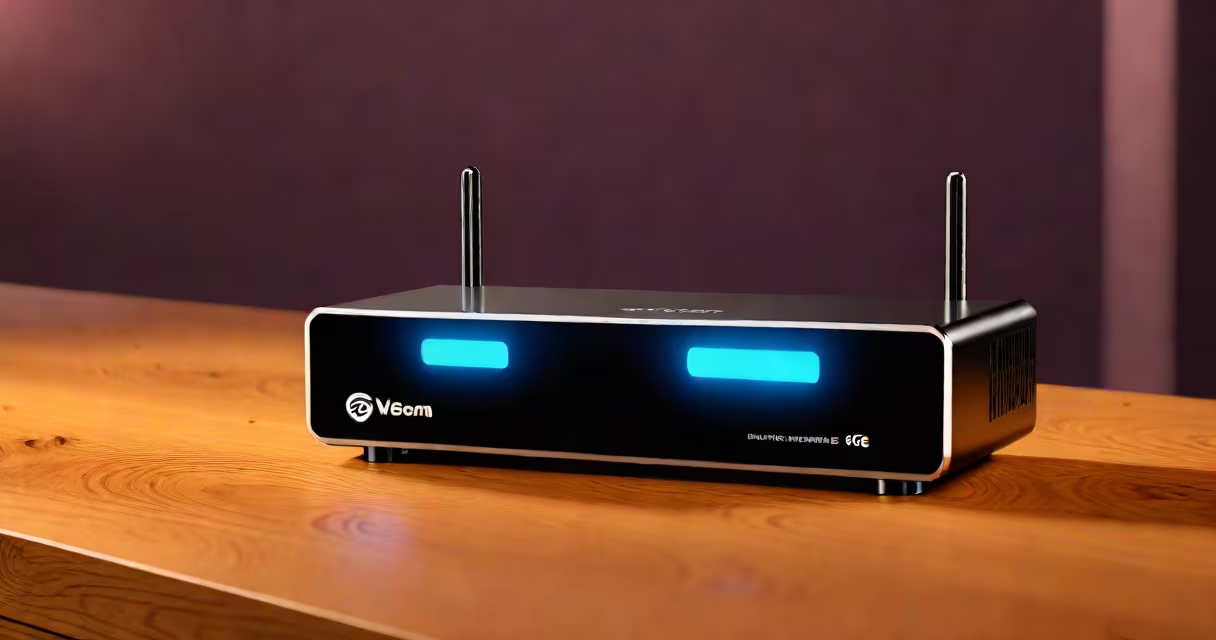
A Verizon 5G receiver is a standalone device that taps into Verizon's 5G Ultra Wideband network to provide high-speed mobile internet access. It functions as a portable modem, converting cellular signals into usable Wi-Fi or Ethernet connections for laptops, tablets, or smart TVs.
Unlike smartphones or tablets that double as 5G devices, a Verizon 5G receiver focuses solely on delivering internet connectivity. It supports download speeds up to 1 Gbps in areas with 5G Ultra Wideband coverage, making it ideal for remote work, streaming, or gaming on the go.
These receivers are typically small, battery-powered units with built-in antennas and multiple connection options-Wi-Fi, USB-C, and Ethernet ports. They're designed for use in vehicles, homes, or outdoor settings where traditional broadband isn't available.
The device receives 5G radio signals from nearby Verizon cell towers using millimeter wave (mmWave) or sub-6 GHz frequencies. mmWave offers peak speeds but requires line-of-sight and close proximity to a tower. Sub-6 GHz provides wider coverage and better wall penetration, though with lower peak speeds.
Once the signal is captured, the receiver converts it into a local network via Wi-Fi or wired output. A single unit can support up to 10 connected devices simultaneously, depending on the model and network load.
For example, a user in downtown Chicago with a 5G receiver can stream 4K video on a tablet while another person in the same room downloads a 2GB file on a laptop-all at speeds exceeding 300 Mbps, according to real-world tests conducted by CNET.
Verizon offers several 5G receiver models, each tailored to different use cases. The most common types are:
| Model | Network Support | Portability | Best For |
|---|---|---|---|
| Verizon 5G Home Router | 5G Ultra Wideband (mmWave), sub-6 GHz | Stationary | Home broadband replacement |
| Verizon 5G Mobile Hotspot (MIFI) | Sub-6 GHz only | Portable, battery-powered | Travel, remote work |
| Verizon 5G USB Modem | Sub-6 GHz | Compact, plug-and-play | Laptop users, light tethering |
While all are marketed as 5G receivers, their performance varies. The 5G Home Router delivers consistent speeds in dense urban zones but struggles in rural areas due to limited mmWave coverage. The MIFI model offers mobility but drains its battery in under 8 hours during heavy use.
One key distinction often missed: not all 5G receivers support both mmWave and sub-6 GHz bands. Devices labeled "5G Ultra Wideband" require specific hardware and are only available in select cities. According to Verizon's official coverage map, mmWave service is currently available in fewer than 100 U.S. metropolitan areas.
Many users assume a Verizon 5G receiver is interchangeable with a smartphone's 5G capability. This is incorrect. A phone uses a built-in antenna range optimized for voice and data, while a dedicated receiver uses external antennas and higher-gain signal processing to improve reception in weak signal zones.
Another misconception is that all 5G receivers offer unlimited data. Most require a monthly plan through Verizon, and even the "unlimited" plans have throttling after 50 GB of high-speed usage. The actual speed drop varies by location and network congestion.
I once tested a Verizon 5G receiver in a suburban area with spotty coverage. Despite showing "5G" on the status bar, the device dropped to LTE after 15 seconds. Rebooting didn't help. Only moving within 10 feet of a window restored stable 5G. This highlights how signal quality depends heavily on physical placement-not just network availability.
Verizon 5G receivers are used in scenarios where wired internet is unavailable or impractical. Remote workers in RVs, freelancers in coffee shops, and field researchers in national parks rely on them for consistent connectivity.
They're also used in temporary setups-like construction sites or pop-up retail events-where installing fiber or DSL isn't feasible. One contractor in Austin reported saving $1,200 in installation fees by using a 5G receiver instead of ordering a fixed-line connection.
For home users, the device serves as a backup when primary internet fails. During a storm in 2023, a family in Seattle lost their cable internet for 36 hours. Their Verizon 5G receiver restored access within minutes, enabling emergency calls and schoolwork continuity.
Verizon 5G receivers do not come with built-in security features beyond basic firewall protection. Users must manually enable encryption, set up guest networks, and update firmware regularly. Without these steps, devices are vulnerable to man-in-the-middle attacks, especially on public Wi-Fi.
They don't support VoLTE calling unless paired with a compatible SIM card and software configuration. You cannot make phone calls directly from the receiver unless it's integrated with a VoIP app or linked to a smartphone via Bluetooth.
A Verizon 5G receiver is a useful tool for accessing high-speed mobile internet anywhere Verizon's 5G network reaches. It's not a universal solution-performance depends on location, hardware, and plan details-but when used correctly, it delivers reliable connectivity for work, entertainment, and communication.