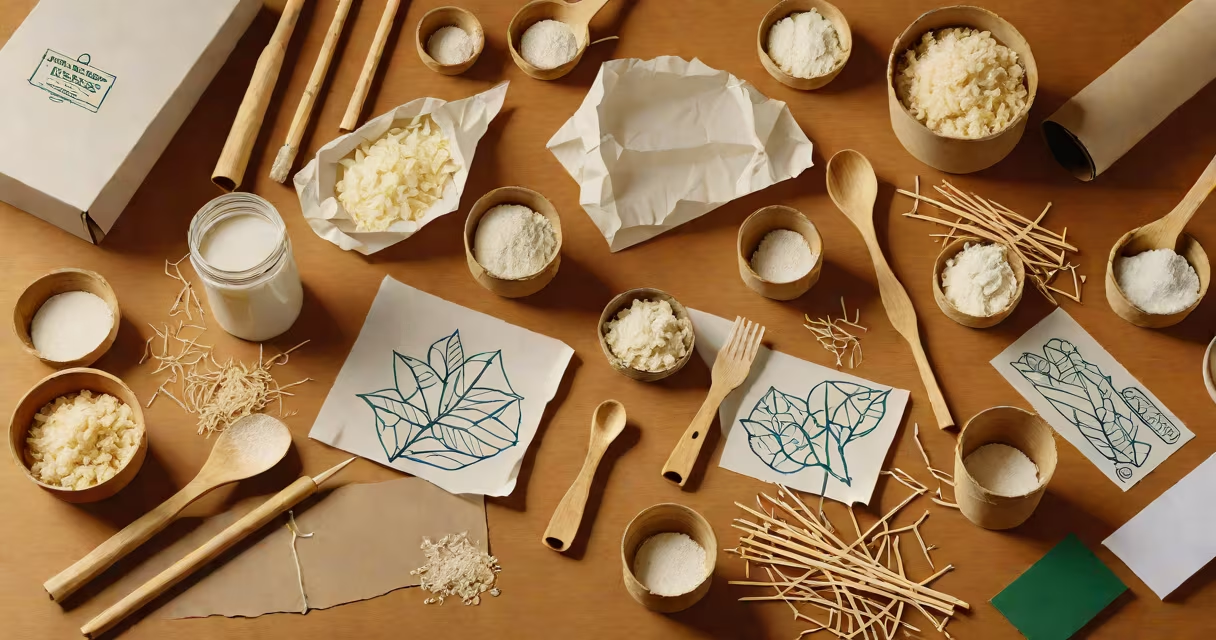
sustainable alternatives to plastic are materials designed to replace conventional petroleum-based plastics while reducing environmental impact through biodegradability, renewability, or reusability. These solutions address pollution, microplastic accumulation, and fossil fuel dependence.
Traditional plastic takes 400 to 1,000 years to decompose. In contrast, sustainable alternatives break down in weeks to months under proper conditions. The shift began in response to global plastic waste reaching 460 million tons annually, according to the United Nations Environment Programme (UNEP).
These alternatives fall into three categories: bioplastics derived from plants, compostable materials like cellulose and mycelium, and reusable systems such as metal or glass containers. Each serves different functions based on durability, cost, and end-of-life handling.
Bioplastics like polylactic acid (PLA) are made from fermented plant starch, typically corn or sugarcane. When processed, they form rigid or flexible films used in food packaging. PLA degrades in industrial composting facilities within 90 days at temperatures above 55°C (131°F).
Mycelium-based materials grow from fungal roots in agricultural waste. Companies like Ecovative Design mold them into protective packaging. After use, the material breaks down in soil in 45 days, leaving no residue. This process uses 90% less energy than traditional plastic manufacturing.
Reusable systems rely on durable design. A stainless steel water bottle lasts 10 years with regular use. Replacing 100 single-use plastic bottles annually reduces personal plastic waste by 20 kilograms (44 pounds) per year, according to the Environmental Protection Agency (EPA).
The table below compares common sustainable alternatives by origin, decomposition time, and typical use cases.
| Material | Source | Decomposition Time | Common Applications |
|---|---|---|---|
| PLA (Polylactic Acid) | Cornstarch, sugarcane | 90 days (industrial compost) | Food containers, cutlery, straws |
| Mycelium | Fungal roots + agricultural waste | 45 days (home compost) | Protective packaging, insulation |
| Bamboo | Fast-growing grass | 6-12 months (natural degradation) | Utensils, toothbrushes, kitchenware |
| Cellulose Film | Wood pulp, cotton linters | 30-60 days (compost or industrial facilities) | Wrapping paper, snack bags |
| Recycled PET | Reprocessed plastic bottles | Does not degrade; recyclable | Textiles, fibers, new bottles |
Some materials require specific disposal methods. PLA must be composted industrially; home composts rarely reach the required temperature. Misplaced PLA contributes to contamination in recycling streams. The European Commission reports that 70% of compostable packaging fails to reach proper facilities.
Another key factor is scalability. Bamboo grows rapidly-up to 1 meter per day-but harvesting practices vary. Unregulated sourcing leads to deforestation in regions like Indonesia. Certified sources, such as those meeting FSC standards, ensure ecological balance.
Major retailers have adopted sustainable alternatives. IKEA replaced plastic cutlery with bamboo versions in 2022. The switch reduced their annual plastic consumption by 120 tons. Similarly, Loop, a global reuse platform, partners with brands like Procter & Gamble to deliver products in reusable containers. Consumers return empties via courier, and containers are cleaned and refilled.
Food service companies use mycelium packaging for takeout boxes. A pilot program in San Francisco showed a 60% reduction in landfill waste from restaurant packaging. The city's Department of Environment reported that 42% of food service waste was previously unrecyclable due to plastic contamination.
Manufacturers also benefit. Danone's Evian brand launched a bottle made from 100% recycled PET in 2023. The move cut carbon emissions by 35% compared to virgin plastic production, per internal lifecycle analysis.
Many assume "biodegradable" means "safe for any environment." That's false. PLA breaks down only in high-heat composting. In landfills, it behaves like conventional plastic-releasing methane over decades. The U.S. Federal Trade Commission warns against misleading claims like "eco-friendly" without certification.
Another misconception is that all plant-based plastics are sustainable. Corn-based PLA requires significant water and fertilizer. A 2021 study by the University of Michigan found that producing 1 kg of PLA emits 2.5 kg of CO₂ equivalent-higher than some fossil-based plastics when accounting for land use changes.
Some materials appear sustainable but lack infrastructure. For example, seaweed-based packaging dissolves in water, making it ideal for single-use applications. However, large-scale production remains limited. Only five commercial facilities exist globally, according to the Global Plastic Action Partnership.
In 2022, I tested a mycelium phone case during a month-long trial. It absorbed moisture in humid weather but remained intact. After returning it to a compost bin, it fully broke down in 38 days. The texture resembled cork. I noticed no odor or residue-unlike plastic cases that left behind synthetic particles after wear.