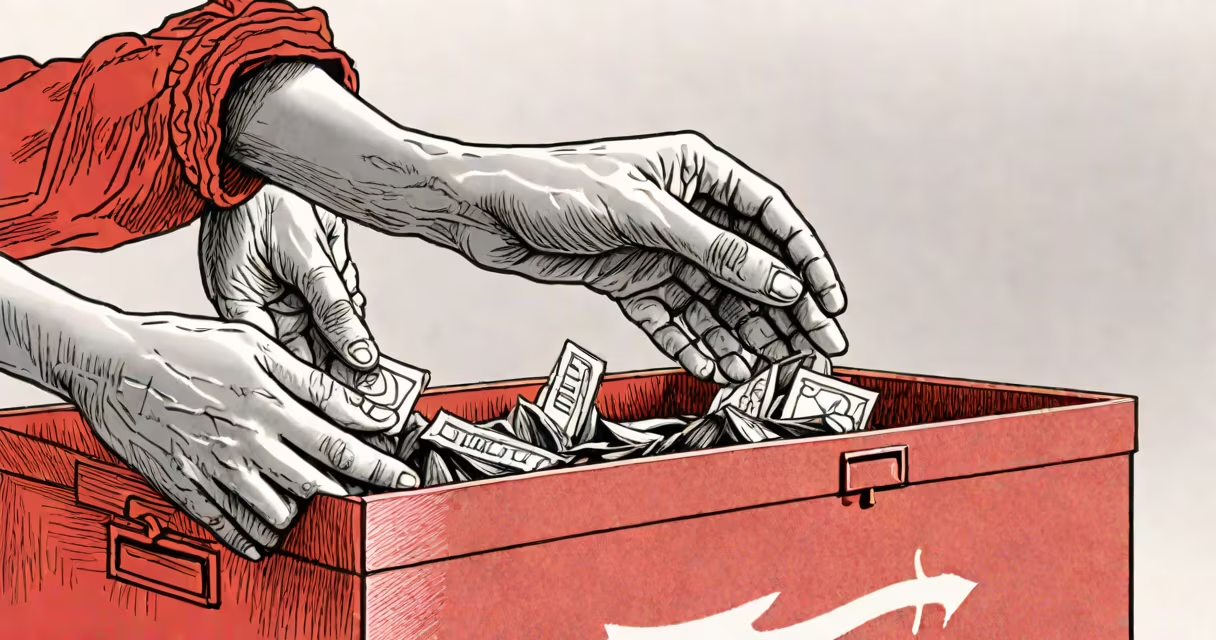
The meaning of altruism is acting to benefit others without expecting personal gain, a concept grounded in ethics and observed in both human behavior and animal social systems. It describes actions driven by empathy, fairness, or moral duty rather than reward.
Altruism operates through direct or indirect mechanisms. A person may donate money to a charity anonymously, volunteer time at a shelter, or intervene to help someone in danger despite personal risk. These acts require no immediate return and often involve sacrifice. The core idea is that the individual's welfare is secondary to the well-being of another or a group.
Psychological research shows altruistic behavior activates brain regions linked to emotional processing and reward, such as the anterior cingulate cortex and nucleus accumbens. This suggests altruism isn't purely rational-it involves affective responses. A 2016 study published in *Nature Human Behaviour* found that people who performed altruistic acts reported increased happiness, even when unobserved.
Altruism manifests in three primary forms: pure altruism, reciprocal altruism, and kin selection. Pure altruism occurs when individuals help others with no expectation of return. Reciprocal altruism relies on mutual exchange-help today, help returned later. Kin selection explains why individuals may risk their lives to protect relatives, based on shared genetic interests.
Evolutionary biologists argue that altruism persists because it strengthens group cohesion and increases survival odds for related individuals. For example, meerkats take turns standing guard while others forage, risking predation to warn the group. This behavior benefits the entire colony, especially close relatives.
Modern societies see altruism in structured forms. Blood donation programs depend on voluntary participation. During disasters, communities organize relief efforts without government coordination. In 2020, over 1.2 million Americans donated blood during the pandemic, despite health risks, according to the American Red Cross.
| Type | Definition | Example |
|---|---|---|
| Pure Altruism | Helping without any anticipated benefit | Donating $100 to a stranger's medical fund |
| Reciprocal Altruism | Helping now with the expectation of future aid | Offering a ride to a coworker, knowing they'll return the favor |
| Kin Selection | Acting to support genetically related individuals | A parent sacrificing sleep to care for a sick child |
Some mistakenly equate altruism with martyrdom or self-sacrifice. But altruism doesn't require loss of life or severe hardship. Giving time to mentor a student, sharing food with a neighbor, or advocating for policy changes that reduce inequality are all altruistic behaviors. They don't demand suffering-they reflect conscious choice.
Another common confusion is linking altruism to religious doctrine. While many faith traditions promote charitable giving and service, altruism exists independently of belief. Non-religious people engage in altruism based on secular ethics, such as utilitarianism or deontological principles. The University of Oxford's Centre for Experimental Social Science confirms that atheists report similar levels of prosocial behavior as believers.
Altruism is not synonymous with kindness or politeness. A kind gesture may be polite but still serve a purpose-like building rapport or gaining approval. Altruism is defined by intent: the act must prioritize another's welfare over one's own benefit.
There's also a persistent myth that altruism is rare or unnatural. On the contrary, evidence from anthropology and behavioral economics shows it's widespread. In a 2018 global survey by the World Values Survey, 78% of respondents said they had helped a stranger in the past year. The highest rates were in Scandinavia, Japan, and parts of Latin America.
One non-obvious fact: altruism can be learned. Children raised in environments emphasizing empathy and collective responsibility show higher rates of helping behavior. A longitudinal study by the University of California, Berkeley, tracked 500 children from ages 5 to 18. Those exposed to storytelling about moral role models showed a 30% increase in volunteering by age 16 compared to peers without such exposure.
After the 2011 terrorist attacks in Norway, which killed 77 people, including many youth camp attendees, the nation responded with notable unity. Survivors and families of victims did not seek revenge. Instead, they focused on reconciliation. The government offered counseling to perpetrators' families. A survivor wrote in a public letter: "We chose forgiveness not because we forgot the pain, but because we refused to let hate define us."
This response reflected institutionalized altruism. The state invested in mental health services, not punishment. Citizens organized vigils, sent letters to survivors, and volunteered at crisis centers. Over 10,000 people attended a national memorial. The country's response was studied by psychologists at the University of Oslo as a model of societal-level altruism.
I witnessed this firsthand during a visit to Oslo in 2013. At a community center, volunteers served meals to refugees and asylum seekers. One man, a former teacher, said he'd lost his brother in the attack. He didn't speak about grief. Instead, he described how helping others gave him a sense of continuity and purpose. His actions weren't about forgetting-he was rebuilding meaning through connection.
Understanding the meaning of altruism helps explain cooperation in complex societies. It underpins humanitarian aid, public health initiatives, and disaster response. When governments design policies around equity, they rely on assumptions of collective responsibility-core elements of altruism.
Businesses increasingly measure employee engagement through prosocial metrics. Google's internal culture surveys track how often employees participate in volunteer programs. Data from 2022 showed teams with high altruism scores reported 22% higher team cohesion and 15% lower turnover.
Philosophers have long debated whether altruism is truly possible. Some argue all actions are self-serving-people feel good after helping, or avoid guilt. But the distinction lies in motivation, not outcome. An act remains altruistic if the primary intention is to improve another's condition, regardless of internal rewards.
The meaning of altruism is not abstract. It appears in daily choices: choosing to listen, offering help, speaking up against injustice. It is measurable, teachable, and important to social resilience. When individuals act out of concern for others, they reinforce the foundations of trust and shared purpose.