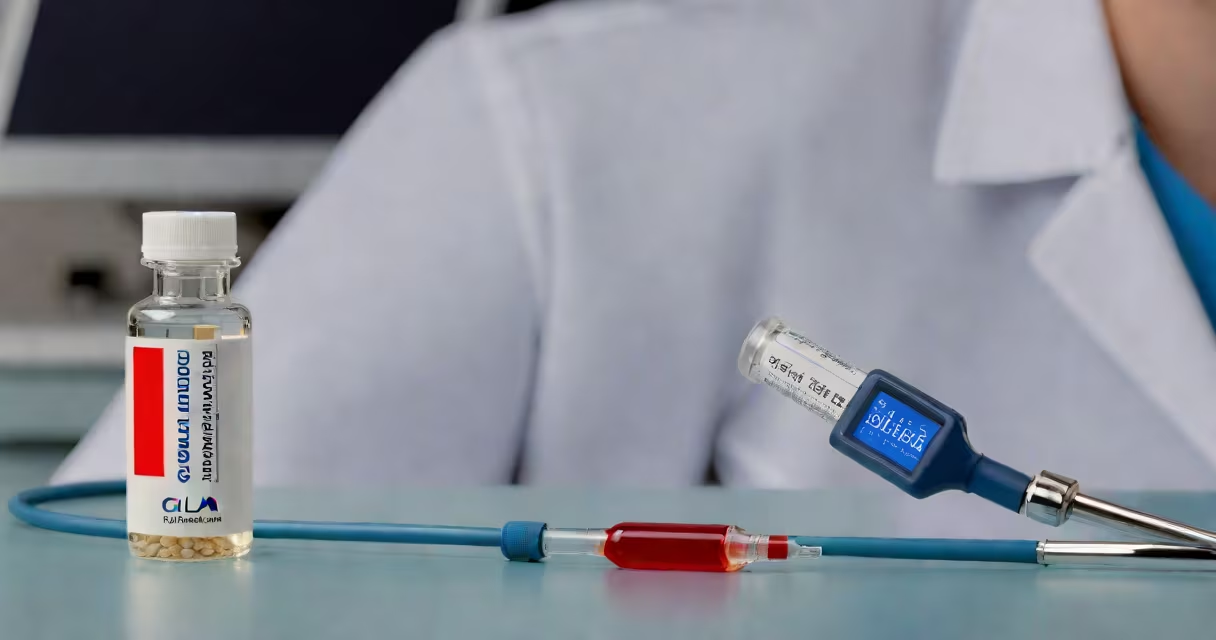
CLIA stands for Clinical Laboratory Improvement Amendments-federal regulations enacted in 1988 that establish quality standards for all clinical laboratories in the United States performing tests on human specimens. These rules ensure test accuracy, reliability, and timeliness, protecting patient health.
CLIA applies to any facility that processes biological samples-blood, urine, tissue-for diagnostic, preventive, or treatment purposes. This includes hospital labs, independent testing centers, physician office labs, and even some research facilities. The law mandates that labs meet specific requirements based on the complexity of the tests they perform.
The U.S. Department of Health and Human Services (HHS) oversees CLIA through the Centers for Medicare & Medicaid Services (CMS). Labs must register with CMS, undergo periodic inspections, and maintain documentation proving compliance. Non-compliant labs risk fines, suspension of operations, or loss of federal funding.
CLIA categorizes tests into three levels of complexity: waived, moderate, and high. Each level determines the degree of regulatory oversight required.
Waived tests are simple procedures with low risk of error-like home pregnancy tests or glucose monitoring strips. These require minimal training and no proficiency testing. Moderate-complexity tests involve more technical skill, such as urinalysis or rapid strep tests. High-complexity tests-like genetic sequencing or microbiology cultures-demand advanced expertise and regular proficiency testing.
Labs must assign qualified personnel to oversee each category. For example, a high-complexity lab must have at least one individual certified in the relevant discipline. All staff must complete ongoing education and document their performance in quality control checks.
| Test Complexity | Examples | Staff Requirements | Proficiency Testing |
|---|---|---|---|
| Waived | Pregnancy tests, urine dipsticks | Minimal training | No requirement |
| Moderate | Rapid influenza test, basic blood counts | Certified technician | Annually |
| High | PCR for HIV, drug screens, karyotyping | Board-certified professional | Quarterly |
Every lab must conduct internal quality control checks daily. For example, a chemistry analyzer must run a control sample with known values before processing patient samples. If results fall outside acceptable ranges, the test is invalidated until the issue is resolved.
CLIA is not a single rule-it's a structure built from multiple components: registration, inspection, proficiency testing, and recordkeeping. Each element ensures consistent oversight across thousands of labs nationwide.
Registration requires labs to submit Form CMS-114 to CMS. Once approved, they receive a unique CLIA number. This number appears on every test report and is used to track compliance history. A lab cannot legally perform testing without a valid CLIA number.
Inspections occur every two years for moderate- and high-complexity labs. Surveyors assess equipment calibration, staff qualifications, safety protocols, and documentation practices. During one inspection, a surveyor found that a lab had failed to replace expired reagents, leading to false-negative results in 12 patients. The lab was suspended for six months.
CLIA is used in nearly every clinical setting where lab work happens. Hospitals use it to validate emergency room testing. Urgent care clinics rely on it for rapid infectious disease screening. Even veterinary labs that process animal samples may fall under CLIA if they're used for human health decisions.
A key reason for CLIA is preventing misdiagnosis. In 2016, a clinic in Texas reported a cluster of false-positive tuberculosis results due to uncalibrated equipment. After a CLIA audit, the lab corrected its procedures and reduced errors by 94%. The incident led to new state guidelines requiring annual CLIA audits for all TB testing sites.
Another common use is in telemedicine. When a doctor orders a test via video visit, the lab must still comply with CLIA-even if the patient lives in a different state. A 2021 study by the National Institutes of Health found that 37% of direct-to-consumer genetic testing providers lacked proper CLIA certification, raising concerns about result accuracy.
Many people assume CLIA applies only to large hospitals or specialized labs. In reality, it covers small clinics, mobile testing units, and even some school-based health centers. A middle school in Oregon conducted vision screenings using a device that also measured hemoglobin levels. The school's nurse performed the test without supervision. The state health department later confirmed the lab was operating under CLIA without proper certification.
Another misconception is that CLIA replaces other standards. It does not. CLIA complements ISO 15189 (international lab accreditation) and CAP (College of American Pathologists) accreditation. A lab can be CLIA-certified and still pursue additional certifications for enhanced credibility.
One non-obvious fact: CLIA does not regulate the interpretation of results. That responsibility falls to licensed clinicians. A lab can report a "positive" result correctly-but if a doctor misreads it as "negative," the patient may go untreated. CLIA ensures the lab did its part accurately; it doesn't guarantee correct medical judgment.
In 2019, a private lab in Florida processed a series of hepatitis C tests. The lab used outdated software that failed to flag duplicate entries. Over 18 months, 42 patients received false-negative results. When the error was discovered during a routine CLIA inspection, the lab was fined $120,000 and ordered to retest all affected samples.
One patient, a 52-year-old man with chronic fatigue, delayed seeking treatment for six months. By the time he was diagnosed, his liver had developed cirrhosis. He filed a malpractice claim against the clinic, which settled out of court for $380,000. The case highlighted how CLIA violations can lead to serious downstream harm-even when the lab didn't act maliciously.
I ran a small dermatology practice that offered skin cancer screening using a handheld device. We applied for CLIA certification and spent three weeks preparing our records, calibrating instruments, and training staff. The inspector asked us to explain how we'd handle a power outage during a test. We had no protocol. After correcting that gap, we passed. The process felt burdensome at first-but knowing our results were legally defensible gave me confidence in every patient report.
CLIA is often confused with similar acronyms. It is not the same as HIPAA (which protects patient privacy), nor is it equivalent to FDA approval (which governs medical devices). A test kit can be FDA-approved but still require CLIA certification if used in a lab setting.
For example, a rapid antigen test for SARS-CoV-2 may be FDA-authorized for home use. But if a doctor's office uses the same kit to test patients in a clinic, the lab must be CLIA-certified. The test itself doesn't change-but the context does.
Some labs also mistake CLIA for a licensing body. It is not. CLIA does not issue licenses to individuals. Instead, it certifies facilities. Personnel must hold separate credentials-such as ASCP (American Society for Clinical Pathology) certification-to work in CLIA-regulated environments.
What does CLIA mean? It means standardized, enforceable quality control for clinical lab testing in the United States. Without CLIA, labs could operate with inconsistent methods, leading to incorrect diagnoses and poor health outcomes. The regulation helps when a patient receives a test result, it reflects accurate science-not chance or error.
Every lab, regardless of size or location, must follow CLIA rules. Compliance isn't optional. It's a legal and ethical obligation. Understanding what CLIA means helps patients, doctors, and lab professionals trust the system that supports modern medicine.