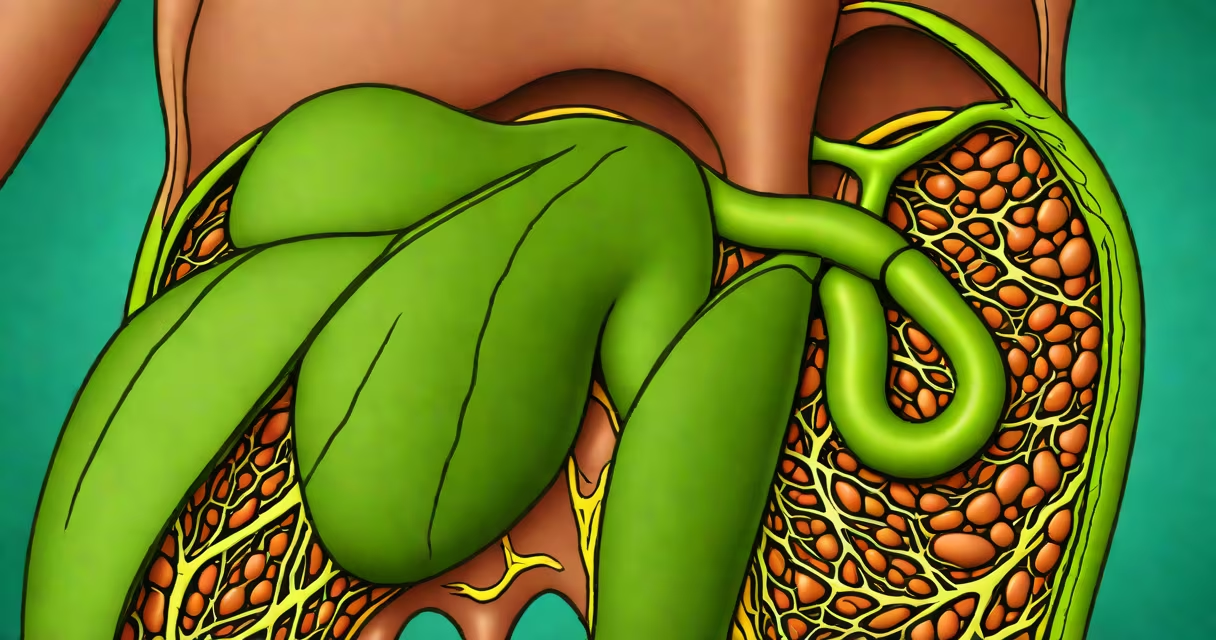
The gallbladder is a small, pear-shaped organ located under the liver that stores and concentrates bile produced by the liver. It plays a key role in fat digestion by releasing bile into the small intestine during meals.
Bile is a greenish fluid made by the liver that helps break down fats. The gallbladder collects this bile and concentrates it by removing water. When you eat a meal high in fat, the gallbladder contracts and sends bile through the common bile duct into the duodenum-the first part of the small intestine.
Without the gallbladder, bile flows continuously from the liver into the intestines. This reduces the efficiency of fat digestion, especially after large or fatty meals. Some people live normally without a gallbladder after surgical removal, but they may experience more frequent bowel movements or bloating.
The gallbladder operates through a series of coordinated muscle contractions. After eating, hormones like cholecystokinin (CCK) signal the gallbladder to contract and release stored bile. This process typically occurs within 15 to 30 minutes after food enters the stomach.
Bile contains cholesterol, bilirubin, and bile salts. When bile becomes too concentrated, solid particles can form-these are called gallstones. Gallstones can block the bile ducts, leading to severe pain known as biliary colic. About 10-15% of adults in the U.S. develop gallstones, according to the National Institute of Diabetes and Digestive and Kidney Diseases (NIDDK).
A real-world example: A 45-year-old woman experiences sharp pain in her upper right abdomen after eating a steak dinner. Imaging reveals a 1.2 cm gallstone blocking the cystic duct. She undergoes laparoscopic cholecystectomy-the standard procedure to remove the gallbladder-and recovers within two weeks.
The gallbladder wall consists of three layers: mucosa, muscularis, and serosa. The mucosa contains epithelial cells that absorb water and concentrate bile. The muscularis layer contains smooth muscle fibers that contract to expel bile.
It measures about 7-10 cm long and 3-4 cm wide in adults. Its capacity is roughly 30-50 mL-about the size of a small egg. The organ sits in a depression on the underside of the liver's right lobe, anchored by connective tissue.
Despite its small size, the gallbladder performs a critical function. It ensures bile is available in concentrated form when needed, rather than being released in a constant trickle.
Many people assume the gallbladder produces bile. That is incorrect. The liver produces bile continuously. The gallbladder only stores and concentrates it. Confusing the two leads to misunderstandings about liver disease versus gallbladder disease.
Another misconception is that people without a gallbladder cannot digest fat. While fat digestion becomes less efficient, the body adapts. Bile still flows from the liver into the small intestine, though without the surge that the gallbladder once provided.
There's also confusion around gallstones. Not all gallstones cause symptoms. Up to 80% of people with gallstones remain asymptomatic, according to the American Gastroenterological Association (AGA). These are often discovered incidentally during imaging for unrelated issues.
Conditions affecting the gallbladder fall into several categories based on cause and presentation:
| Type | Primary Cause | Typical Symptoms | Prevalence |
|---|---|---|---|
| Gallstones | Cholesterol or pigment precipitation in bile | Severe right upper quadrant pain, nausea, bloating | Approx. 10-15% of U.S. adults |
| Acute cholecystitis | Blocked cystic duct due to stones | Constant pain, fever, elevated white blood cell count | Occurs in ~1% of gallstone cases annually |
| Chronic cholecystitis | Prolonged inflammation from repeated episodes | Mild intermittent pain, indigestion | Develops in ~30% of symptomatic gallstone patients |
| Gallbladder cancer | Rare; linked to long-standing stones and chronic inflammation | Often asymptomatic until advanced stages | Less than 1 in 100,000 people annually |
One non-obvious fact: The gallbladder can become inflamed even without gallstones. This condition, called acalculous cholecystitis, affects about 10% of hospitalized patients with severe illness. It results from poor blood flow to the gallbladder, not stone formation.
Surgical removal of the gallbladder-cholecystectomy-is one of the most common abdominal procedures in the U.S., with over 750,000 performed annually. Most are done laparoscopically using four small incisions.
I once observed a patient who had their gallbladder removed after years of recurrent pain. Post-surgery, they reported improved energy and fewer digestive flare-ups. However, they also noted increased gas and loose stools after fatty meals-common side effects of living without a gallbladder.
After surgery, bile flows directly from the liver into the small intestine. This continuous flow lacks the concentration and timing benefits of stored bile. As a result, fat absorption decreases slightly, and some individuals develop postcholecystectomy syndrome-a mix of ongoing abdominal pain, nausea, and diarrhea.
For those who've had their gallbladder removed, dietary adjustments help manage symptoms. Reducing intake of fried foods, high-fat meats, and rich desserts can minimize discomfort. Eating smaller, more frequent meals also supports digestion.
While the gallbladder is not essential for survival, it enhances digestive efficiency. People without it adapt well, but they must adjust habits to maintain comfort and nutrient absorption.