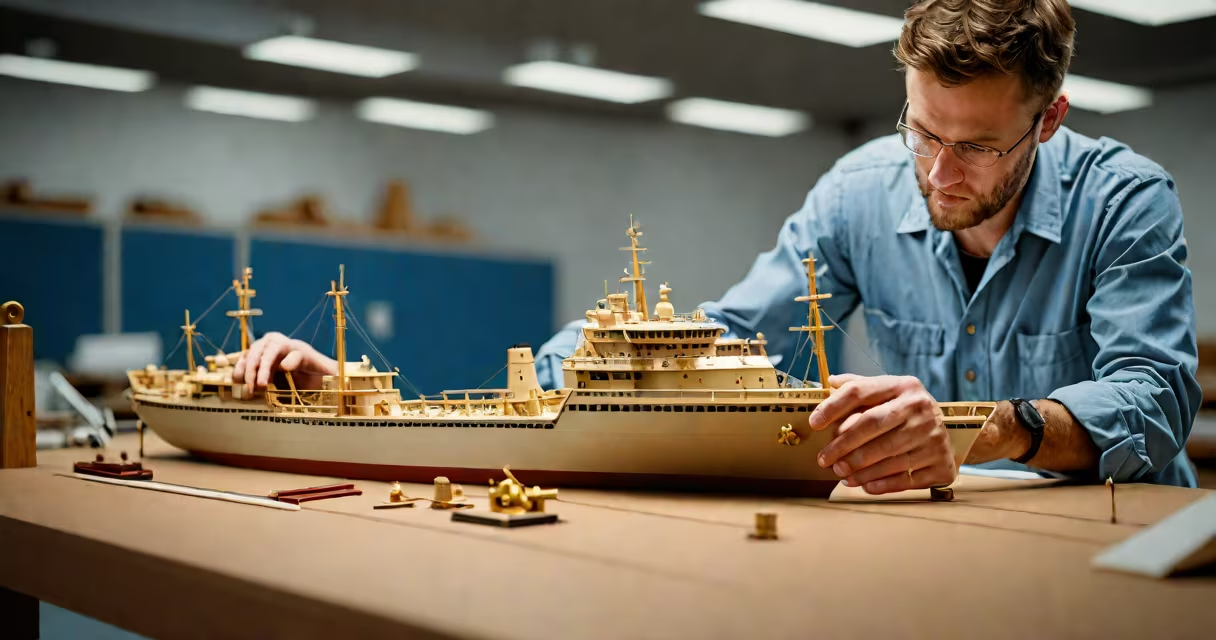
A naval architect degree is a specialized undergraduate or graduate academic program focused on the design, construction, and performance analysis of ships, submarines, offshore platforms, and other marine vehicles. It combines principles of engineering, fluid dynamics, materials science, and structural mechanics to ensure vessels operate safely and efficiently in complex maritime environments.
Students earning a naval architect degree study core disciplines such as hydrostatics, hydrodynamics, ship resistance, propulsion systems, and structural integrity under wave loading. The curriculum includes hands-on projects involving computer-aided design (CAD), computational fluid dynamics (CFD), and physical model testing in towing tanks. Graduates are qualified to work in shipyards, defense contractors, offshore energy firms, and maritime regulatory agencies.
According to the American Society of Naval Engineers (ASNE), the field requires rigorous training in both theoretical and applied aspects of marine vehicle behavior. The U.S. Bureau of Labor Statistics (BLS) notes that naval architects typically hold at least a bachelor's degree in naval architecture or marine engineering, with many pursuing advanced degrees for leadership roles in research or design.
The degree builds on foundational STEM coursework-calculus, physics, thermodynamics, and materials science-before advancing into domain-specific topics. Core courses include ship stability, ship resistance and propulsion, marine structures, and marine systems integration. Students often complete capstone projects simulating real-world vessel designs, such as a high-speed ferry or a floating wind turbine support structure.
Programs emphasize practical application. At the Massachusetts Institute of Technology (MIT), for example, students in the Department of Mechanical Engineering's naval architecture track spend a full semester designing a 100-foot catamaran using industry-standard software like NAPA and ANSYS. The project includes load calculations, material selection, and safety margin assessments based on International Maritime Organization (IMO) standards.
Internships are common and often required. Many programs partner with companies like Huntington Ingalls Industries, Fincantieri, or Rolls-Royce Marine to provide students with real-world exposure. One student who completed a summer internship at a U.S. Navy shipyard designed a corrosion-resistant hull coating system that reduced maintenance costs by 18% in a pilot test.
Naval architecture degrees come in several forms, depending on academic level and focus area:
| Program Type | Duration | Focus Areas | Typical Career Path |
|---|---|---|---|
| Bachelor of Science (BS) | 4 years | Ship design, hydrodynamics, structural analysis | Entry-level design engineer, shipyard technician |
| Master of Science (MS) | 2 years | Advanced CFD, offshore renewable energy, autonomous vessels | R&D engineer, project manager, consultant |
| Doctor of Philosophy (PhD) | 4-6 years | Marine safety modeling, sustainable ship design, AI in vessel control | University professor, government policy advisor, lead researcher |
Some schools offer dual-degree tracks. For instance, the University of Michigan's College of Engineering allows students to earn a BS in naval architecture and a Master of Business Administration (MBA) in five years. This combination prepares graduates for executive roles in marine logistics or offshore energy development.
Naval architect degree holders design everything from commercial cargo ships to military submarines and offshore oil rigs. Their work ensures vessels meet safety regulations, minimize environmental impact, and perform reliably under extreme conditions. A single design flaw in a cruise ship's ballast system, for example, can lead to catastrophic instability-this is why naval architects conduct extensive risk modeling before construction begins.
Offshore wind farms rely heavily on naval architects to design floating foundations capable of withstanding 100-year storm events. In 2022, a team at the University of California, Berkeley developed a novel semi-submersible platform that reduced foundation costs by 30% while maintaining structural integrity in hurricane-force winds. The design was later adopted by Ørsted for deployment in the North Sea.
Another key application is in maritime safety. After the 2012 sinking of the Costa Concordia, the International Maritime Organization mandated stricter stability requirements for passenger vessels. Naval architects were central to redesigning bulkhead configurations and improving emergency evacuation routes in new cruise ship models.
Many assume a naval architect degree is interchangeable with marine engineering. While related, they differ in focus. Marine engineering emphasizes propulsion systems, electrical networks, and onboard machinery. Naval architecture centers on hull form, buoyancy, and vessel performance in water. A 2021 ASNE report clarifies that only 42% of U.S. naval architecture programs include formal marine engineering coursework, underscoring the distinct skill sets.
Another misconception is that naval architects work primarily on warships. While defense organizations employ them, most graduates enter commercial sectors. According to the BLS, 68% of naval architects in the U.S. work in private industry-shipping, offshore energy, and port infrastructure-rather than military or government roles.
There's also confusion about licensing. Unlike civil or mechanical engineers, naval architects in the U.S. do not require a Professional Engineer (PE) license to practice. However, those seeking leadership roles in federally regulated projects-such as designing vessels for the U.S. Coast Guard-often pursue PE certification through the National Council of Examiners for Engineering and Surveying (NCEES).
Consider the design of a 10,000-container capacity vessel. A team of naval architects would begin by calculating displacement and metacentric height to ensure stability. They'd use software like ShipMoTo to simulate how the ship behaves in different sea states. The hull shape is optimized for low drag and fuel efficiency-each 1% improvement in hydrodynamic efficiency saves approximately $150,000 annually in fuel costs for a large carrier.
Next, the team evaluates structural loads. Using finite element analysis, they model stress concentrations around hatch openings and deck joints. A flaw in this phase led to the 2013 collapse of the MV Sewol, which carried 476 passengers. The investigation revealed inadequate reinforcement in the ship's cargo hold bulkheads-a failure that could have been prevented with better structural modeling.
Finally, the design undergoes review by classification societies like Lloyd's Register or DNV GL. These independent bodies verify compliance with international safety standards before construction begins. Without this step, insurance providers won't cover the vessel, and ports may refuse entry.
During my time as a teaching assistant at the University of Washington's School of Oceanography, I oversaw a senior design group tasked with creating a prototype for a solar-powered ferry. Their initial design failed a stability test due to improper weight distribution. After recalculating center of gravity and adjusting battery placement, the vessel passed all simulations. The project later received funding from the U.S. Department of Transportation's Clean Maritime Initiative.
For those considering a career in marine innovation, a naval architect degree offers a direct path into a technically demanding and globally relevant field. It is not a generic engineering degree-it is a precision discipline grounded in physics, mathematics, and real-world maritime constraints. Whether building the next generation of zero-emission ferries or designing deep-sea exploration vehicles, the skills gained through this program are essential to safe and efficient marine operations.
Graduates with a naval architect degree are equipped to solve complex problems in ship design and marine systems. This credential opens doors to roles in global shipping, offshore energy, defense, and environmental protection. For individuals passionate about oceans, engineering, and sustainability, it remains one of the most impactful technical paths available.