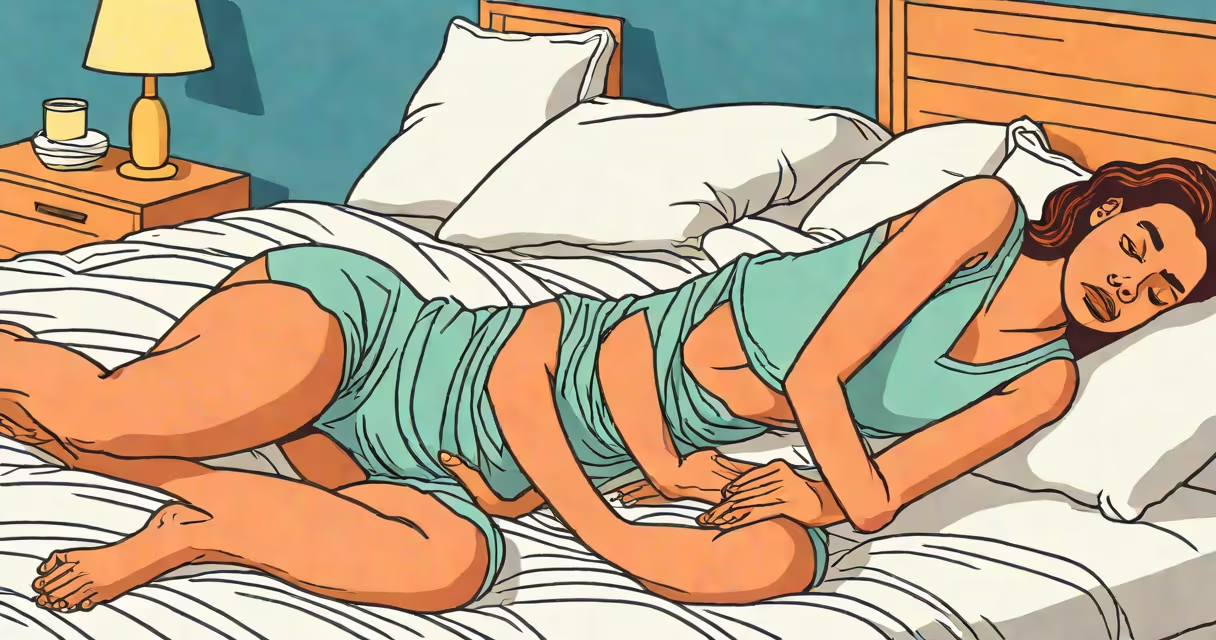
Period cramps usually begin 1 to 3 days before menstruation starts and peak within the first 24 to 48 hours of bleeding. They result from uterine contractions triggered by prostaglandins, hormone-like substances that cause the uterus to contract to expel its lining.
These contractions reduce blood flow to the uterus, leading to ischemia and pain. The intensity varies widely among individuals, with some experiencing mild discomfort and others reporting severe, debilitating pain. Cramps often last 2 to 5 days, tapering off as menstrual flow decreases.
Research from the American College of Obstetricians and Gynecologists (ACOG) confirms that primary dysmenorrhea-the most common form of menstrual pain-typically begins shortly after menarche (first period) and persists through reproductive years. It's not linked to underlying pelvic disease, unlike secondary dysmenorrhea, which develops later and may indicate conditions such as endometriosis or fibroids.
Cramps originate in the uterus, not the lower back or abdomen alone. The uterus contracts rhythmically due to elevated levels of prostaglandin F2-alpha. These compounds stimulate smooth muscle contraction, reducing oxygen supply to uterine tissue and triggering pain signals via spinal nerves.
Prostaglandin levels correlate directly with cramp severity. A 2021 study published in Reproductive Sciences found that women with severe menstrual pain had prostaglandin concentrations up to 50% higher than those with mild symptoms. This explains why NSAIDs like ibuprofen-prostaglandin inhibitors-are effective for many.
Not all pain is localized. Referred pain from the uterus can radiate to the lower back, thighs, and even the inner groin. This occurs because nerve pathways from the uterus share spinal segments with areas in the back and legs. Thus, back pain during periods is not coincidental-it's neurologically connected.
There are two main categories of menstrual pain: primary and secondary. Primary dysmenorrhea appears soon after menarche and recurs monthly. Secondary dysmenorrhea develops later-often after age 25-and worsens over time. It may signal an underlying condition.
| Type | Onset | Duration | Common Causes |
|---|---|---|---|
| Primary dysmenorrhea | Within 6 months of first period | 1-3 days per cycle | High prostaglandin levels, normal uterus |
| Secondary dysmenorrhea | After age 25, often gradual onset | Longer duration, worsening over time | Endometriosis, fibroids, adenomyosis |
For most people, cramps begin just before or at the start of bleeding. A 2020 survey by the National Women's Health Network found that 78% of respondents reported cramps starting within 24 hours of their period beginning. Only 12% experienced pain exclusively before bleeding began.
Many assume cramps always start before bleeding. That's false. Some people experience pain only during active flow. Others report cramps lasting beyond the period-up to 7 days in rare cases. This variation is normal and reflects individual physiology.
A key misunderstanding is equating back pain with cramps. While lower back pain frequently accompanies period cramps, it's not the same thing. Back pain during menstruation stems from referred pain, not direct uterine involvement. The Journal of Pain Research notes that 64% of women with severe menstrual pain report back discomfort, but imaging shows no structural spine issues.
Another misconception: cramps mean your cycle is "normal." Not necessarily. Severe pain disrupting daily life affects 10-15% of menstruating people, according to ACOG. When cramps interfere with school, work, or social activities, medical evaluation is advised. This doesn't mean you're broken-it means you may have treatable causes.
Consider Sarah, a 22-year-old college student. She tracks her cycle using a fertility app. Her period arrives on Day 28 of her cycle. Cramps begin on Day 26-two days before bleeding starts. They peak on Day 28 and subside by Day 30. She uses ibuprofen at onset and finds relief within 30 minutes.
Sarah's pattern fits typical primary dysmenorrhea. Prostaglandin release likely began around ovulation (Day 14), peaking as the corpus luteum degenerates and progesterone drops. This hormonal shift triggers uterine contractions. Her response to NSAIDs supports the prostaglandin theory.
She consulted a gynecologist after missing two classes due to pain. An ultrasound ruled out endometriosis. Her doctor recommended continuous ibuprofen use starting two days before expected bleeding. This reduced her cramp severity by 70% over three cycles.
Period cramps are common-but not inevitable. If pain prevents routine tasks, lasts longer than five days, or changes suddenly, see a healthcare provider. Sudden onset after years of mild pain may signal endometriosis, which affects about 10% of reproductive-age women.
Some people never get cramps. That's normal too. A 2019 study in Human Reproduction found that 15% of women reported no menstrual pain despite regular cycles. This lack of pain correlates with lower prostaglandin levels and higher endorphin activity. If you don't get cramps, you're not abnormal-you're biologically different.
Understanding when cramps occur helps predict and manage them. Most start before or at the beginning of bleeding. They're driven by prostaglandins, not emotional stress. And while back pain is common, it's not the source of the pain-it's a side effect of shared nerve pathways.