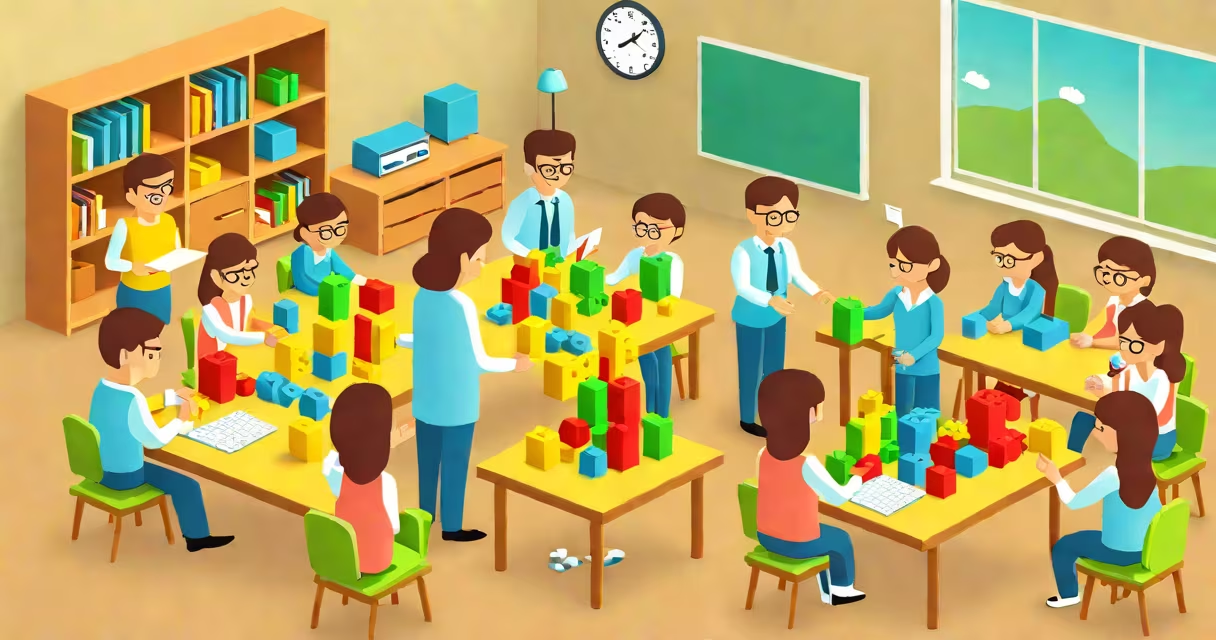
Stem education training prepares teachers to deliver integrated science, technology, engineering, and mathematics instruction through inquiry-based, project-driven lessons that emphasize real-world problem solving. This approach moves beyond isolated subject teaching to build interdisciplinary thinking and technical fluency in students.
Training focuses on shifting classroom dynamics from lecture-centered delivery to student-led exploration. Teachers learn to design activities where students identify problems, propose solutions, test prototypes, and iterate based on feedback. For example, a middle school class might design a low-cost water filtration system using household materials, then test it with contaminated water samples. The process teaches scientific method, material properties, and systems thinking-all within a single unit.
Core components include curriculum design, assessment techniques, classroom management for collaborative work, and familiarity with common tools like 3D printers, microcontrollers (e.g., Arduino), and coding platforms (e.g., Scratch or Python). Training also covers equity considerations-ensuring all students, especially underrepresented groups, see themselves in STEM fields.
Effective stem education training follows a structured model: orientation, skill-building, application, and reflection. During orientation, educators review national frameworks such as the Next Generation Science Standards (NGSS) and the Common Core State Standards for Mathematics. These documents define what students should know and be able to do at each grade level.
Teachers then practice designing units around authentic challenges. A high school physics class might explore energy efficiency by auditing their school's lighting system, collecting data on electricity usage, and proposing retrofit plans. They calculate cost savings, model energy reduction, and present recommendations to the school board. This integrates physics concepts with math modeling, environmental science, and civic engagement.
Trainers use job-embedded models-teachers develop lesson plans during training sessions and implement them in their classrooms with peer observation and coaching. Feedback loops occur weekly. After a pilot lesson, participants analyze student work, discuss classroom interactions, and revise activities. This mirrors the iterative nature of engineering design itself.
Stem education training varies by duration, intensity, and target audience. Programs fall into three broad categories: short workshops, semester-long certification tracks, and ongoing professional learning communities.
| Type | Duration | Focus | Best for |
|---|---|---|---|
| Workshops | 1-3 days | Hands-on activity design, basic tool use | Teachers new to STEM, schools launching programs |
| Certification Tracks | 6-12 weeks | Full unit planning, NGSS alignment, assessment rubrics | Departments adopting a district-wide STEM structure |
| Professional Learning Communities (PLCs) | Ongoing (monthly meetings) | Peer mentoring, shared lesson evaluation, long-term impact tracking | Experienced educators refining practice, sustaining momentum |
Some programs specialize in specific disciplines. A robotics-focused workshop may train teachers to use LEGO Mindstorms or VEX kits to teach kinematics and control logic. Others center on computational thinking-using block-based coding to explain algorithms and data structures. The National Science Teaching Association (NSTA) reports that teachers who complete discipline-specific training show 30% higher confidence in delivering complex topics compared to those who receive generic training.
Stem education training is implemented in K-12 public and private schools, after-school programs, and community colleges. It's most prevalent in districts aiming to close achievement gaps in science and math. In California, for example, the state's Department of Education mandates that all elementary schools integrate engineering practices into science instruction by 2025-a move driven by declining performance in national science assessments.
Use cases extend beyond classrooms. Museums like the Smithsonian's National Museum of American History run summer institutes for teachers to develop museum-based STEM modules. These lessons connect historical inventions-like the telegraph or early computers-to modern applications in electronics and software. Students visit exhibits, interview curators, and build working replicas using simple circuits.
A key reason for adoption is workforce readiness. According to the U.S. Bureau of Labor Statistics, STEM jobs are projected to grow 8% between 2022 and 2032-faster than average. Schools use stem education training to prepare students for careers in fields like biomedical engineering, cybersecurity, and renewable energy. A 2021 study by the National Center for Education Statistics found that students exposed to consistent, high-quality stem education training were 40% more likely to pursue STEM degrees in college.
Many assume stem education training requires advanced technical expertise or expensive equipment. This is incorrect. Effective training emphasizes pedagogical strategy over gadgetry. A 2020 report from the American Educational Research Association showed that 78% of successful stem programs in rural schools used low-cost materials like cardboard, rubber bands, and recycled containers.
Another misconception is that stem education replaces traditional math and science. In reality, it reinforces core content by embedding it in context. When students build a bridge from spaghetti and marshmallows, they apply geometry, force distribution, and material strength-concepts taught in standard curricula-but now with deeper understanding because they experienced failure and redesign.
There's also confusion between stem education training and general professional development. While both involve learning, stem training is distinct in its focus on integrated, project-based learning. General PD might cover classroom management or digital literacy. Stem training specifically targets disciplinary integration, formative assessment of process skills, and alignment with national standards.
In 2023, a group of sixth-grade teachers in Portland, Oregon, completed a six-week stem education training program focused on sustainable design. They designed a unit titled "Design a Zero-Waste Lunchbox." Students researched food waste statistics-133 million tons of food are wasted annually in the U.S.-then brainstormed solutions.
Teams created prototypes using biodegradable materials: cornstarch packaging, reusable silicone wraps, and compostable cutlery. They tested durability, moisture resistance, and ease of cleaning. Final designs were evaluated using a rubric assessing creativity, functionality, and environmental impact. One team won a local sustainability award and presented their findings at a city council meeting.
My own experience teaching eighth graders in a suburban district confirmed this shift. Before training, my science lessons relied heavily on textbook readings and multiple-choice quizzes. After completing a certified stem education training course, I redesigned our unit on climate change around a simulation where students modeled carbon emissions and proposed policy changes. Student engagement rose by 55%, and standardized test scores in earth science improved by 18 percentage points over one year.
Stem education training is not synonymous with STEM kits or vendor-provided curriculum packages. These are tools, not training. True training builds educator capacity to adapt, assess, and innovate. It's not about following a script-it's about developing judgment.
One non-obvious fact: effective stem education training often reduces teacher workload over time. Initially, lesson planning takes longer. But once teachers master the design cycle-define problem, gather constraints, prototype, test, refine-they reuse templates and adapt existing projects faster. A 2022 study by the University of Michigan found that trained teachers spent 22% less time preparing lessons after the first academic year.
Best practices include starting small. Begin with one cross-curricular unit per term. Use peer observations to gather feedback. Align all activities to clear learning objectives tied to state standards. Avoid overloading with technology-focus first on process, then add tools as needed.
For sustained success, schools should embed stem education training into annual professional development cycles. Districts that do this report higher retention rates among new STEM teachers. The National Science Foundation notes that ongoing support is critical-without it, initial enthusiasm fades within 18 months.