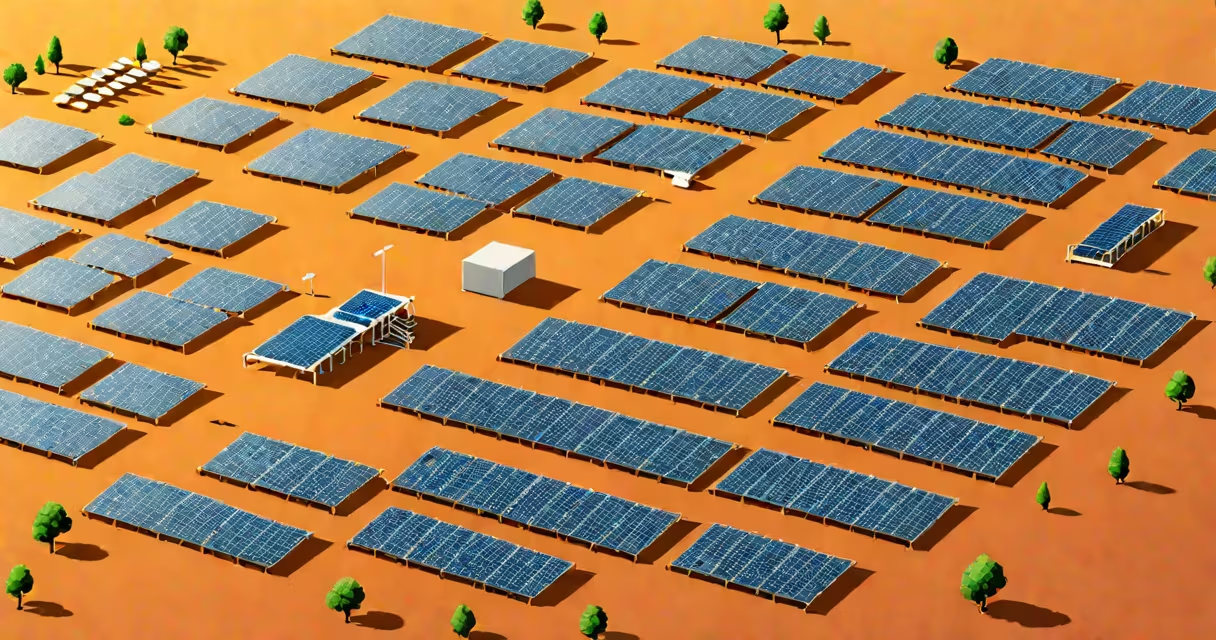
Solar energy is sustainable because it uses sunlight-a renewable resource that won't run out for billions of years-and generates electricity without releasing greenhouse gases or pollutants during operation. This makes it a core component of long-term environmental and energy security strategies.
Sunlight reaches Earth at a rate of about 173,000 terawatts continuously, far exceeding global energy demand. Solar panels convert this light into electricity through photovoltaic cells, which require no fuel and produce no emissions while operating. The International Renewable Energy Agency (IRENA) reports that solar PV systems emit 40-50 grams of CO₂ equivalent per kilowatt-hour over their lifecycle-far below fossil fuels' 400-1,000 g/kWh range.
Unlike coal or natural gas, solar energy doesn't deplete finite resources. Once installed, solar arrays can operate for 25-30 years with minimal maintenance. They don't consume water during electricity generation, unlike thermal power plants, which can use up to 1,000 liters per megawatt-hour. This reduces strain on freshwater supplies, especially critical in arid regions.
Photovoltaic (PV) cells in solar panels absorb photons from sunlight. When photons strike semiconductor materials like silicon, they dislodge electrons, creating a flow of direct current (DC). An inverter converts DC into alternating current (AC), which powers homes and businesses or feeds into the grid.
The sustainability of this process lies in its input: sunlight. The sun is expected to remain stable for another 5 billion years. Even on cloudy days, solar panels generate usable power-about 10-25% of peak output. In high-insolation areas like Arizona or southern Spain, annual solar yields exceed 1,800 kWh per installed kilowatt-peak (kWp).
A 5-kW residential system in California, for example, can produce approximately 8,000 kWh annually. Over 25 years, that's 200,000 kWh of clean electricity-equivalent to avoiding 140 metric tons of CO₂ emissions, according to the U.S. Environmental Protection Agency (EPA).
Solar panels are primarily made from silicon, glass, aluminum, and copper. While mining and manufacturing involve energy and emissions, the carbon payback period-the time it takes for a panel to offset its production footprint-is typically 1-2 years. After that, every kilowatt-hour generated is effectively carbon-free.
Recycling infrastructure is expanding. The European Union's Waste Electrical Equipment Directive mandates that by 2030, 85% of solar panel components must be recycled. Companies like First Solar have developed closed-loop processes that recover over 90% of materials from retired panels.
Some critics argue that rare metals like indium or tellurium in thin-film panels pose supply risks. However, most utility-scale installations now use crystalline silicon, which accounts for over 95% of the market. These panels rely on abundant elements and are increasingly manufactured using low-carbon electricity.
People often assume solar energy is inefficient or unreliable. Modern panels convert 20-23% of sunlight into electricity-up from 15% in 2010. Efficiency gains come from improved cell designs, such as PERC (Passivated Emitter and Rear Cell) and bifacial modules that capture light from both sides.
Another myth is that solar farms destroy ecosystems. A well-planned installation avoids sensitive habitats. In the Mojave Desert, some solar projects coexist with native species like the desert tortoise through habitat mitigation plans. The Bureau of Land Management requires environmental assessments before approving large-scale solar development.
There's also confusion between sustainability and efficiency. A system can be efficient (producing more energy per unit area) but not sustainable if it relies on mined materials with high ecological costs. Solar energy scores highly on both metrics. According to the National Renewable Energy Laboratory (NREL), solar PV has a net energy gain ratio of 10:1-meaning it produces ten times more energy over its lifetime than was used to build it.
There are three primary applications of solar energy, each with distinct sustainability characteristics:
| Type | How It Works | Sustainability Factor |
|---|---|---|
| Photovoltaic (PV) | Converts sunlight directly into electricity via semiconductors. | High. Low operational emissions, long lifespan, rapidly improving efficiency. |
| Solar Thermal (Concentrated Solar Power) | Uses mirrors to focus sunlight and heat fluid to drive turbines. | Moderate. High land use, water consumption for cooling in dry climates. |
| Solar Water Heating | Uses collectors to heat water for domestic or industrial use. | Very high. Simple design, minimal materials, near-zero emissions. |
Residential rooftop systems typically use PV. Large-scale solar plants may use either PV or concentrated solar power (CSP), depending on location and scale. CSP plants like the Ivanpah facility in California use thousands of heliostats to focus sunlight on a central tower, generating steam to turn turbines. While effective in sunny deserts, they require significant water for cleaning mirrors and cooling, reducing their sustainability in arid zones.
I once observed a community solar project in rural Iowa where residents pooled funds to install 200 kW of rooftop PV on a school building. The system reduced the school's electricity bill by 60% and provided surplus power to local farmers. The project ran on a 25-year lease agreement with a local cooperative, demonstrating how solar energy supports both environmental and economic sustainability at the local level.
Energy sustainability isn't just about emissions-it's about reliability. Fossil fuel prices fluctuate due to geopolitics and supply constraints. Solar energy, once installed, has nearly zero marginal cost. Sunlight is free and predictable on seasonal and daily cycles.
Nations aiming for net-zero targets by 2050 rely heavily on solar. The International Energy Agency (IEA) projects that solar will supply 29% of global electricity by 2050 under its Net Zero Scenario. This growth is driven by falling costs-solar PV module prices dropped 89% between 2010 and 2022, according to IRENA.
Understanding why solar energy is sustainable involves recognizing that it's not just a clean alternative-it's a resilient one. It reduces dependence on imported fuels, lowers air pollution, and supports decentralized energy access in remote communities. For example, off-grid solar systems now power over 1 billion people in sub-Saharan Africa who lack connection to national grids.