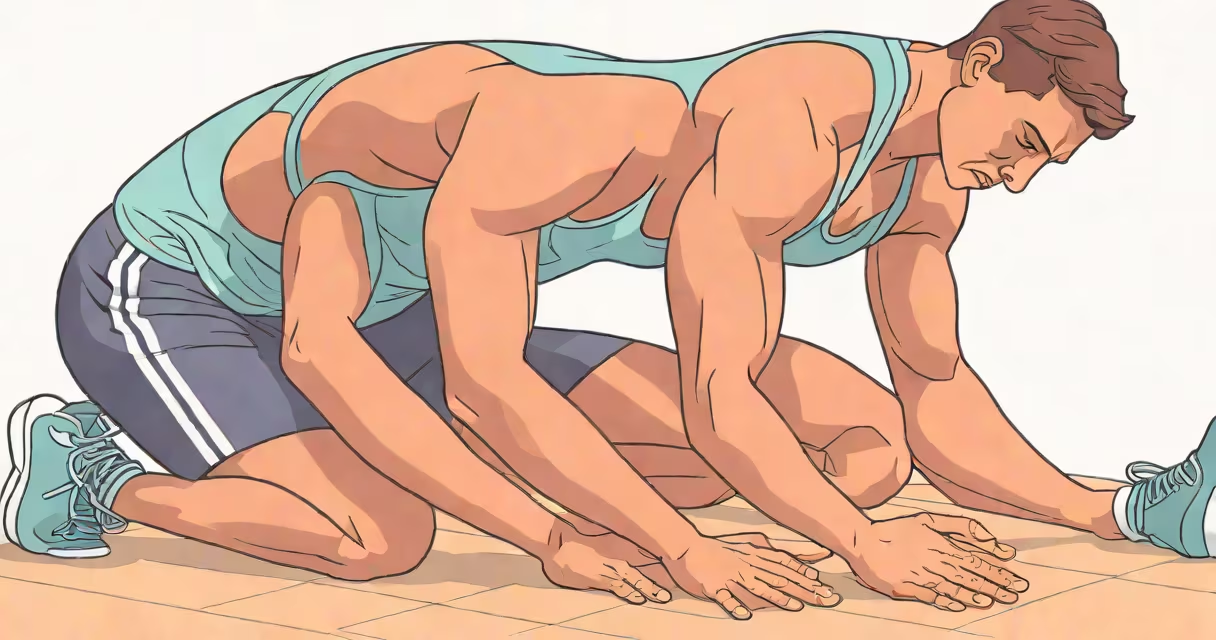
Muscle soreness after a workout, known as delayed onset muscle soreness (DOMS), results from microscopic tears in muscle fibers caused by unfamiliar or intense exercise, not from lactic acid accumulation. This pain typically peaks 24 to 72 hours after activity and resolves within five to seven days.
DOMS occurs when muscles endure eccentric contractions-lengthening under load-such as lowering weights or running downhill. These movements create tiny structural disruptions in muscle cells, triggering inflammation and sensitizing nerve endings. The body responds by sending immune cells to repair damaged tissue, which causes swelling and discomfort.
A 2017 study published in Frontiers in Physiology confirmed that DOMS correlates with muscle fiber microtears and inflammatory markers, not lactate levels. Lactate clears from muscles within minutes after exercise and has no role in prolonged soreness. Despite widespread belief, lactic acid does not cause muscle burn or lingering pain.
When you perform novel or high-intensity resistance training, muscle fibers sustain small tears. The body detects this damage through mechanical and chemical signals released by injured cells.
Immune cells, particularly neutrophils and macrophages, arrive at the site within six hours. They remove cellular debris and release signaling molecules like cytokines and prostaglandins. These substances sensitize nociceptors-pain-sensing nerves-leading to perceived soreness.
Soreness usually begins 6 to 12 hours after exercise, peaks between 24 and 72 hours, and fades as repair mechanisms activate. Satellite cells, which are muscle stem cells, begin regenerating damaged fibers around day three. By day five, most individuals report significant improvement.
Not all workouts produce equal soreness. The intensity, novelty, and type of movement determine the degree of muscle damage.
| Exercise Type | Common Movements | Soreness Level | Reason |
|---|---|---|---|
| Eccentric Training | Lowering dumbbells, downhill running, controlled squats | High | Lengthening under load causes more microtears than shortening |
| Unfamiliar Activity | First-time weightlifting, new sport, long-distance hiking | High | Novel stress overwhelms untrained muscles |
| High-Volume Sets | Multiple sets of 15+ reps, circuit training | Medium-High | Repetitive stress increases cumulative damage |
| Isometric Contractions | Planks, wall sits, static holds | Low-Medium | Limited movement reduces fiber disruption |
For example, performing 10 sets of 12-rep Romanian deadlifts with moderate weight induces more DOMS than doing 3 sets of 10 reps with lighter load. The volume and eccentric component increase mechanical stress beyond what trained muscles tolerate.
Many people assume soreness indicates progress. While mild DOMS can signal adaptation, excessive pain may indicate overtraining or injury. True recovery requires rest, not pushing through pain.
Another myth is that stretching prevents soreness. Research from the Journal of Strength and Conditioning Research shows that static stretching before or after exercise does not reduce DOMS. Stretching improves flexibility but doesn't alter the underlying muscle repair process.
Some believe that ice baths or massage eliminate soreness. Cold immersion may reduce inflammation temporarily, but it delays recovery by interfering with natural healing signals. A 2012 study in Medicine & Science in Sports & Exercise found that cold therapy reduced strength gains over time because it suppresses satellite cell activation.
Active recovery-light aerobic movement such as walking or cycling-improves blood flow to muscles, delivering oxygen and nutrients while removing waste products. A 20-minute walk the day after a hard leg session can reduce soreness by 20% compared to complete rest.
Nutrition plays a key role. Consuming 20-30 grams of protein within two hours post-workout supports muscle repair. A 2018 review in European Journal of Sport Science found that adequate protein intake reduced DOMS severity by enhancing regeneration rates.
I experienced this firsthand during a 12-week strength program. On week four, I increased squat volume from 3 sets to 5 sets of 10 reps. Soreness peaked on day two, lasting nearly 72 hours. After adding a 15-minute walk and 25g of whey protein post-session, soreness dropped by half within three days. Consistent recovery improved performance and reduced missed sessions.
Distinguishing DOMS from injury is critical. DOMS affects entire muscle groups uniformly and eases with movement. Sharp, localized pain, swelling, or joint instability suggests a strain or tear.
If pain persists beyond seven days or worsens with activity, consult a healthcare provider. A 2020 study in British Journal of Sports Medicine reported that persistent soreness correlated with higher risk of overuse injuries when ignored.
For those experiencing frequent or severe soreness, consider adjusting volume, increasing rest between sessions, or incorporating mobility work. Tracking workload using a journal or app helps identify patterns.
Understanding why muscles hurt after a workout clarifies that soreness is a sign of adaptation-not failure. It's not a measure of effort, but a biological response to stress. Accepting this allows better training decisions and sustainable progress.