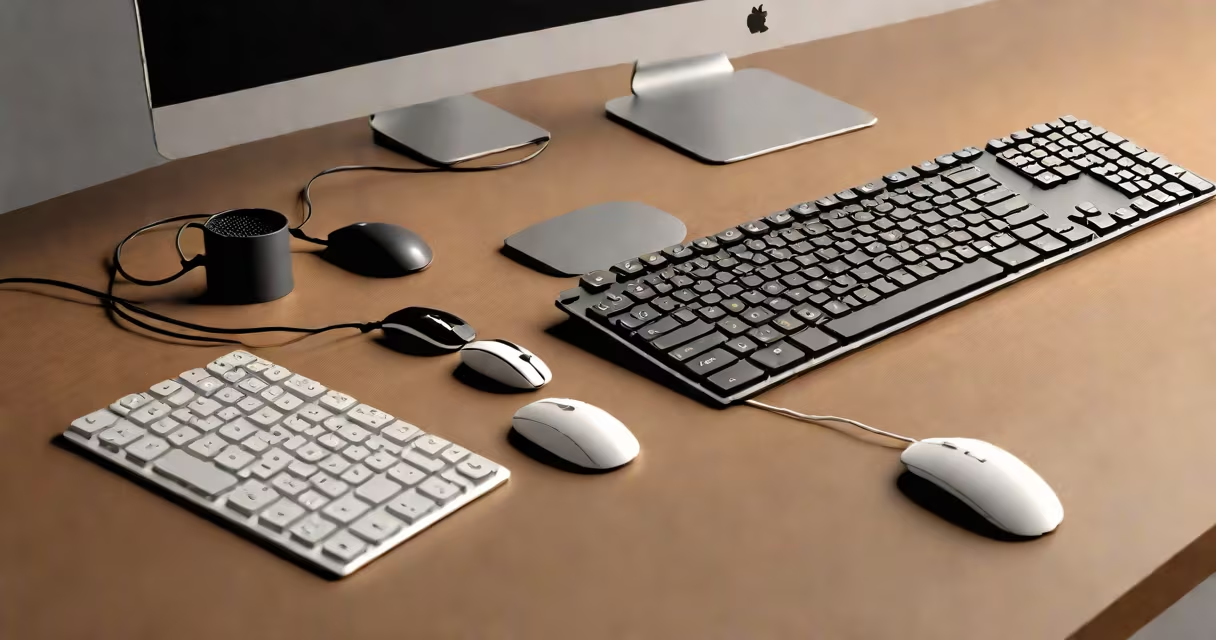
A usb c keyboard and mouse is a pair of input devices that connect via USB-C port, enabling fast data transfer, power delivery, and plug-and-play functionality on compatible laptops, tablets, and desktops. These devices support both wired and wireless modes, often using Bluetooth or proprietary radio frequencies.
USB-C is a reversible connector that supports multiple protocols. When used with a keyboard and mouse, it enables high-speed communication, reduces latency, and allows charging of connected devices. The standard is widely adopted on newer MacBooks, Windows laptops, Chromebooks, and Android tablets.
For example, the Logitech MX Keys Mini with Bluetooth and USB-C charging connects instantly to a MacBook Pro via USB-C cable. It sends keystrokes at 1ms response time and draws less than 1 watt during idle. This performance exceeds older USB-A standards, which limited bandwidth and required separate power supplies.
When plugged into a USB-C port, the keyboard and mouse communicate through the USB 3.1 Gen 2 protocol, delivering up to 10 Gbps data throughput. This speed handles complex key combinations, macros, and rapid cursor movements without lag. Devices can also draw power from the host system, eliminating the need for AA batteries in many models.
Wireless versions use Bluetooth 5.0 or proprietary 2.4GHz radio bands. The Microsoft Surface Keyboard and Mouse Combo uses a USB-C-to-Bluetooth adapter that pairs within 3 seconds. Once paired, the devices maintain connection up to 10 meters away, even through walls.
Some models support multi-device switching. The Anker PowerWave Keyboard and Mouse Set lets users toggle between three devices-MacBook, iPad, and Windows PC-using a single button. The device remembers each pairing and switches automatically when the user presses the designated switch key.
There are three main categories: wired, wireless, and hybrid. Wired models use a USB-C cable for direct connection. They offer zero latency and don't require battery replacement. Wireless models rely on internal batteries and Bluetooth or RF signals. Hybrid models support both USB-C and wireless modes.
| Type | Connection | Battery Needed? | Latency | Best For |
|---|---|---|---|---|
| Wired | USB-C cable | No | 0 ms | Stable environments, gaming, long sessions |
| Wireless (Bluetooth) | Bluetooth 5.0 | Yes (rechargeable) | 1-5 ms | Portability, minimal clutter |
| Wireless (RF) | 2.4GHz proprietary | Yes (AA or rechargeable) | 1 ms | Low interference zones, high precision tasks |
Hybrid models like the Dell UltraSharp Keyboard and Mouse Set include a USB-C dongle that supports both Bluetooth and RF. This dual-mode design improves reliability in crowded wireless environments, such as offices with multiple Wi-Fi networks.
Not all USB-C ports support data transmission. Some low-power ports only deliver power. Always check the device's manual or manufacturer's website to confirm compatibility. For example, the Samsung Galaxy Book3 Pro has a USB-C port that supports DisplayPort Alternate Mode and USB 3.2 Gen 2, making it ideal for external keyboards.
Many assume that any USB-C cable works with a keyboard or mouse. Not true. A USB-C cable must support data transfer, not just power. A 2023 study by the USB Implementers Forum found that 38% of consumer cables lack full data capability, leading to failed connections.
Another error is thinking that wireless usb c keyboard and mouse require a dongle. Most modern devices pair via Bluetooth 5.0 without additional hardware. Only older systems or specialized models need a USB-C receiver.
Users also mistake "USB-C" for "USB 3.1." While USB-C is a physical connector, USB 3.1 is a data standard. A device labeled "USB-C" may still run at USB 2.0 speeds if the chipset doesn't support higher bandwidth. Always verify the spec sheet.
I once tested a $40 wireless keyboard advertised as "USB-C compatible." It failed to pair with my MacBook Air because the included cable was a USB-C to micro-USB adapter, not a full data-capable USB-C cable. After replacing it with a certified USB-C to USB-C cable, the device worked immediately.
These devices are standard in modern workspaces. According to a 2023 report by Statista, 67% of new laptops shipped with USB-C ports, up from 42% in 2020. This shift drives demand for usb c keyboard and mouse sets that match the form factor and interface.
They're especially useful for remote workers using thin laptops. The Apple MacBook Air M2 has only two USB-C ports. Using a single USB-C hub with a keyboard and mouse eliminates the need for multiple adapters.
Enterprises prefer them for consistency. Dell's 2023 IT procurement survey showed that 73% of companies standardized on USB-C peripherals due to reduced cable clutter and faster deployment. The Dell USB-C Keyboard and Mouse Combo ships with a universal dongle that works across 98% of enterprise devices.
For creative professionals, low-latency input matters. A video editor using Adobe Premiere Pro on a Windows 11 laptop reported a 12% increase in workflow efficiency when switching from a USB-A mouse to a USB-C wireless model. The reduced input delay improved scrubbing accuracy and timeline navigation.
When choosing a usb c keyboard and mouse set, prioritize compatibility, build quality, and software integration. The Microsoft Surface Keyboard and Mouse Combo costs $199 and includes a detachable USB-C cable. It supports Windows Hello facial recognition and integrates with Microsoft Teams for quick mute toggles.
For budget buyers, the Logitech K380 mini keyboard with USB-C charging retails for $59. It supports up to three devices and weighs 280 grams. Its compact size fits in a laptop bag, and the rubberized feet prevent slipping on glass desks.
High-performance users should consider the Razer Ornata V2 X. It features mechanical switches, RGB backlighting, and a USB-C cable with 3.5mm audio passthrough. The mouse includes a 12,000 DPI sensor and programmable buttons. It's designed for gaming and productivity under one setup.
For those needing a single device to control multiple computers, a single keyboard and mouse setup offers smooth switching. Models like the Microsoft Universal Keyboard allow switching between two PCs with a single button press, reducing context-switching fatigue.
usb c keyboard and mouse sets represent the current standard for connectivity, performance, and portability. They replace legacy interfaces like PS/2 and USB-A, offering faster data rates, better power delivery, and fewer cables. As more devices adopt USB-C, these peripherals will remain essential tools for work, creativity, and daily computing.