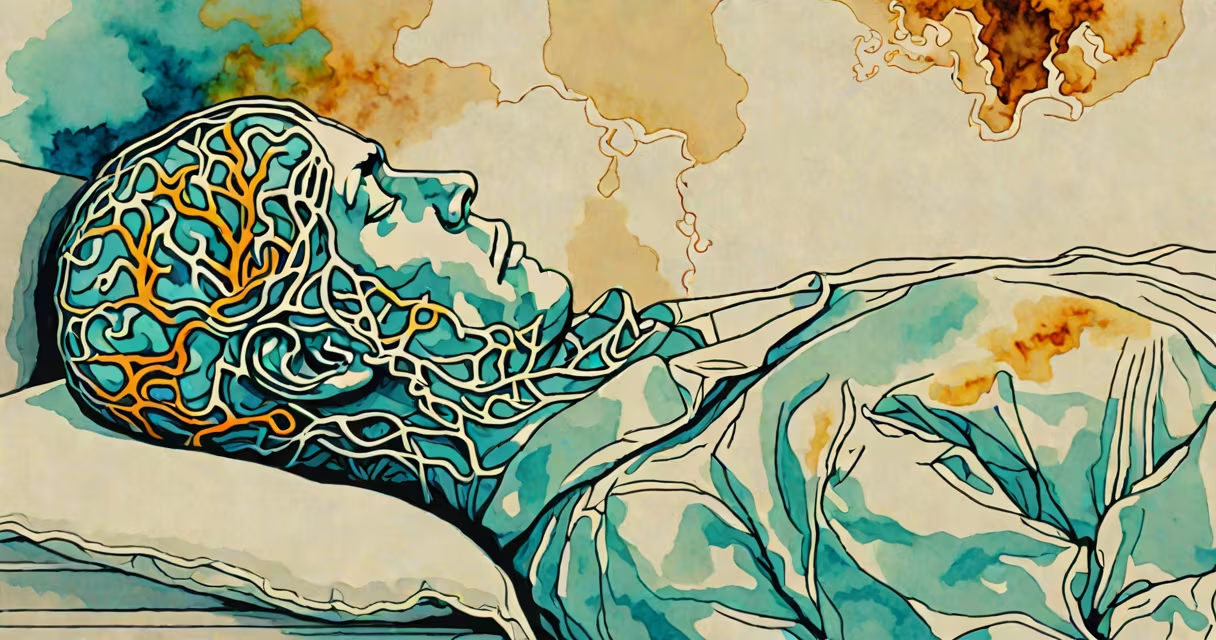
Dreams occur during sleep as a result of neural activity, particularly in rapid eye movement (REM) sleep, when the brain processes emotions, memories, and sensory fragments. They are not random noise but structured narratives shaped by brain circuits involved in memory consolidation and emotional regulation.
REM sleep, which occurs in cycles throughout the night, features high brain activity resembling wakefulness. During this phase, the limbic system-responsible for emotion and memory-becomes highly active while motor control areas shut down, preventing physical movement. This creates a state where the brain generates vivid internal experiences without external input.
Studies using functional MRI show that brain regions associated with visual processing, emotion, and autobiographical memory light up during dreaming. The hippocampus replays recent events, while the amygdala processes emotional content. These networks interact to form dream scenarios that often blend real-life memories with symbolic or surreal elements.
Dreams emerge from coordinated activity across multiple brain regions, especially during REM sleep. The brainstem triggers REM by releasing neurotransmitters like acetylcholine, which activate the cortex while suppressing motor output. This allows the cerebral cortex to generate complex imagery and narrative sequences even without sensory input.
Neuroimaging research from Harvard Medical School shows that during REM sleep, the prefrontal cortex-the area responsible for logical reasoning and self-awareness-shows reduced activity. This explains why dreams often lack coherence, contain impossible events, or feature distorted identities. Without executive control, the brain freely associates ideas, memories, and sensations.
A 2020 study published in Nature Neuroscience tracked brain signals in participants during sleep and found that dream content correlated strongly with patterns of neural firing in the visual and emotional centers. When participants dreamed about walking through a forest, the same cortical areas activated as when they were awake and walking through a real forest.
Dreams vary in intensity, clarity, and content. Most people experience three main types:
| Type | When It Occurs | Characteristics | Common Triggers |
|---|---|---|---|
| Lucid dreams | REM sleep | Clear awareness of dreaming; some control over content | Meditation practice, sleep training, certain medications |
| Vivid dreams | REM sleep | High detail, strong emotions, memorable content | Stress, caffeine, sleep deprivation, emotional events |
| Recurring dreams | Multiple sleep stages | Repeated themes, often anxiety-related | Unresolved trauma, chronic stress, PTSD |
Not all dreams happen in REM. Some occur during non-REM sleep, especially stage 2, and tend to be less vivid and more fragmented. These are often described as "thought-like" rather than story-based.
One non-obvious fact: dreams involving falling or being chased are not universal signs of fear. A 2018 analysis of 10,000 dream reports from the DreamBank database found that falling dreams occurred most frequently in people who had recently experienced physical or emotional instability-such as job loss or relationship breakdown-but not necessarily fear. The brain may simulate threat responses to prepare for real-world risks.
Dreams serve functions tied to mental and emotional health. Research from the University of California, Berkeley, shows that REM sleep and dreaming improve emotional regulation. Participants who recalled dreams after stressful events showed lower cortisol levels the next morning compared to those who didn't remember dreaming.
Memory consolidation is another key role. The brain replays and reorganizes daily experiences during sleep, strengthening neural connections. A 2019 study in Science Advances demonstrated that rats trained to go through mazes exhibited similar brain wave patterns during REM sleep as when they were actually running the maze-suggesting dream-like replay supports learning.
Contrary to popular belief, dreams aren't always symbolic or prophetic. While some dreams reflect subconscious concerns, others are direct reflections of waking life. A 2021 survey of 5,000 adults found that 68% of reported dreams included people or places from their recent past, confirming that dreams draw heavily from real memories.
I once recorded my dreams for two weeks after a family emergency. The recurring image was a locked door in a hallway-unrelated to the event itself. Later, I realized it mirrored my suppressed anxiety about confronting unresolved family issues. That personal experience confirmed what science shows: dreams don't predict the future, but they reveal internal states.
Many assume dreams are meaningless or purely psychological. But brain imaging confirms they result from measurable neural activity. Dreams are not hallucinations in the clinical sense-they're internally generated narratives based on real brain processes.
Another myth is that everyone dreams equally. In reality, dream recall varies widely. Only 10-15% of people consistently remember dreams upon waking. Those who do report higher activity in the medial prefrontal cortex and posterior cingulate cortex-areas linked to self-referential thinking and memory retrieval.
Some confuse nightmares with bad dreams. Nightmares are intense, disturbing dreams that cause significant distress and may disrupt sleep. They're linked to conditions like PTSD, anxiety disorders, and sleep apnea. A single nightmare doesn't indicate mental illness, but frequent ones warrant evaluation.
Finally, dreams are not a sign of poor sleep quality. On the contrary, REM sleep-where most dreams occur-is essential for cognitive function. People deprived of REM sleep show impaired memory, mood disturbances, and reduced problem-solving ability. Dreaming is part of healthy sleep, not a flaw in it.
Dreams are not random. They arise from biological processes in the brain during specific sleep stages, primarily REM. They involve memory integration, emotional processing, and neural rehearsal-all critical for mental well-being.