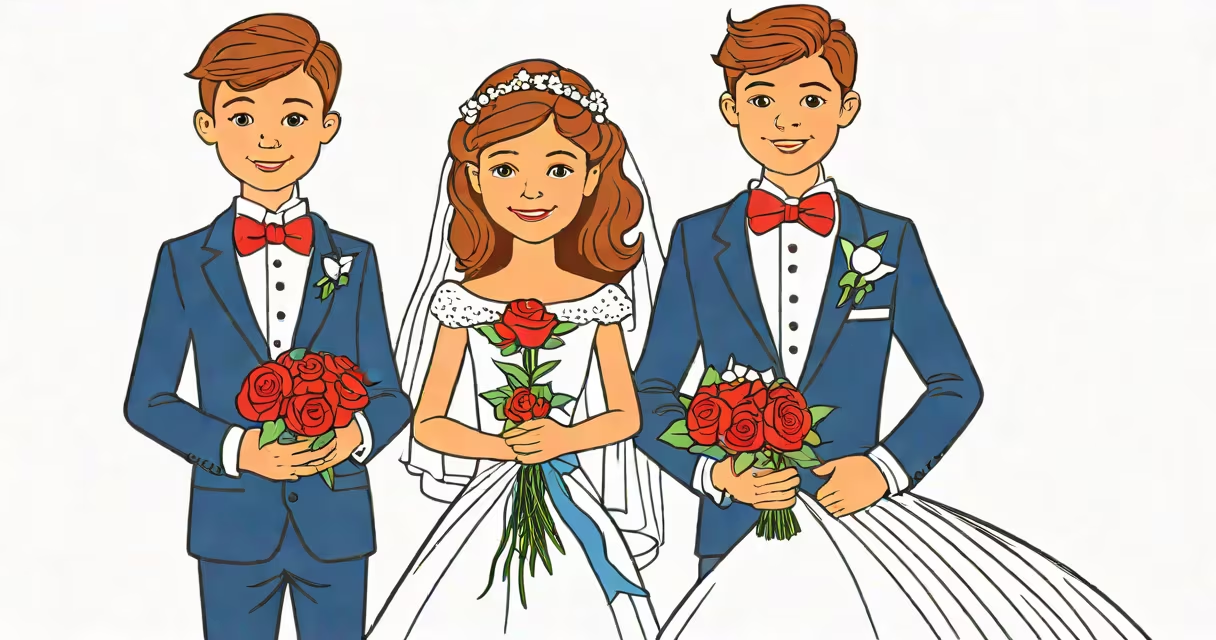
Ring bearers wear matching formal attire that complements the wedding party's color scheme and style, typically consisting of a suit, vest, or tuxedo with coordinated accessories such as a boutonniere, shoes, and sometimes a sash or flower crown.
Ring bearers are usually young boys, often between ages 3 and 7, chosen for their ability to carry the wedding rings safely down the aisle. Their outfit aims to reflect the formality of the event while allowing them to move comfortably. The attire is not meant to overshadow the bride or groom but to contribute to the visual cohesion of the ceremony.
The choice of outfit varies based on the wedding's season, venue, and cultural or family traditions. For example, a winter wedding in a cathedral may feature a dark wool suit with a velvet lapel, while a summer beach wedding might call for a light linen suit with a floral boutonniere. The key is consistency with the wedding aesthetic.
Most ring bearers wear one of three standard styles: a full suit, a suit with a vest, or a tuxedo. These are selected based on the wedding's level of formality and the preferences of the parents or wedding planner.
Each outfit includes essential elements:
A table of common ring bearer outfit types and their typical use cases:
| Outfit Type | Formality Level | Best For | Typical Colors |
|---|---|---|---|
| Suit with vest | High | Ceremonial weddings, church services | Navy, charcoal, burgundy |
| Tuxedo | Very high | Black-tie events, evening ceremonies | Black, midnight blue |
| Linen suit | Moderate | Beach, garden, or outdoor weddings | Light gray, beige, mint |
| Custom-designed outfit | Variable | Fantasy themes, cultural celebrations | Themed colors (e.g., royal purple for a royal wedding) |
Ring bearers often carry a small pillow or basket to hold the wedding rings. This is not part of the outfit but a necessary prop. The pillow is usually covered in satin or lace and may be embroidered with the couple's initials or the wedding date.
Some families opt for a ring bearer basket made of woven wood or fabric, especially for rustic or boho-themed weddings. The basket is placed on a small stand or carried by hand. The rings are secured inside with a ribbon or elastic band to prevent slipping during the walk.
One non-obvious detail: the size of the ring pillow matters. A pillow too large can make the child look overwhelmed. A standard size is 6 inches wide by 4 inches tall. This fits most ring sizes and allows the child to hold it with both hands comfortably.
People often confuse ring bearers with pageboys or flower girls. While all are children involved in the wedding procession, their roles differ. Ring bearers carry the rings. Pageboys may carry the rings or assist with other ceremonial duties. Flower girls scatter petals or carry a basket of flowers.
Another misconception is that ring bearers must wear the same outfit as the groomsmen. This is not required. Groomsmen wear full-sized suits or tuxedos, while ring bearers wear scaled-down versions. The similarity in design creates unity, but the scale ensures the child remains comfortable and safe.
A personal observation: during my cousin's wedding, the ring bearer wore a navy suit with a red bowtie and a tiny rose boutonniere. He walked slowly, eyes wide, clutching the pillow with both hands. When he reached the altar, he paused, looked at the bride, and smiled. That moment stayed with me-not because of the outfit, but because the child felt seen and included. The attire supported his role, not the other way around.
Ring bearers are most common in Western Christian weddings, particularly in the United States, Canada, and parts of Europe. The tradition dates back to the 19th century, when children were given symbolic roles in religious ceremonies.
According to the British Wedding Guide, the practice became widespread in the UK during the Victorian era, influenced by royal weddings. Today, it is still prevalent in traditional ceremonies but less common in non-religious or culturally diverse weddings.
In some cultures, such as in parts of India and Japan, ring bearers are not standard. Instead, the rings are handed directly by a close family member or the officiant. However, younger generations adopting Western-style weddings are increasingly incorporating ring bearers, especially in urban areas.
What do ring bearers wear? A coordinated outfit that reflects the wedding's formality and theme, including a suit or tuxedo, boutonniere, shoes, and a ring pillow. The goal is not perfection but inclusion. The child's comfort and confidence matter more than fashion details.