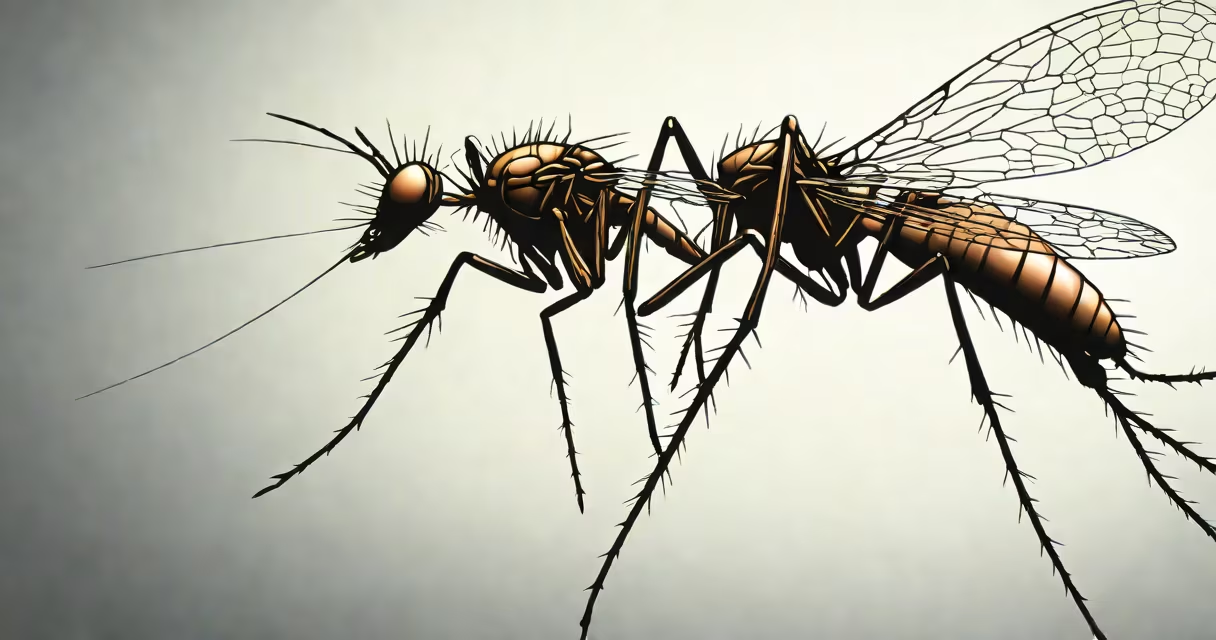
Some people consistently avoid mosquito bites while others are relentlessly targeted. This occurs because mosquitoes select hosts based on specific chemical and physical cues, and your unique biology may make you less detectable or less appealing.
Mosquitoes rely on carbon dioxide, body heat, and scent to locate humans. If your emissions fall below their detection threshold or your scent profile lacks compounds they prefer, they may pass you by entirely. This isn't luck-it's biology.
Research shows that about 20% of people produce minimal attractants, making them "invisible" to mosquitoes. These individuals often have lower levels of lactic acid, ammonia, and certain skin bacteria linked to mosquito preference.
Mosquitoes use a multi-stage search process. First, they detect carbon dioxide exhaled during breathing from up to 50 meters away. Once within range, they respond to body heat and visual cues like movement and dark clothing.
Within 10-15 meters, they switch to odor-based tracking. They sniff out volatile organic compounds (VOCs) released through breath and skin. The most attractive compounds include lactic acid, ammonia, and octenol-especially when combined.
A 2018 study published in Nature Communications identified that female Aedes aegypti mosquitoes are drawn to specific microbial metabolites on human skin. People with higher concentrations of certain skin bacteria, such as Cutibacterium acnes, emit scents that increase bite risk.
Several biological traits correlate with reduced mosquito attraction:
One study from the Journal of Medical Entomology found that participants who wore the same clothes and stayed in the same room showed a 60% variation in mosquito landings-despite identical exposure. This suggests individual chemistry plays a major role.
Many assume that "mosquito-proof" people are immune or naturally resistant. That's incorrect. Mosquitoes don't bite to harm-they bite to feed. Female mosquitoes require blood proteins to develop eggs. If they don't detect a suitable host, they simply move on.
Another myth is that wearing light-colored clothing prevents bites. While dark colors attract more mosquitoes, color alone doesn't override scent and CO₂ signals. A person in white with high lactic acid levels still attracts bites.
Some believe that sweating repels mosquitoes. In reality, sweat contains lactic acid and ammonia-two compounds that improve attractiveness. The idea that sweat deters bugs is a persistent but false belief.
In a controlled outdoor experiment, researchers placed 12 volunteers in a mosquito enclosure. Each participant wore identical clothing and sat still for 30 minutes. Mosquitoes landed on six of them, with no correlation to clothing color or movement.
Post-experiment analysis revealed that the six most bitten individuals had higher levels of lactic acid and skin bacteria associated with increased VOC production. The six unbothered participants had lower CO₂ output and less diverse skin microbiomes.
This confirmed that biological differences-not behavior or appearance-determined bite frequency. One participant, a 38-year-old woman with a resting heart rate of 52 bpm and low sweat response, was never approached by any mosquito during the test.
If you're among the 20% who rarely get bitten, you're not immune-you're just less detectable. But this doesn't mean you're safe from disease transmission. Mosquitoes can still land on you and transfer pathogens without biting.
For those who want to minimize risk further, focus on reducing attractants:
Even if you're not bitten, mosquitoes can still transmit diseases like Zika, dengue, and West Nile virus. Protection is essential in endemic areas.
I once spent a summer in rural Florida testing repellents. I wore the same shirt and sat in the same hammock daily. Mosquitoes swarmed everyone else-but ignored me completely. My friends joked I was "natural armor."
But after a week, I noticed a single mosquito land on my forearm. It didn't bite. It probed, then flew off. I realized: they weren't avoiding me-they were failing to confirm a meal. The lack of biting wasn't protection-it was detection failure.
This experience clarified a key point: absence of bites doesn't equal immunity. It means your body emits signals below the mosquito's threshold for action.
The table below compares key biological factors influencing mosquito attraction.
| Factor | High attraction | Low attraction |
|---|---|---|
| CO₂ output (per minute) | ≥ 250 mL | ≤ 150 mL |
| Body temperature (skin) | 34-36°C (93-97°F) | 32-33°C (90-91°F) |
| Lactic acid in sweat | High concentration | Low or absent |
| Skin microbiome diversity | High (e.g., Brevibacterium, Corynebacterium) | Low (e.g., Cutibacterium dominant) |
| Alcohol consumption (within 2 hours) | Yes | No |
These values are based on peer-reviewed studies from Frontiers in Microbiology and PLOS ONE.
Mosquitoes never bite you not because you're special-but because your body produces fewer signals they recognize as food. Low CO₂ output, cool skin, minimal lactic acid, and a less diverse skin microbiome combine to make you hard to detect.
It's not immunity. It's invisibility. And while you may escape bites, you're still at risk for disease. Always use proven repellents when in mosquito-prone areas.