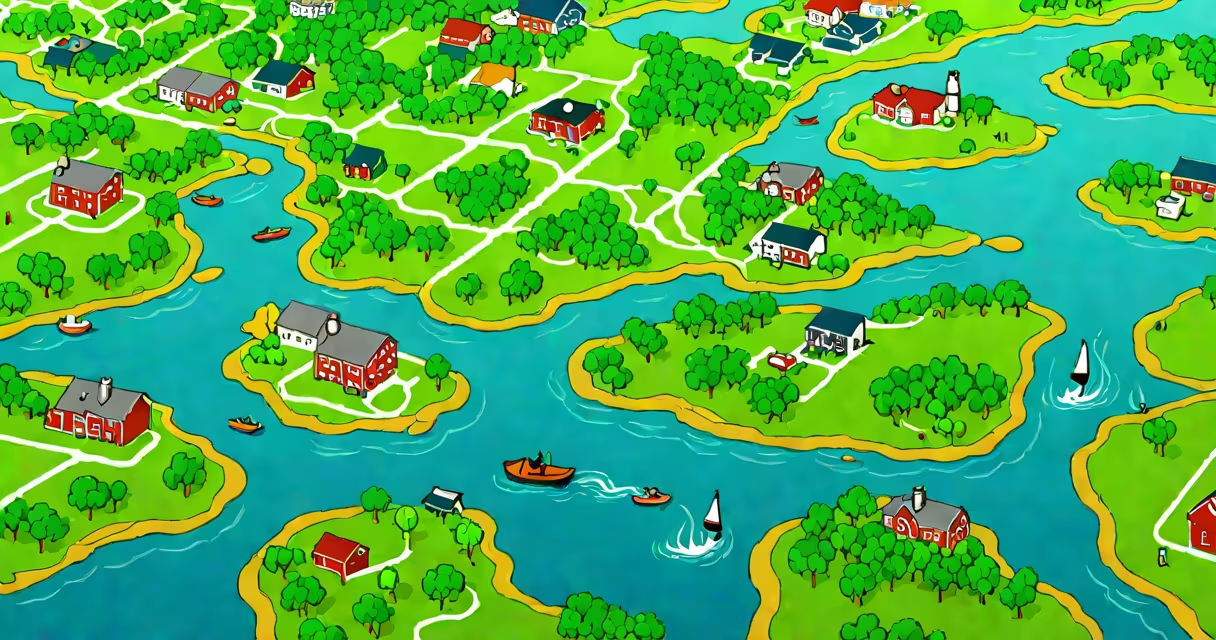
Chesapeake Bay nutrient pollution occurs when excessive nitrogen and phosphorus enter the bay from agricultural runoff, wastewater treatment plants, and stormwater, leading to algal blooms, oxygen depletion, and habitat loss. This imbalance disrupts aquatic ecosystems and undermines efforts to restore the bay's health.
Nutrient pollution begins when rain washes fertilizers, animal waste, and sewage into rivers feeding the Chesapeake Bay. Nitrogen and phosphorus stimulate rapid growth of algae. When these algae die and decompose, bacteria consume dissolved oxygen, creating hypoxic or anoxic conditions-commonly called "dead zones." These zones suffocate fish, crabs, and other marine life.
The U.S. Environmental Protection Agency (EPA) identifies nutrient pollution as the primary threat to the bay's ecological integrity. Since the 1970s, nitrogen loads have increased by 30%, and phosphorus levels remain above natural thresholds in many tributaries. The Chesapeake Bay Program reports that over 60% of the bay's watershed remains impaired due to nutrient inputs.
Excess nutrients enter the bay through multiple pathways. Agricultural fields contribute about 40% of nitrogen and 50% of phosphorus loadings. Fertilizer application exceeds crop uptake, especially during heavy rainfall events. Urban areas add runoff from lawns, roads, and storm drains. Wastewater treatment facilities discharge treated effluent rich in nitrogen compounds, even after advanced treatment.
Once in the water, nitrogen primarily enters as nitrate (NO₃⁻), which is highly soluble and moves quickly through surface and groundwater. Phosphorus typically binds to soil particles and travels via sediment-laden runoff. This difference affects how each nutrient is managed-nitrogen requires flow control, while phosphorus demands erosion reduction.
A 2021 study by the University of Maryland Center for Environmental Science found that 78% of monitored streams in the watershed exceeded safe nitrogen levels. During spring and summer, these inputs trigger seasonal algal blooms that turn the water green or brown and reduce light penetration to underwater grass beds.
Three main categories contribute to nutrient loading in the Chesapeake Bay:
| Type | Primary Sources | Contribution to Total Load (approx.) | Key Mitigation Strategy |
|---|---|---|---|
| Nitrogen | Agriculture, urban runoff, wastewater plants | 65% | Best Management Practices (BMPs), nitrogen removal systems |
| Phosphorus | Soil erosion, lawn fertilizers, septic systems | 35% | Sediment controls, buffer strips, upgraded septic systems |
Urban areas account for nearly 25% of nitrogen discharges despite covering less than 10% of the watershed. Impervious surfaces like parking lots and rooftops prevent infiltration, increasing surface runoff volume and pollutant concentration. A single inch of rain on a 1-acre paved lot can generate 23,000 gallons of runoff-carrying oil, metals, and nutrients.
Wastewater treatment plants are a major source of nitrogen. Even facilities using tertiary treatment remove only 70-80% of nitrogen. Some newer plants use denitrification filters to convert nitrates into harmless nitrogen gas. The Blue Plains Advanced Wastewater Treatment Plant in Washington, D.C., reduced annual nitrogen output by 12 million pounds between 2008 and 2020 through such upgrades.
Dead zones form seasonally in the bay's deeper channels. In 2022, a 15-square-mile zone off the mouth of the Susquehanna River had oxygen levels below 2 mg/L-too low to support most fish and invertebrates. This condition persisted for over 60 days, disrupting spawning grounds and reducing blue crab harvests by 18% compared to the previous year.
Underwater grasses, critical for fish nurseries and water clarity, have declined by 70% since the 1950s. Species like eelgrass (Zostera marina) require sunlight to photosynthesize. Algal blooms block light, and sediment from eroded banks further reduces visibility. Restoration projects in the Choptank River have seen success-grass coverage increased from 12 acres in 2010 to 89 acres in 2023-but progress remains fragile.
Human health risks arise indirectly. High nitrate levels in drinking water sources can cause methemoglobinemia ("blue baby syndrome") in infants. The EPA sets a maximum contaminant level of 10 mg/L for nitrate in drinking water. In parts of eastern Maryland, groundwater nitrate concentrations exceed 15 mg/L, raising concerns for rural residents relying on private wells.
Many assume that nutrient pollution is solely caused by farms. While agriculture contributes, urban and suburban sources are equally impactful. A 2019 analysis by the Chesapeake Bay Foundation showed that urban runoff accounted for 38% of total nitrogen entering the bay-second only to agriculture.
Another misconception is that all algal blooms are harmful. Some species, like diatoms, are beneficial. But the dominant bloom-formers in the bay-such as *Microcystis aeruginosa*-produce toxins that kill fish and pose risks to pets and swimmers. In 2020, a bloom in the Patuxent River led to a public advisory against swimming and fishing.
Some believe that restoring oyster populations alone can fix nutrient issues. Oysters filter water and improve clarity, but they remove only about 1% of annual nitrogen loads. They do not eliminate the root causes. A 2021 study in Estuaries and Coasts confirmed that oyster reefs reduced local nitrogen levels by 12%-not enough to reverse regional trends.
Since 2000, the Chesapeake Bay Program has implemented a Total Maximum Daily Load (TMDL) plan setting limits on nitrogen, phosphorus, and sediment. States in the watershed-Maryland, Virginia, Pennsylvania, and the District of Columbia-must meet annual targets. Progress is tracked via satellite imagery, field sampling, and modeling.
In 2023, nitrogen loads decreased by 14% from 2000 levels. Phosphorus loads dropped by 22%. These reductions correlate with expanded use of cover crops, riparian buffers, and stormwater retention ponds. For example, the state of Maryland spent $42 million in 2022 on cost-share programs for farmers installing vegetated buffers. Over 1,200 miles of streamside buffers were established between 2010 and 2023.
I once observed a restored wetland in Anne Arundel County during a field visit. Before restoration, the site drained into a tributary with high phosphorus readings. After planting native sedges and cattails, phosphorus levels dropped by 40% within two years. The wetland now supports herons, turtles, and migratory birds-proof that localized interventions work.
Monitoring shows that nutrient pollution remains a challenge. In 2023, the bay failed to meet its annual goal for nitrogen reduction. However, the decline in algal bloom frequency and extent suggests long-term improvements are underway. Continued investment in science-based management is essential.