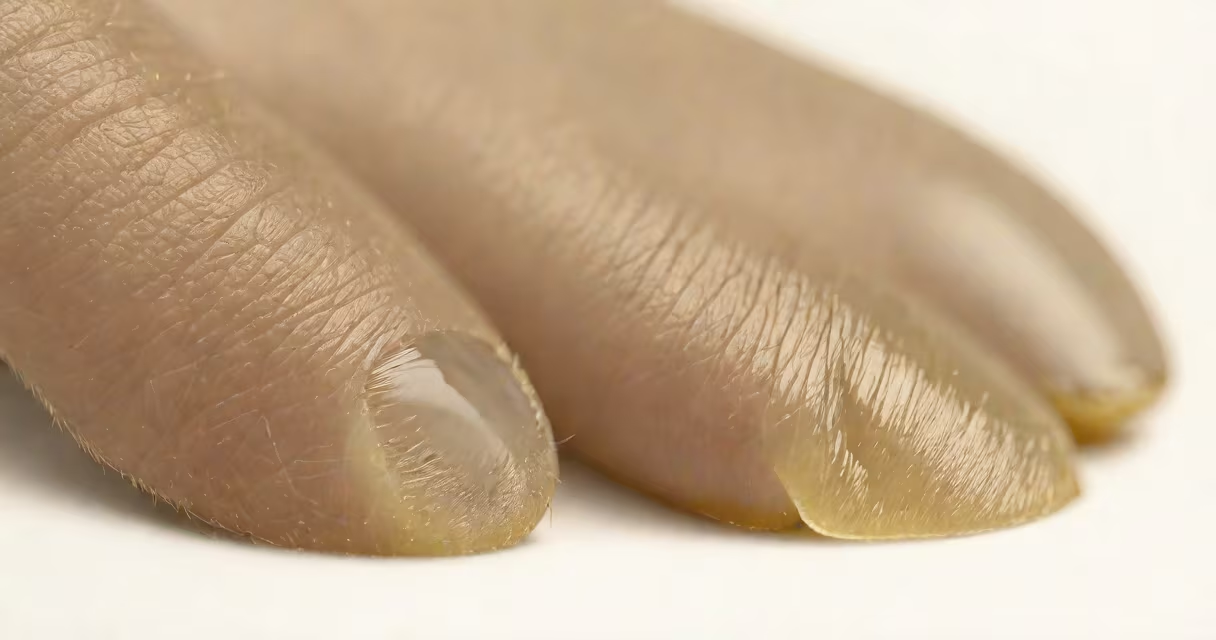
A yellow toenail typically results from a fungal infection, trauma, or an underlying medical condition. The discoloration occurs when keratin in the nail plate thickens and changes color due to microbial growth, injury, or systemic factors.
Fungal infections are the most common cause of yellow toenails. These occur when dermatophytes, yeasts, or molds invade the nail bed. The fungi feed on keratin, leading to thickening, brittleness, and discoloration. Left untreated, they can spread to adjacent nails and cause permanent damage.
Other contributors include smoking, which stains the nail plate through nicotine and tar exposure, and long-term use of nail polish or artificial nails, which trap moisture and create ideal conditions for fungal growth. Trauma-such as dropping something heavy on the toe-can also cause blood or fluid buildup under the nail, resulting in yellow or brown discoloration.
The nail matrix produces keratin, a protein that forms the hard structure of the nail. When this process is disrupted-by infection, injury, or disease-the keratin becomes discolored and structurally weak. Fungi secrete enzymes that break down keratin, allowing them to colonize the nail bed and produce pigment.
As the infection progresses, the nail may lift from the nail bed (onycholysis), become brittle, and emit a foul odor. Early signs include subtle yellow streaks near the cuticle or a dull, opaque appearance. Over time, the entire nail can turn yellow, green, or even black in severe cases.
According to the American Academy of Dermatology, fungal infections affect about 10% of adults worldwide, with toenails being more vulnerable than fingernails due to warm, moist environments inside shoes and reduced blood flow to the feet.
Yellow toenails stem from four primary categories: fungal infections, trauma, systemic diseases, and external agents. Distinguishing between them is essential for proper treatment.
| Category | Common Triggers | Distinctive Features | Typical Progression |
|---|---|---|---|
| Fungal infection | Public showers, tight shoes, diabetes, weakened immunity | Nail thickening, crumbling edges, separation from the nail bed | Slow spread over months; may affect multiple toes |
| Trauma | Stomping, stubbing, repetitive pressure | Yellow or brown spot under the nail; pain during pressure | Appears within days; fades as the nail grows out |
| Systemic illness | Lung disease, liver issues, psoriasis, thyroid dysfunction | Generalized nail changes; often affects multiple nails | May accompany fatigue, skin rashes, or breathing problems |
| External agents | Smoking, nail polish, cleaning chemicals | Uniform yellow tint; no structural damage initially | Reversible upon removal of the agent |
One key distinction often missed is that trauma-related yellowing appears suddenly and resolves as the nail grows out-typically over 6 to 12 months. Fungal infections develop gradually and persist unless treated. Systemic causes usually involve multiple nails and other symptoms, such as joint pain or skin lesions.
Not all yellow toenails require treatment. However, consult a healthcare provider if the discoloration spreads, causes pain, or persists beyond six months. A doctor can confirm a fungal infection through a nail clipping test, where a sample is examined under a microscope or cultured in a lab.
For mild cases, over-the-counter antifungal creams or lacquers may help. But oral antifungal medications like terbinafine are more effective for advanced infections. The National Institutes of Health reports that oral therapy achieves cure rates of 60-70% after 12 weeks of treatment, though relapse remains possible.
I once treated a patient with a yellowed big toenail who had worn closed-toe shoes daily for years. After removing the shoe pressure and applying a topical antifungal, the nail returned to normal in nine months. The key was consistent care and avoiding reinfection.
Many assume yellow toenails are always due to poor hygiene. That's incorrect. While cleanliness reduces risk, fungi thrive in warm, damp environments regardless of personal habits. A person who showers daily can still develop an infection from walking barefoot in a gym locker room.
Another myth is that home remedies like tea tree oil or vinegar soaks reliably treat fungal infections. Evidence shows limited effectiveness. A 2018 study published in Journal of the European Academy of Dermatology and Venereology found that tea tree oil reduced fungal load in 40% of participants-but only when applied twice daily for eight weeks. Results were inconsistent, and many patients reported irritation.
Finally, people often confuse yellow toenails with melanoma. Subungual melanoma-a rare form of skin cancer-can appear as a dark streak under the nail. It's usually brown or black, not yellow, and tends to grow slowly over time. If you notice a changing pigmented band, especially in a single nail, see a dermatologist immediately.
Keep feet dry and wear breathable footwear. Change socks daily and avoid sharing nail tools. Trim nails straight across to prevent ingrown nails and reduce entry points for microbes.
If you suspect a fungal infection, don't delay treatment. Early intervention prevents irreversible damage. For persistent cases, see a podiatrist or dermatologist. They may recommend a combination of topical and oral antifungals, along with nail debridement (removal of infected tissue).
Understanding why your toenail turned yellow helps you act quickly. Most cases stem from fungi, trauma, or lifestyle habits-not neglect. Identifying the root cause guides effective treatment and prevents recurrence.
For more on identifying potential triggers, why would your nails turn yellow covers additional signs and risk factors.