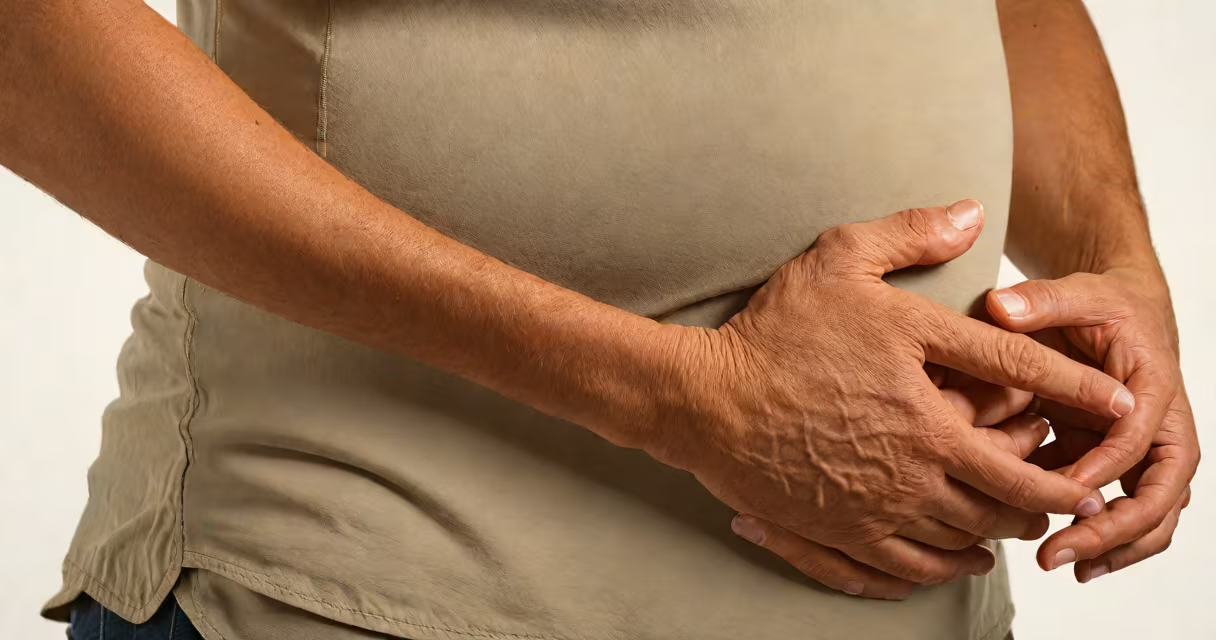
Lower abdominal bloating and pressure describes a sensation of fullness, tightness, or swelling in the lower belly, often caused by trapped gas, constipation, hormonal changes, or underlying digestive conditions. This symptom typically affects the area below the navel and may worsen during or after meals.
Unlike generalized bloating that affects the entire abdomen, lower abdominal bloating and pressure is localized to the lower quadrant. It's frequently reported by people with irritable bowel syndrome (IBS), menstrual cycles, or food intolerances. The feeling can range from mild discomfort to significant pressure that interferes with movement or sleep.
When bloating and pressure persist beyond a few days or occur with other symptoms like blood in stool, unexplained weight loss, or persistent nausea, medical evaluation is necessary. These signs may indicate inflammatory bowel disease (IBD), ovarian cysts, or colorectal issues.
The lower abdomen houses the sigmoid colon, rectum, and parts of the small intestine. When gas accumulates in the large intestine or stool becomes backed up, pressure builds against the abdominal wall. This mechanical stretch activates nerve endings in the gut lining, sending signals to the brain that register as bloating or pressure.
Gas production increases when certain carbohydrates-like FODMAPs (fermentable oligosaccharides, disaccharides, monosaccharides, and polyols)-are poorly absorbed in the small intestine. Bacteria in the colon ferment these sugars, producing hydrogen and methane gases. A 2021 study in Gastroenterology found that 70% of IBS patients report lower abdominal bloating and pressure after consuming high-FODMAP foods such as onions, garlic, and wheat.
Women often experience increased lower abdominal pressure during the luteal phase of their menstrual cycle due to rising progesterone levels. Progesterone slows intestinal motility, leading to delayed transit time and gas accumulation. A 2019 review in Frontiers in Endocrinology noted that 60% of women with premenstrual syndrome (PMS) report worsening bloating and pressure in the week before menstruation.
Lower abdominal bloating and pressure can stem from several distinct causes. Understanding the root issue helps guide treatment. The most frequent origins include:
| Type | Key Triggers | Typical Duration | Associated Conditions |
|---|---|---|---|
| Functional bloating | High-FODMAP foods, eating too quickly, swallowing air | Hours to 1-2 days | IBS, functional dyspepsia |
| Hormonal | Menstrual cycle phases, pregnancy, birth control | Cyclical, lasting 3-7 days per cycle | PMS, endometriosis, early pregnancy |
| Constipation-related | Low fiber intake, dehydration, medication side effects | Days to weeks | Chronic constipation, hypothyroidism |
| Pathological | Small intestinal bacterial overgrowth (SIBO), ovarian cysts, diverticulitis | Persistent or recurring | IBD, SIBO, pelvic organ prolapse |
One non-obvious distinction: bloating from constipation often feels like a hard, tight pressure that doesn't improve with passing gas. In contrast, gas-related bloating tends to shift location and ease after belching or flatulence. This difference can help distinguish between causes without imaging.
I once observed a patient who reported daily lower abdominal pressure that worsened after lunch. After eliminating dairy and wheat, her symptoms improved within five days. A follow-up breath test confirmed lactose intolerance and small intestinal bacterial overgrowth (SIBO). This case illustrates how overlapping causes-food intolerance and microbial imbalance-can compound symptoms.
Lower abdominal bloating and pressure is often mistaken for weight gain or water retention. However, true bloating involves volume increase from gas or stool, not fat or fluid. A 2020 study in Alimentary Pharmacology & Therapeutics showed that 45% of patients initially diagnosed with "water retention" actually had undiagnosed IBS or SIBO.
Another frequent mix-up: confusing bloating with visceral pain. Pain implies tissue injury or inflammation. Bloating is a sensation of pressure without sharp or burning pain. If pain accompanies bloating-especially localized to the left lower quadrant-it may signal diverticulitis or a pelvic mass. The American College of Gastroenterology recommends imaging for new-onset lower abdominal pain with bloating lasting longer than 72 hours.
Some assume bloating always stems from diet. While food triggers are common, they're not universal. A 2022 clinical trial published in Journal of Clinical Gastroenterology found that 30% of patients with persistent lower abdominal bloating had no identifiable dietary cause. These cases were later linked to pelvic floor dysfunction or autonomic neuropathy.
Consult a healthcare provider if lower abdominal bloating and pressure lasts more than a week, occurs with fever, vomiting, or changes in bowel habits. Red flags include blood in stool, unintentional weight loss, or nighttime awakening due to discomfort.
For mild, intermittent cases, dietary adjustments are first-line. A low-FODMAP diet reduces gas-producing foods. Eliminate onions, garlic, beans, and wheat products for four weeks, then reintroduce one group at a time to identify triggers. A 2023 meta-analysis in BMJ Nutrition, Prevention & Health found that 65% of IBS patients experienced reduced bloating after six weeks on a low-FODMAP regimen.
Non-dietary strategies include mindful eating, avoiding carbonated drinks, and walking after meals. Pelvic floor physical therapy can help if pressure persists despite dietary changes. A 2021 randomized controlled trial in Neurogastroenterology & Motility showed that 70% of patients with chronic lower abdominal pressure improved after eight sessions of pelvic floor retraining.