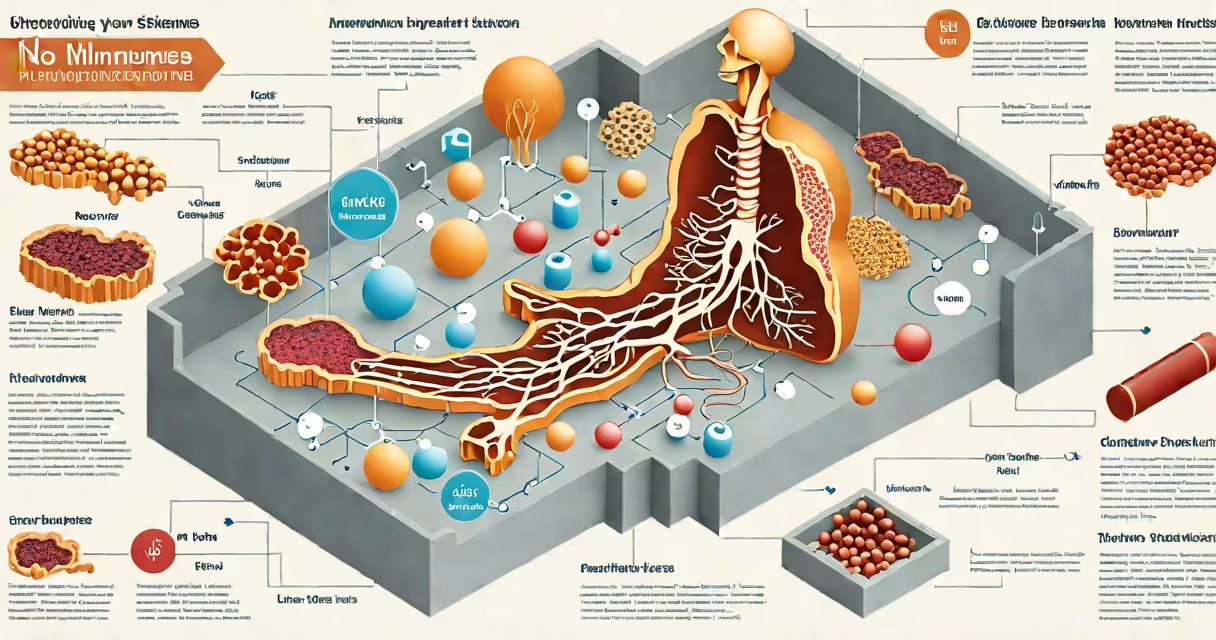
The immune system is distributed across multiple organs and tissues throughout the body, not confined to a single site. It includes specialized structures like lymph nodes, the spleen, bone marrow, and the thymus, as well as widespread immune cells in the bloodstream and mucosal linings of the gut, lungs, and skin.
Immune function begins in the bone marrow, where hematopoietic stem cells give rise to all immune cells. These precursors travel to the thymus, where T cells mature. B cells develop in the bone marrow and migrate to secondary lymphoid organs like lymph nodes and the spleen, where they encounter antigens and initiate adaptive responses.
Immune surveillance occurs continuously in peripheral tissues. For example, the gut contains about 70% of the body's immune cells, concentrated in Peyer's patches and lamina propria. The skin hosts Langerhans cells, while the lungs rely on alveolar macrophages. This widespread distribution allows rapid detection and response to pathogens entering through common entry points.
Major components of the immune system are organized into primary and secondary lymphoid organs. Primary sites produce and mature immune cells; secondary sites activate them upon antigen exposure.
| Location | Primary Function | Cell Types Found |
|---|---|---|
| Bone marrow | Produces all blood and immune cells | Hematopoietic stem cells, B cell precursors |
| Thymus | Matures T cells | CD4+ and CD8+ T cells |
| Lymph nodes | Filters antigens and activates adaptive immunity | Dendritic cells, B cells, T cells |
| Spleen | Filters blood-borne pathogens and removes old red blood cells | Macrophages, B cells, T cells |
| Gut-associated lymphoid tissue (GALT) | Monitors intestinal microbes and food antigens | IELs, dendritic cells, IgA-producing plasma cells |
Each organ plays a distinct role. The bone marrow generates immune cell precursors, while the thymus selects functional T cells and eliminates self-reactive ones. Lymph nodes act as checkpoints during infection, allowing antigen presentation and clonal expansion of specific T and B cells. The spleen filters blood and responds to systemic infections, especially those caused by encapsulated bacteria like Streptococcus pneumoniae.
A non-obvious fact: the brain lacks conventional lymphatic vessels, but recent research confirms the presence of a glymphatic system and meningeal lymphatics that clear waste and support immune surveillance in the central nervous system. This challenges older assumptions that the brain was immunologically isolated.
Immune cells circulate via blood and lymph. Leukocytes enter tissues through endothelial junctions guided by chemokines. Once in tissues, they differentiate into effector cells or remain as memory cells.
For example, during a viral infection, dendritic cells in the skin capture viral antigens and migrate to draining lymph nodes. There, they present antigen to naïve T cells, triggering activation and proliferation. Activated T cells then return to the bloodstream and home to infected tissues using adhesion molecules and chemokine receptors.
This trafficking pattern ensures targeted defense. A 2021 study published in Nature Immunology showed that T cells can retain tissue-specific homing signals even after years of dormancy, explaining long-term protection against reinfection.
Many people assume the immune system is centralized, like a command center. But it operates as a decentralized network. No single organ controls the entire response.
Another misconception is that immunity resides only in the bloodstream. While white blood cells travel through blood, their most critical actions occur in tissues. For instance, neutrophils leave capillaries and enter infected areas within minutes-often before antibodies appear.
Some believe supplements or diet alone can "boost" immunity. But immune function relies on coordinated activity across multiple systems. Overstimulating one part, such as flooding the body with vitamin C, doesn't improve protection and may disrupt balance.
Consider a small cut on the finger. Within seconds, platelets begin clotting. Within minutes, neutrophils and monocytes migrate from nearby capillaries into the wound site. These innate responders engulf bacteria and release inflammatory signals.
Within hours, dendritic cells collect debris and bacterial fragments, then travel to regional lymph nodes-say, in the armpit. There, they present antigens to T cells, initiating an adaptive response. If the pathogen is new, this process takes 3-5 days to generate effective antibodies.
Meanwhile, B cells in the lymph node begin producing IgM antibodies. As the infection resolves, memory B and T cells persist, ready to respond faster if the same pathogen returns.
This entire sequence unfolds across multiple locations: the skin, lymph nodes, blood, and spleen-all working together. No single site holds the whole system.
Disorders affecting immune location often result in localized or systemic failure. For example, severe combined immunodeficiency (SCID) results from defective development of T cells in the thymus. Patients lack functional T cells and are highly susceptible to infections.
Autoimmune diseases like lupus involve misdirected immune responses. Antibodies attack healthy tissues, particularly in the kidneys and skin, because immune surveillance fails to distinguish self from non-self. This suggests that tolerance mechanisms depend on proper location and signaling within lymphoid organs.
Chronic inflammation in the gut, such as in Crohn's disease, arises when immune cells in the intestinal lining overreact to commensal bacteria. This demonstrates that immune location determines context-same cells behave differently depending on environment.
During my time volunteering at a rural clinic in Kenya, I observed children with untreated malnutrition developing recurrent infections. Blood tests revealed low lymphocyte counts and poor antibody titers. Many had enlarged lymph nodes due to chronic stimulation, yet their immune systems failed to mount effective responses. This highlighted how nutrition affects immune cell production and migration-not just the organs themselves.
If you're concerned about persistent infections or slow recovery, consider whether your immune system is functioning properly. Do I have a weak immune system is a valid question when symptoms suggest dysfunction. Testing for T-cell counts, complement levels, or antibody production can clarify underlying issues.
Knowing where your immune system is located reveals its complexity. It is not a single entity but a changing, distributed network that protects you from threats across every tissue interface.