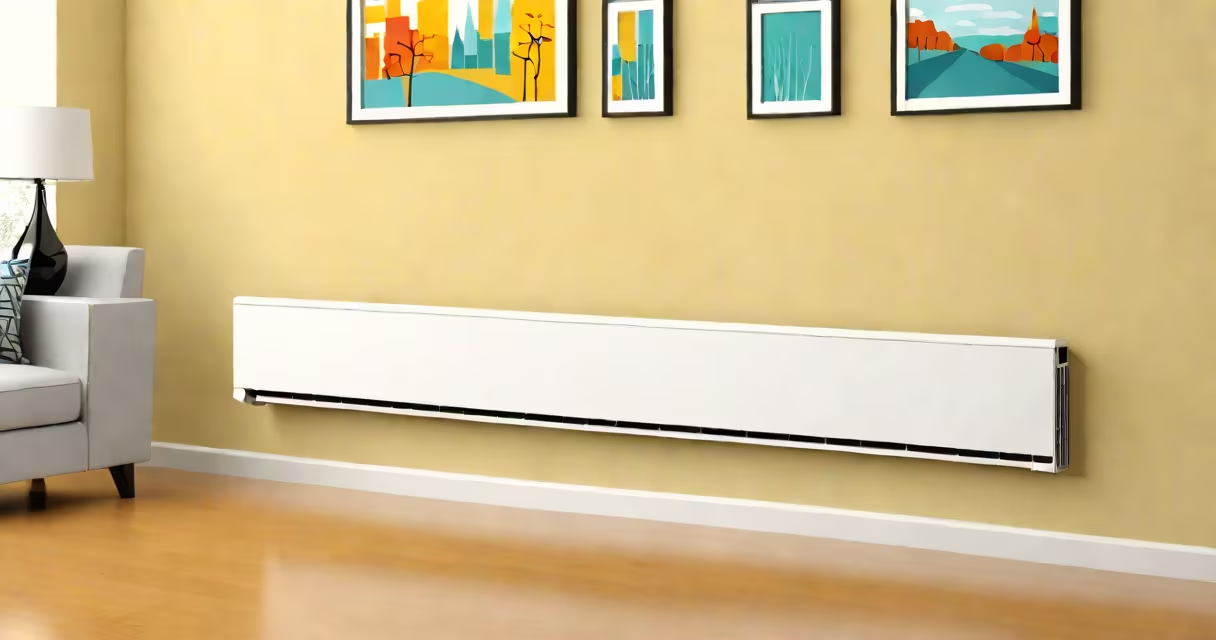
Baseboard heating is a type of electric or hydronic (water-based) forced-air system that uses metal fins mounted along the base of interior walls to radiate heat into a room. It operates through convection and radiation, warming air near the floor and allowing it to rise naturally.
Electric baseboard heaters draw power from the home's electrical system. As current flows through a resistive heating element, it generates heat that warms the metal fins. Air passing over the fins rises, creating a natural convection current. This process continues until the room reaches the set temperature on the thermostat.
Hydronic baseboard systems use hot water or steam circulated through pipes connected to a boiler. The heated fluid flows through finned tubes inside the baseboard unit, transferring thermal energy to the surrounding air. These systems are quieter and more efficient than electric models but require a dedicated boiler and piping infrastructure.
Electric baseboard heaters rely on resistance heating. When electricity passes through a nichrome wire coil, it produces heat. A bimetallic thermostat inside the unit regulates power based on room temperature. Once the desired temperature is reached, the circuit opens and power stops. As the room cools, the thermostat closes again, restarting the cycle.
These units typically operate at 240 volts and draw between 1,500 and 2,000 watts per linear foot. A 6-foot unit consumes about 9,000 watts per hour, costing approximately $1.20 per hour at average U.S. electricity rates ($0.13/kWh).
Hydronic baseboard systems use a boiler to heat water to 140-180°F. Pumps circulate the water through insulated pipes to baseboard units in each room. The temperature in each zone is controlled by a thermostatic valve that adjusts flow based on demand. This allows individual room control and reduces energy waste.
Baseboard heating comes in two primary forms: electric and hydronic. Each serves different building types and climate zones.
| Type | Heat Source | Efficiency | Installation Cost | Operating Cost |
|---|---|---|---|---|
| Electric | Electrical resistance | ~100% | $100-$200 per unit | High (electricity is expensive) |
| Hydronic | Boiler-heated water | 80-90% (with condensing boilers) | $1,500-$4,000 per system | Low to moderate (depends on fuel) |
Electric baseboard heaters are common in older apartment buildings and rental units due to low upfront cost and simple installation. They're often found in bedrooms and bathrooms where space is tight and ductwork isn't feasible.
Hydronic baseboard systems are typical in new construction and renovations where central heating is planned. They provide consistent warmth and allow zoning-each room can be set to a different temperature. According to the U.S. Department of Energy, zoned hydronic systems reduce annual heating costs by 15-25% compared to single-zone electric systems.
Many people assume baseboard heating is inefficient because it runs on electricity. While electric resistance heating is less efficient than heat pumps or gas furnaces, it's not inherently wasteful. Its efficiency depends on context. In a well-insulated home with low usage, electric baseboard can be cost-effective.
A key misunderstanding is that baseboard heaters are always noisy. Modern electric models use quiet fanless designs. Hydronic systems are nearly silent, relying only on pump hum. Older units with mechanical thermostats may click or hum, but newer models eliminate this with electronic controls.
Another misconception is that baseboard heaters take up too much wall space. Most units are 3-6 inches deep and 24-48 inches long. They fit under windows or along interior walls without obstructing furniture placement. Some manufacturers offer slim-profile models that are 2.5 inches deep, ideal for tight spaces.
In a 2019 retrofit project in Boston, a homeowner replaced an old oil furnace with a hydronic baseboard system. The home had 2,200 square feet and three zones. The installer ran PEX tubing from a condensing boiler to baseboard units in the living room, master bedroom, and guest set.
After installation, the homeowner reported a 22% reduction in heating bills over winter. The system maintained 70°F in each zone with minimal temperature swings. The basement boiler ran 3.5 hours per day during peak cold, consuming 12 gallons of #2 fuel oil per week.
Using data from the American Council for an Energy-Efficient Economy (ACEEE), hydronic systems with proper insulation and zoning can achieve seasonal energy efficiency ratios (SEER) equivalent to 85-90% furnace efficiency when properly maintained.
Baseboard heating excels in homes with limited ductwork, such as older houses, converted basements, or additions. It's ideal for rooms used intermittently-like guest bedrooms or home offices-because thermostats can be turned off when unoccupied.
Electric baseboard is practical in mild climates where heating demand is low. In regions like Southern California, where winters average below 50°F for fewer than 30 days annually, electric baseboard provides supplemental warmth without high operating costs.
Hydronic baseboard suits colder climates. In northern states like Minnesota and Vermont, where winter temperatures drop below 0°F for weeks, hydronic systems maintain stable indoor temperatures with lower peak electricity demand.
I installed a hydronic baseboard system in my own 1950s ranch house. After insulating the attic and upgrading windows, I reduced the required heat output by 40%. The system now runs only 2.5 hours daily during January, using less than 100 kWh total for the month.
Baseboard heating is not the same as forced-air systems. Forced-air uses ducts to distribute heated air from a furnace or heat pump. Baseboard systems don't require ducts and heat via convection and radiation, not blowing air.
It's also not the same as radiant floor heating. Radiant floors use embedded tubing or electric mats beneath flooring to warm from the ground up. Baseboard heats from the bottom up but doesn't involve floor surfaces.
Finally, baseboard heating is not a heat pump. Heat pumps move heat rather than generate it. Electric baseboard creates heat directly through resistance, making it less efficient than air-source or ground-source heat pumps in most climates.
Baseboard heating is a type of electric or hydronic forced-air system that uses metal fins along walls to warm rooms through convection and radiation. It's widely used in homes without ductwork and offers precise zone control. Electric models are simple to install but costly to run. Hydronic systems are more efficient and comfortable but require plumbing and a boiler.
Understanding the difference between electric and hydronic baseboard helps homeowners choose the right solution. For existing homes with low heating loads, electric baseboard remains a viable option. For new builds or retrofits, hydronic systems deliver better long-term savings and comfort.