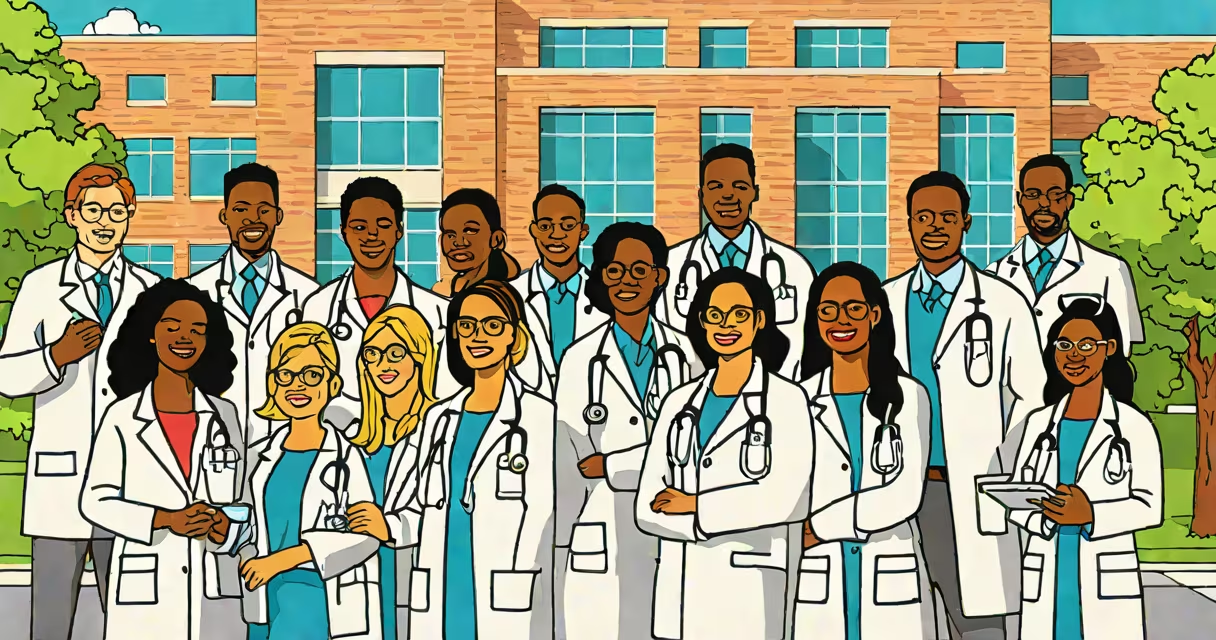
Biology bachelor degrees prepare graduates for careers in research, healthcare, environmental science, biotechnology, and education. The degree provides foundational knowledge in cellular processes, genetics, ecology, and experimental design, enabling entry into roles requiring scientific reasoning and technical skills.
Graduates with a biology degree typically complete four years of study focused on life sciences. Core courses include molecular biology, microbiology, physiology, and biochemistry. Students often gain hands-on experience through laboratory work, field studies, and independent research projects. A typical curriculum includes 120 credit hours, with 60 credits in science and math prerequisites.
Many biology majors pursue graduate school in fields such as medicine, veterinary science, or environmental policy. Others enter the workforce directly in roles like clinical laboratory technician, environmental consultant, or science communicator. The versatility of the degree allows adaptation across sectors with varying levels of specialization.
Employers value biology graduates for their analytical thinking, attention to detail, and ability to interpret complex data. These competencies apply across industries including pharmaceuticals, public health, conservation, and education. Entry-level positions often require only a bachelor's degree, especially in applied settings.
For example, a biology graduate with coursework in immunology and cell culture may qualify for a research assistant role at a biotech firm. Such positions involve maintaining cell lines, preparing reagents, and documenting results under supervision. Salaries start around $45,000 annually, with growth potential based on experience and certification.
Another path involves working with government agencies. The U.S. Environmental Protection Agency hires biology majors for environmental monitoring programs. A recent hire with a focus on aquatic ecosystems conducted water quality tests across 12 sites in the Pacific Northwest, collecting samples and analyzing nutrient levels using spectrophotometry.
Biological science graduates can pursue several distinct career tracks. Some choose direct employment in industry, others continue formal training. The following table outlines common paths, required qualifications, and average starting salaries.
| Career Path | Typical Qualifications | Avg. Starting Salary (U.S.) |
|---|---|---|
| Research Technician | Bachelor's in biology, lab experience | $45,000 |
| Environmental Consultant | Bachelor's, GIS or field survey training | $52,000 |
| Science Communicator | Bachelor's, writing portfolio, media experience | $48,000 |
| Medical School | Bachelor's, MCAT, clinical experience | Varies (residency pays ~$60k/year) |
| Master's in Public Health | Bachelor's, GRE, epidemiology coursework | $55,000 |
Some roles demand additional certifications. Clinical laboratory technicians must pass the American Society for Clinical Pathology (ASCP) certification exam. Environmental consultants may earn a Professional Geologist license depending on state requirements.
Advanced degrees expand opportunities. A master's in neuroscience opens doors to neuropharmacology research. A Ph.D. in developmental biology leads to tenure-track faculty positions at universities. According to the National Science Foundation, 68% of biology Ph.D. recipients secure postdoctoral or faculty roles within five years of graduation.
Many assume biology majors are limited to lab work or teaching. This overlooks the breadth of applications in emerging fields. For example, synthetic biology combines genetic engineering with industrial design to create sustainable materials. A biology graduate with a minor in chemistry developed a biodegradable plastic alternative used in packaging by a Fortune 500 company.
Another misconception is that biology degrees lead only to academic careers. In reality, many employers prioritize problem-solving and communication skills over specific technical training. A biology graduate at a nonprofit organization led a campaign to reduce pesticide use in urban parks by presenting data on pollinator decline to city planners.
One key distinction often missed: biology is not synonymous with pre-med. While many biology students aim for medical school, the majority do not. The Association of American Medical Colleges reports that only 34% of biology majors apply to medical school, and just 17% are accepted. The rest pursue diverse careers in science policy, forensic analysis, or tech-driven health startups.
I worked as a biology lab assistant during my undergraduate years, handling DNA extractions and gel electrophoresis. After graduation, I joined a coastal restoration project in Florida. My team monitored seagrass recovery after hurricane damage. We collected sediment cores, measured chlorophyll levels, and mapped changes over time using GPS and drone imagery.
This role required applying classroom knowledge to real-world conditions. I had to adjust protocols for saltwater exposure and account for seasonal variation in plant growth. The experience taught me that biology isn't just about theory-it's about observing systems in motion and adapting methods to fit changing environments.
After earning a biology bachelor's degree, students should assess their interests and strengths. Those drawn to hands-on work may seek technician roles in hospitals or biotech firms. Individuals interested in global issues might consider international development or climate research.
For those considering further education, planning early improves admission odds. Taking prerequisite courses in organic chemistry and physics increases competitiveness for medical or dental school. Gaining research experience through internships or summer programs strengthens graduate school applications.
Some biology grads explore interdisciplinary paths. Combining biology with computer science leads to bioinformatics-a growing field in genomics and drug discovery. A student with a biology degree and coding skills landed a job at a startup developing AI models to predict disease progression based on genetic markers.
What to do with biology bachelors depends on personal goals. The degree is not a dead end. It is a foundation for lifelong learning and career evolution. Whether entering the workforce directly or pursuing advanced training, biology graduates have multiple viable pathways forward.