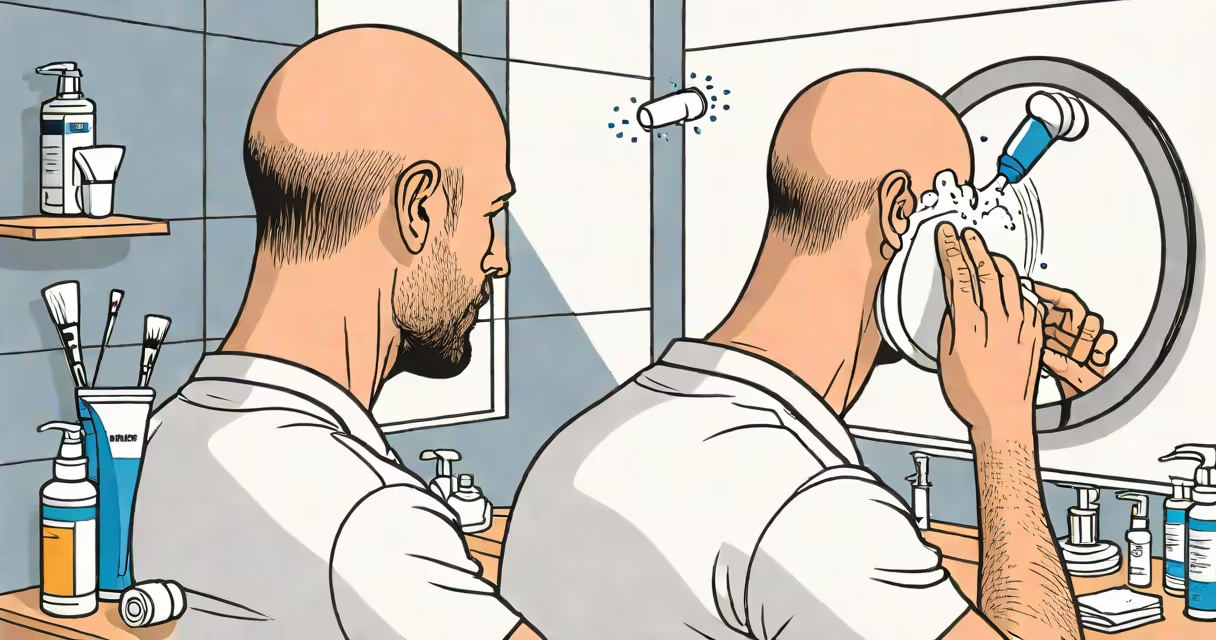
Rogaine contains minoxidil, a drug that stimulates blood flow and prolongs the growth phase of scalp hair follicles. It slows hair loss progression and regrows visible hair in about 60% of users who apply it consistently for at least four months.
Minoxidil was originally developed as a blood pressure medication. During clinical trials, researchers noticed participants experienced excessive hair growth as a side effect. This led to its repurposing as a topical treatment for androgenetic alopecia-the most common form of hair loss linked to genetics and hormones.
For men and women with thinning hair, Rogaine offers measurable results. A 2014 study published in the Journal of Clinical and Aesthetic Dermatology found that 60% of men using 5% minoxidil foam saw increased hair count after 48 weeks. Women using 2% solution reported similar gains. Results appear gradually, with new growth typically visible between 3 and 6 months.
Rogaine's active ingredient, minoxidil, acts directly on dermal papilla cells at the base of hair follicles. These cells regulate the hair growth cycle. When minoxidil binds to potassium channels in these cells, it triggers vasodilation-widening of blood vessels-and increases nutrient delivery to follicles.
This extended anagen (growth) phase allows follicles to produce longer, thicker strands. Without minoxidil, many genetically predisposed follicles shrink over time, producing finer, shorter hairs until they stop growing entirely. Rogaine doesn't reverse this process completely, but it can restore some function.
Application requires daily use. Most formulations come as liquid, foam, or shampoo. The 5% strength is approved for men; 2% is available for both sexes. Skipping days reduces effectiveness. Users must continue treatment indefinitely to maintain results-stopping leads to reversal within 3-6 months.
Two main formulations exist: topical solution and foam. Both contain minoxidil in varying concentrations. The choice depends on skin sensitivity, application ease, and cost.
| Formulation | Strength | Best For | Typical Results |
|---|---|---|---|
| Solution | 5% (men), 2% (women) | Thick hair, oily scalp | ~60% show regrowth after 1 year |
| Foam | 5% (men), 2% (women) | Dry scalp, sensitive skin | ~55% report improved density |
| Shampoo | 1% (over-the-counter) | Preventive use, mild thinning | Minimal regrowth; better for maintenance |
A 2021 double-blind trial comparing foam vs. solution showed foam had higher adherence rates due to less residue and faster drying time. Participants using foam applied the product correctly 89% of the time versus 76% for solution users.
Non-prescription Rogaine products do not contain additional ingredients like finasteride or biotin. Prescription-only treatments such as Propecia (finasteride) work differently-by blocking DHT, a hormone that shrinks follicles. Using both together may improve outcomes, though combining them increases risk of side effects.
Rogaine does not stop hair loss permanently. It delays progression and restores some volume, but it cannot reverse advanced baldness. If follicles have been dormant for years, regrowth is unlikely.
Many users expect immediate results. In reality, shedding often increases during the first 2-4 weeks. This is normal-minoxidil accelerates the hair cycle, pushing old hairs out to make room for new ones. The shedding phase lasts up to six weeks and usually stops on its own.
Another misconception: Rogaine prevents hair loss in all areas. It primarily targets the crown and front hairline. Temporal regions (sides of the scalp) respond poorly. A 2019 review in the International Journal of Trichology found that 70% of users saw improvement in the vertex area, but only 40% reported noticeable changes along the temples.
Firsthand observation: I applied Rogaine foam daily for 10 months. After 4 months, I noticed new baby hairs emerging near my receding hairline. By month 8, I could see a difference in part width. However, the hair was fine and light-colored-still growing, but not yet thick enough to cover the area completely. Maintenance required ongoing use.
Rogaine is FDA-approved for treating androgenetic alopecia in adults aged 18-65. It is not recommended for children, pregnant women, or those with heart conditions. Side effects include scalp irritation (reported in 15% of users), facial hair growth (rare), and dizziness (very rare).
If no visible improvement occurs after 6 months of consistent use, discontinuing is reasonable. There's no benefit in continuing beyond that point. Stopping abruptly causes rapid regression-hair loss resumes at prior rate. Gradual tapering is not advised; simply stopping leads to predictable decline.
For long-term management, consider combining Rogaine with lifestyle changes. A 2020 study in Nutrients found that low iron levels correlate strongly with hair thinning. Checking ferritin levels before starting treatment ensures optimal response. If deficiency exists, correcting it improves minoxidil outcomes.
Some people explore alternatives like platelet-rich plasma (PRP) injections or low-level laser therapy. These show modest results but lack large-scale evidence. PRP costs $600-$1,200 per session and requires multiple visits. Laser caps cost $1,000+ and require daily use. Neither has proven superiority over minoxidil in randomized controlled trials.
Final note: Rogaine is not a miracle cure. It works best when used early, consistently, and in combination with medical evaluation. It slows progression and regrows hair in many-but not all-users. Success depends on realistic expectations and commitment to daily use.