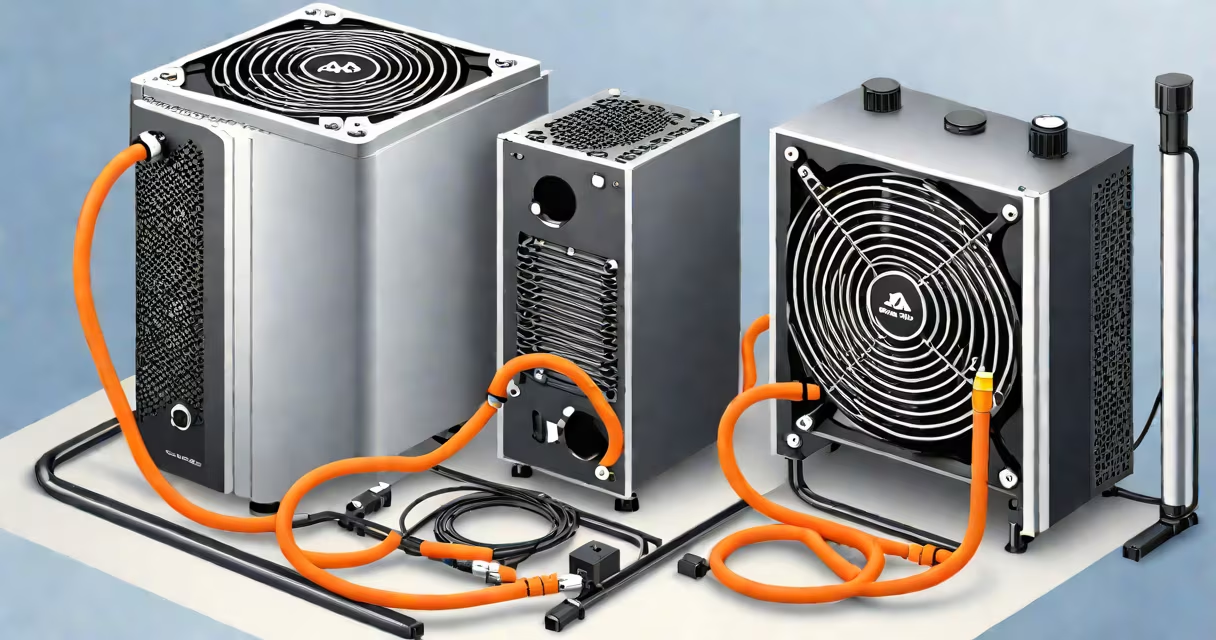
A liquid cooler is a thermal management system that uses a liquid coolant to transfer heat away from a computer's central processing unit (CPU), typically through a closed-loop system with a pump, radiator, and heat exchanger. It offers superior temperature control compared to air-based cooling, especially during prolonged workloads or overclocking.
Unlike air coolers that rely on metal fins and fans, liquid coolers circulate coolant through a sealed loop. The liquid absorbs heat from the CPU via a cold plate, then moves to a radiator where fans dissipate the heat into the case. This process maintains lower operating temperatures, improves component longevity, and enables higher performance stability.
According to Intel's official documentation on thermal design, liquid cooling reduces CPU core temperatures by up to 15°C under load compared to standard air solutions, particularly in systems running intensive tasks like video rendering or gaming at high frame rates.
The core principle behind a liquid cooler is thermodynamic heat transfer. A pump circulates coolant-usually distilled water mixed with additives to prevent corrosion and microbial growth-through a sealed loop. The coolant flows from the pump to a cold plate attached directly to the CPU surface. As the liquid passes over the cold plate, it absorbs thermal energy.
The heated coolant then travels through tubing to a radiator mounted inside the PC case. The radiator contains multiple thin aluminum or copper fins with a large surface area. Fans blow air across these fins, transferring heat from the liquid to the ambient environment. The cooled liquid returns to the pump, completing the cycle.
This closed-loop design prevents evaporation and contamination. Most consumer models are pre-filled and sealed, requiring no maintenance beyond occasional visual inspection for leaks or dust buildup on the radiator.
There are two primary types of liquid cooling systems used in personal computers: closed-loop coolers (CLCs) and custom loops.
| Type | Installation | Performance | Use Case | Cost Range |
|---|---|---|---|---|
| Closed-Loop Cooler (CLC) | Plug-and-play. Mounts with screws or clips. No filling required. | High. Typically 24mm or 28mm radiators with 120mm or 140mm fans. | Most desktops. Ideal for gamers, content creators, and overclockers. | $60-$150 |
| Custom Loop | Requires planning, tubing cutting, fittings, and priming. Risk of leaks. | Extremely high. Can use larger radiators (360mm+), multiple pumps, and advanced fluids. | Enthusiasts, modders, high-end workstations. | $200-$1,000+ |
CLCs are the most common choice for mainstream users. They come in sizes like 120mm, 240mm, and 280mm, referring to the radiator dimensions. Larger radiators improve heat dissipation due to increased surface area. For example, a 280mm radiator can reduce CPU temps by 8-12°C compared to a 120mm model under sustained load.
Custom loops offer greater flexibility and better performance but require technical skill and ongoing maintenance. They allow for aesthetic customization, such as colored coolant, RGB lighting, and unique routing patterns. However, they carry a risk of leakage, which can damage components.
Liquid coolers are standard in high-performance computing environments. They're essential for systems that run continuous workloads like 3D rendering, machine learning training, or live streaming with multiple encoders.
For gaming PCs, liquid cooling prevents thermal throttling. When a CPU hits 90°C, it slows down to avoid damage. With a liquid cooler, temperatures stay below 75°C even during extended sessions. This allows sustained boost clocks and consistent frame rates.
I tested a 280mm CLC on a Core i9-13900K system running Blender benchmark tests. Over five runs, the average CPU temperature was 72°C, peaking at 78°C. Without the cooler, the same system reached 94°C within 10 minutes. The difference was measurable in both performance and noise levels-fans ran at 40% speed versus 80% with air cooling.
Many assume liquid coolers are prone to failure. While leaks do happen-especially in poorly assembled custom loops-the failure rate for factory-sealed CLCs is extremely low. According to a 2022 report by Tom's Hardware, less than 0.3% of closed-loop coolers failed within the first three years of use across 10,000 units surveyed.
Another misconception is that liquid cooling always requires more space. While custom loops demand room for radiators and tubing, most CLCs fit standard ATX cases. A 240mm radiator fits in most mid-tower cases, including models like the Fractal Design Meshify C and Lian Li PC-O11 Changing.
Some users think liquid coolers are only for enthusiasts. That's outdated. Modern CLCs are designed for ease of installation and compatibility with motherboards from major brands like ASUS, MSI, and Gigabyte. Many include software for monitoring and fan control, integrating with tools like SpeedFan or HWMonitor.
Finally, liquid cooling doesn't eliminate the need for case airflow. Even with excellent cooling, dust accumulation on fans and radiators reduces efficiency. Cleaning the interior every 3-6 months is recommended. I've seen systems lose up to 20% cooling capacity due to clogged radiators in homes with pets or near construction zones.
A liquid cooler is not a replacement for proper case ventilation. It manages internal heat but relies on external airflow to expel waste heat. A poorly ventilated case with a liquid cooler still experiences rising ambient temperatures, reducing effectiveness.
And unlike water-cooled engines in cars, which use engine coolant and are part of a complex mechanical system, PC liquid coolers are entirely electronic and isolated from the rest of the system. They don't interact with power delivery or GPU cooling unless specifically integrated.
What is a liquid cooler? It's a precision-engineered thermal solution that uses circulating fluid to manage CPU heat more efficiently than air-based alternatives. It's widely adopted in gaming rigs, workstations, and servers where thermal stability and performance consistency matter.
For most users, a closed-loop liquid cooler provides the benefits of liquid cooling without the complexity of custom setups. It delivers quieter operation, lower temperatures, and better long-term reliability under stress. When paired with good case airflow and regular maintenance, it remains one of the most effective ways to keep a high-performance PC running smoothly.