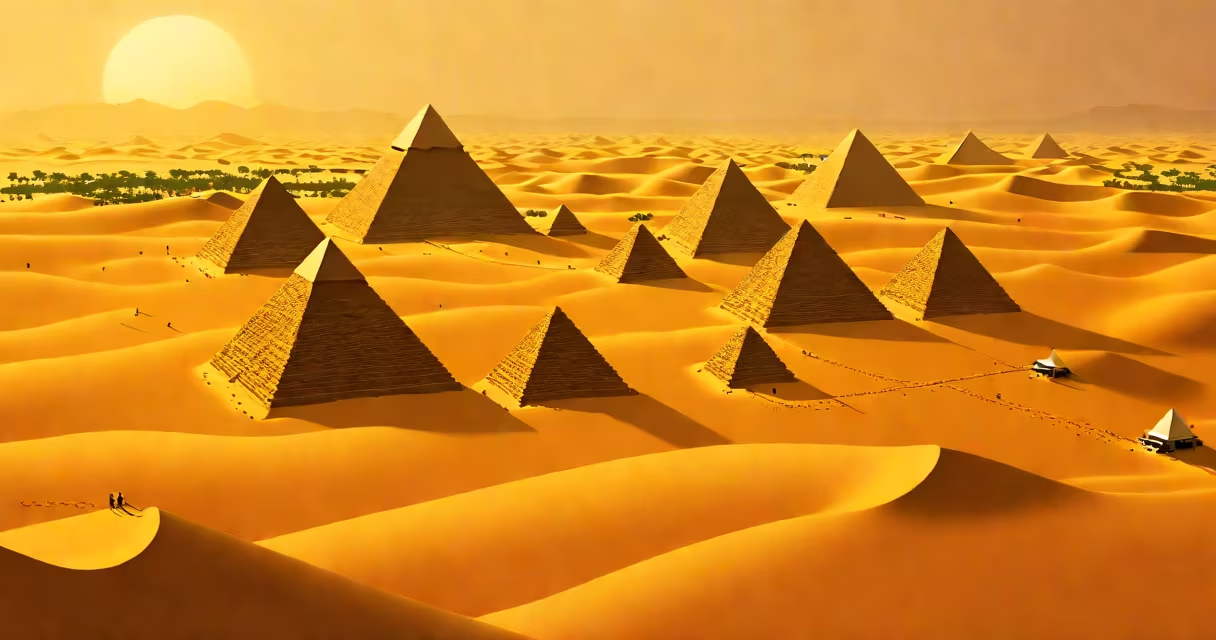
tourist attractions in Egypt are ancient monuments, archaeological sites, and natural landmarks that draw millions of visitors yearly due to their historical significance, architectural grandeur, and cultural legacy. These include the Giza Pyramid Complex, the Valley of the Kings, Luxor Temple, and the Nile River corridor.
The most visited tourist attractions in Egypt center on the Nile River valley, where human settlement dates back over 6,000 years. The region's arid climate preserved structures like tombs, temples, and statues with notable detail. Modern tourism infrastructure now supports access to these sites through guided tours, licensed drivers, and regulated entry fees.
Major tourist attractions in Egypt are governed by the Supreme Council of Antiquities, which oversees conservation and visitor management. Entry to major sites like the Pyramids of Giza requires timed tickets and mandatory guides to reduce wear and protect fragile surfaces. Over 10 million tourists visited Egypt in 2019, with 73% citing ancient sites as their primary reason for travel, according to UNESCO reports.
Most tourist attractions in Egypt operate under a model combining public heritage oversight with private tour services. The Ministry of Tourism and Antiquities licenses tour operators, sets admission prices, and enforces site-specific rules. Visitors must book entry in advance during peak season (October-April), with online portals offering real-time availability.
Access to major sites often involves multiple layers: security screening, ticket validation, and guided audio or live narration. For example, entering the Valley of the Kings requires a printed or digital ticket, a scanned ID, and a licensed Egyptologist guide. This system reduces unauthorized access and ensures accurate interpretation of hieroglyphic inscriptions and burial practices.
Some sites, like the Temple of Karnak in Luxor, offer night tours with lighting effects to show carvings. These events are limited to 200 visitors per evening and require reservations six weeks in advance. The timing aligns with seasonal weather patterns-visits are scheduled between 6 PM and 9 PM to avoid daytime heat exceeding 40°C (104°F).
tourist attractions in Egypt fall into five distinct categories based on function, location, and historical period:
| Type | Examples | Key Features | Visitor Stats (Annual) |
|---|---|---|---|
| Pyramid complexes | Great Pyramid of Giza, Step Pyramid of Saqqara | Used for royal burials; aligned with celestial bodies | Over 5 million |
| Valleys of the Kings and Queens | TT135 (Tutankhamun's tomb), KV5 | Rock-cut tombs; painted walls with funerary texts | 2.1 million |
| Temple complexes | Luxor Temple, Abu Simbel, Philae Temple | Dedicated to gods; large courtyards and obelisks | 3.7 million |
| Nile-based sites | Aswan High Dam, Felucca cruises, Elephantine Island | Water-based activities; traditional boat rides | 4.3 million |
| Modern cultural centers | Egyptian Museum (Cairo), Grand Egyptian Museum (Giza) | High-tech displays; 3D reconstructions of artifacts | 1.8 million |
Each category reflects different aspects of ancient Egyptian society-religious practice, political power, trade, and daily life. The Grand Egyptian Museum, opened in 2023, houses over 5,000 artifacts from Tutankhamun's tomb, including his gold mask, displayed under climate-controlled glass.
tourist attractions in Egypt serve both educational and economic functions. The country earns approximately $12 billion annually from tourism, representing 11% of GDP. Major sites like the Pyramids of Giza contribute nearly 40% of that revenue, according to World Bank data from 2022.
These sites are used for academic research, international exhibitions, and cultural diplomacy. The Egyptian government collaborates with institutions like the University of Oxford and the University of Chicago to conduct carbon-dating and stratigraphic analysis on artifacts. For example, recent scans of the Bent Pyramid at Dahshur revealed internal chambers not visible from the exterior, prompting new theories about pyramid construction techniques.
Despite high visitation, conservation challenges persist. Salt efflorescence damages limestone surfaces at Karnak Temple, and sand erosion affects inscriptions in the Valley of the Kings. The Ministry of Tourism has implemented AI-driven monitoring systems using drones and thermal imaging to detect structural shifts in real time.
Many assume that all tourist attractions in Egypt are located near Cairo or the Nile Delta. In reality, over 30% of major sites lie in Upper Egypt, including Aswan and the Western Desert. The Temple of Amun at Dendera, for instance, sits 700 km south of Cairo and remains accessible via chartered flights or overnight train routes.
A widespread error is believing that the pyramids were built by enslaved laborers. Archaeological evidence from worker villages near Giza shows that laborers were paid artisans, not slaves. Excavations at Deir el-Medina uncovered records showing workers received rations of bread, beer, and meat-similar to modern wage contracts. The average worker lived in mud-brick homes with family, not in chains.
Another misconception is that all temples were used for daily worship. Many were ceremonial or symbolic. The Temple of Hatshepsut at Deir el-Bahri was designed as a mortuary temple to honor a female pharaoh's divine lineage, not for regular religious rites. Its design features terraced levels mimicking mountainous terrain, symbolizing rebirth and cosmic order.
I spent two weeks touring tourist attractions in Egypt in 2022, visiting the Valley of the Kings with a certified Egyptologist guide. Inside Tomb KV5-the largest royal tomb ever discovered-I saw intact wall paintings of the god Ra and the Book of the Dead. The air was cool and still, with light filtering through narrow shafts. The guide pointed out a missing section of paint where a thief had broken in during the 20th dynasty. That moment underscored how fragile history can be-even in well-preserved spaces.
On the Nile, I took a felucca ride at sunrise. The boat moved slowly, powered only by wind. No engines. No noise. Just the sound of oars dipping into water and distant calls from a nearby village. The silence emphasized scale-how small humans are compared to the river's 6,000-year-old flow.
tourist attractions in Egypt are more than ruins-they are living records of belief, governance, and innovation. From the precision of pyramid alignment to the symbolism in temple reliefs, these sites reveal how ancient Egyptians understood time, divinity, and eternity. Understanding them requires moving beyond spectacle to engage with context, material culture, and ongoing preservation efforts.