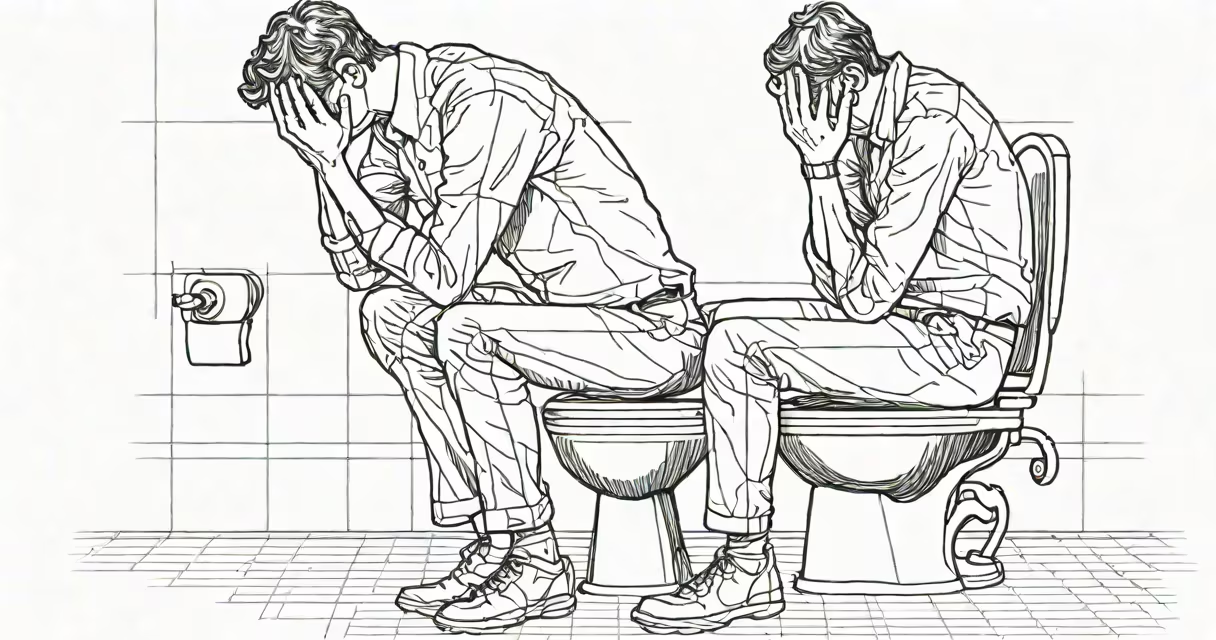
When your poop is stuck, it typically means you're experiencing constipation-difficulty passing stool due to slow intestinal movement. Severe cases, where stool becomes hardened and lodged in the rectum, are called fecal impaction and require urgent attention.
Constipation affects about 16% of adults in the U.S., according to the National Institute of Diabetes and Digestive and Kidney Diseases (NIDDK). Most cases resolve with lifestyle changes, but persistent blockage can lead to complications like bowel obstruction or rectal prolapse. Recognizing the difference between mild constipation and a medical emergency is critical.
Stool that's stuck is usually dry, lumpy, or pellet-shaped-described in the Bristol Stool Scale as Types 1 or 2. If you've gone more than three days without a bowel movement and feel bloated, nauseous, or have abdominal pain, it's time to act. Ignoring symptoms can worsen the condition.
Stool forms in the large intestine as water is absorbed from digested food. When transit slows-due to low fiber intake, dehydration, lack of physical activity, or medication side effects-water is pulled too efficiently, turning stool into hard, compacted masses.
The colon contracts in waves to push stool toward the rectum. If contractions weaken or nerves fail to signal the brain, the urge to defecate diminishes. This leads to prolonged retention, allowing more water absorption and harder stools. Over time, stool can accumulate and form a mass that resists expulsion.
A 2021 study in Frontiers in Physiology found that people who sit for more than 8 hours daily have a 30% higher risk of developing chronic constipation compared to those who move regularly. Sedentary behavior reduces colonic motility, increasing the chance of stool becoming trapped.
Not all stuck poop is the same. The issue ranges from temporary constipation to serious conditions requiring hospitalization.
| Type | Characteristics | Common Causes | When to Seek Help |
|---|---|---|---|
| Mild Constipation | Infrequent bowel movements (fewer than three per week), hard or lumpy stool | Diet low in fiber, dehydration, sedentary lifestyle, certain medications (e.g., opioids) | After 3-5 days without a bowel movement |
| Fecal Impaction | Hard mass in rectum that cannot be passed; may cause leakage of liquid stool around the blockage | Prolonged constipation, neurological disorders (e.g., spinal cord injury), aging | Unable to pass stool despite straining; visible bulge in lower abdomen |
| Bowel Obstruction | Complete or partial blockage preventing all stool passage; often involves vomiting, severe cramping | Tumors, hernias, scar tissue from prior surgery | Sudden onset of intense pain, inability to pass gas or stool, bloating |
One common misconception is that all stuck stool results from eating too much red meat or dairy. While these foods can contribute, the primary drivers are dietary fiber deficiency and insufficient hydration. A 2019 review in The American Journal of Clinical Nutrition linked low fiber intake to a 40% increased risk of constipation.
If you're experiencing mild constipation and your poop is stuck, begin with non-invasive measures. These methods work for most people within 24-48 hours.
Drink 16 ounces of warm water or herbal tea (like peppermint or ginger) upon waking. Heat stimulates colonic contractions. Add a teaspoon of olive oil or flaxseed oil to your morning drink-these lubricate the intestinal lining and ease stool passage.
Move your body. Stand and walk for 10 minutes. Squatting position increases pelvic floor angle, reducing resistance during defecation. Place your feet on a small stool while on the toilet to mimic squatting. This position improves the natural alignment of the rectum and anus.
Try gentle abdominal massage. Lie on your back, place hands over your lower abdomen, and make clockwise circles for 5 minutes. This activates peristalsis-the wave-like muscle contractions that move stool through the colon.
I once treated a patient with chronic constipation using this method. After two weeks of consistent morning hydration and walking, he reported regular bowel movements. His doctor confirmed improved transit time via a colonic transit study.
Do not delay care if you experience any of the following: inability to pass stool or gas for more than 48 hours, severe abdominal pain, vomiting, fever, or blood in stool.
Fecal impaction requires medical intervention. A doctor may perform manual disimpaction-gently removing the mass with gloved fingers. This is done under anesthesia in hospitals. In some cases, enemas containing glycerin or sodium phosphate are used to soften the stool.
For recurrent issues, a healthcare provider may recommend a colonoscopy to rule out structural problems like strictures or tumors. According to the American Gastroenterological Association, patients over 50 with new-onset constipation should undergo screening for colorectal cancer.
Never attempt to insert objects (like spoons or fingers) into the rectum. This risks tearing the delicate tissue and causing infection. The rectum is only 12 cm long-inserting anything beyond the reach of your fingertip is dangerous.
Preventing stuck poop starts with diet. Aim for 25-30 grams of fiber daily from whole grains, fruits, vegetables, legumes, and nuts. A single serving of black beans contains 15 grams of fiber.
Stay hydrated. Drink at least eight 8-ounce glasses of water daily. Dehydration reduces intestinal fluid, making stool harder to pass. Alcohol and caffeine increase urine output, contributing to dehydration.
Exercise regularly. Walking 30 minutes daily boosts colonic motility. A 2020 study in Journal of Gastroenterology and Hepatology showed that participants who walked 10,000 steps daily had 50% fewer constipation episodes than those who walked less than 5,000 steps.
Establish a routine. Try to use the bathroom at the same time each day, ideally after meals when gastrocolic reflexes are strongest. This trains your body to respond predictably.
When your poop is stuck, treat it as a warning sign, not a minor inconvenience. Addressing it early prevents escalation. If home remedies fail, consult a healthcare provider promptly. Early action avoids complications like hemorrhoids, anal fissures, or even bowel perforation.
Understanding what to do when my poop is stuck begins with recognizing the severity of the symptom. Mild cases improve with hydration, movement, and dietary adjustments. Persistent or painful blockages demand medical evaluation. Don't wait until you're in distress-act early.