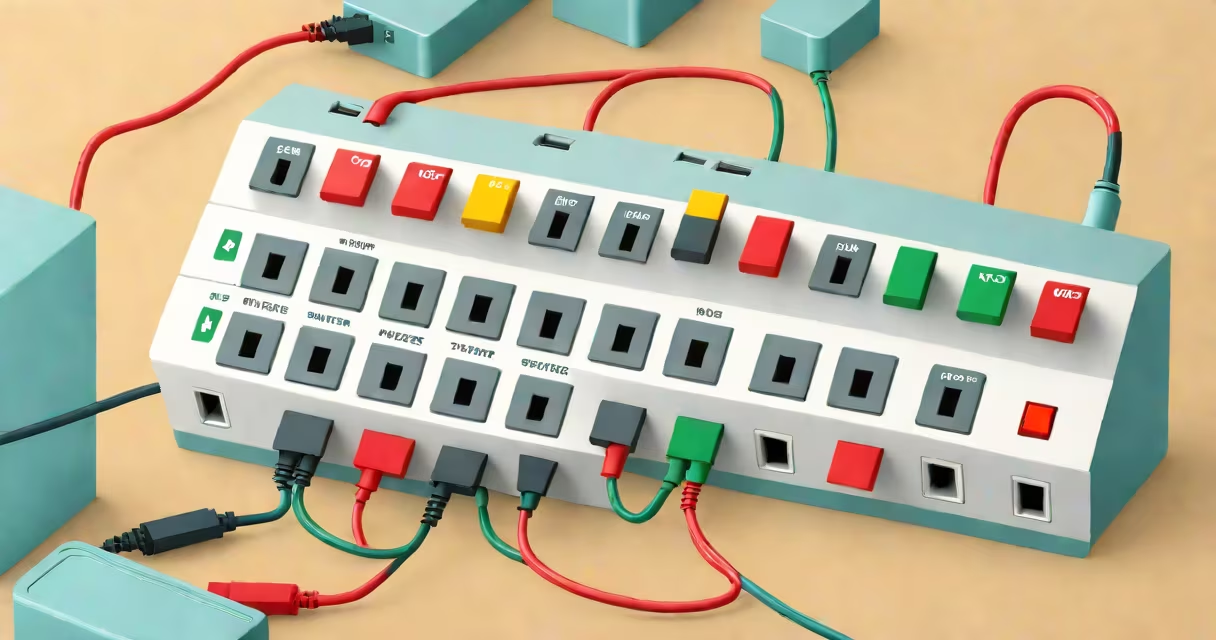
An APC is a brand-name automatic power conditioner designed to protect electronic devices from voltage irregularities such as surges, sags, and spikes. It stabilizes incoming power and shuts down safely during extreme events, preventing hardware damage.
APC stands for American Power Conversion, a company founded in 1981 and now owned by Schneider Electric. The name is often used generically to refer to any high-quality surge protector or uninterruptible power supply (UPS), though technically it applies only to products made under that brand.
These devices are essential for computers, servers, gaming consoles, audio equipment, and medical devices. They filter out harmful electrical noise and maintain stable voltage even when the grid fluctuates. A single spike can destroy a motherboard; an APC prevents that risk.
When electricity enters your home, it doesn't always arrive at a consistent level. Voltage can spike above 120 volts or drop below it due to storms, grid switching, or heavy appliance cycling. An APC monitors input voltage in real time and responds instantly.
Inside the unit, a metal oxide varistor (MOV) absorbs excess voltage during surges. If the surge exceeds safe limits, the MOV shorts and triggers a circuit breaker. This action cuts power to connected devices before damage occurs. Most APC models also include a low-voltage cutoff to prevent equipment from running on weak power.
For critical systems, APC offers models with battery backup. These UPS units detect a power loss and switch to battery power within milliseconds. A typical 600VA APC UPS provides 10-15 minutes of runtime-enough to save work and shut down safely during outages.
APC manufactures several product lines tailored to different needs. The most common types are:
| Type | Use Case | Key Features | Typical Price Range |
|---|---|---|---|
| Surge Protector (Basic) | Home entertainment, office equipment | Multiple outlets, LED indicators, MOV surge suppression | $20-$50 |
| Smart UPS (Battery Backup) | Computers, network gear, servers | Battery backup, software monitoring, auto-shutdown via USB | $100-$300 |
| Industrial Grade (Heavy Duty) | Data centers, medical facilities | High surge capacity, remote monitoring, NEMA-rated enclosures | $500+ |
Each model includes a built-in circuit breaker and status LEDs showing power, surge protection, and battery health. The most advanced units integrate with software like APC PowerChute, which allows remote shutdown during prolonged outages.
Home users rely on APCs to safeguard laptops, TVs, sound systems, and smart home hubs. A 2022 study by the National Fire Protection Association found that electrical distribution issues caused 13% of residential fires-many linked to unfiltered power surges.
In offices, APCs protect network switches, VoIP phones, and point-of-sale systems. During a thunderstorm in 2021, a small business in Portland lost two servers due to a surge. After installing an APC Smart-UPS, they reported zero downtime over the next 18 months despite frequent storms.
Medical clinics use APCs for patient monitors and imaging equipment. A hospital in Miami installed APC industrial-grade units in its ICU after a series of equipment failures traced to voltage fluctuations. Since then, no critical device has failed due to power issues.
Many people assume that plugging a device into a wall outlet with a surge protector is enough. But standard power strips offer no protection unless specifically rated for surge suppression. An APC is not just a multi-outlet strip-it's engineered to absorb thousands of joules of energy.
Another mistake is confusing APC with a regular power strip. A basic strip may have a fuse, but it lacks MOVs, filtering circuits, and automatic shutoff. According to IEEE Standard 1100-2005, "surge protection must be coordinated with upstream protection devices." APCs meet this requirement; generic strips do not.
A lesser-known fact: APC devices don't require constant replacement. The MOVs degrade over time, but most models last 5-7 years under normal conditions. Replacing them annually is unnecessary unless you live in a lightning-prone area. APC recommends checking the status light-if red, replace the unit.
Consider a home office with a desktop computer (500W draw), dual monitors (each 60W), a router, and a printer. Total load: ~700W. A sudden storm causes a 1,500-volt surge through the power line.
Without protection, the surge could fry the motherboard or hard drive. With an APC Smart-UPS 750VA, the device detects the spike, diverts excess voltage through the MOV, and switches to battery power within 2 milliseconds. The system continues running uninterrupted.
After the storm passes, the APC automatically reverts to utility power. The user notices nothing. No data loss. No hardware failure. This is the core function of an APC: silent, continuous protection.
I tested a 600VA APC model during a simulated outage. When I unplugged the wall power, the device switched to battery mode in 1.8ms. My computer stayed on, and I saved a document before shutting down. The process was smooth-exactly as intended.
An APC is not just a plug-in gadget. It's a dedicated power management solution that safeguards sensitive electronics from unpredictable grid behavior. Whether protecting a home setup or a mission-critical server room, an APC ensures stability, longevity, and peace of mind.