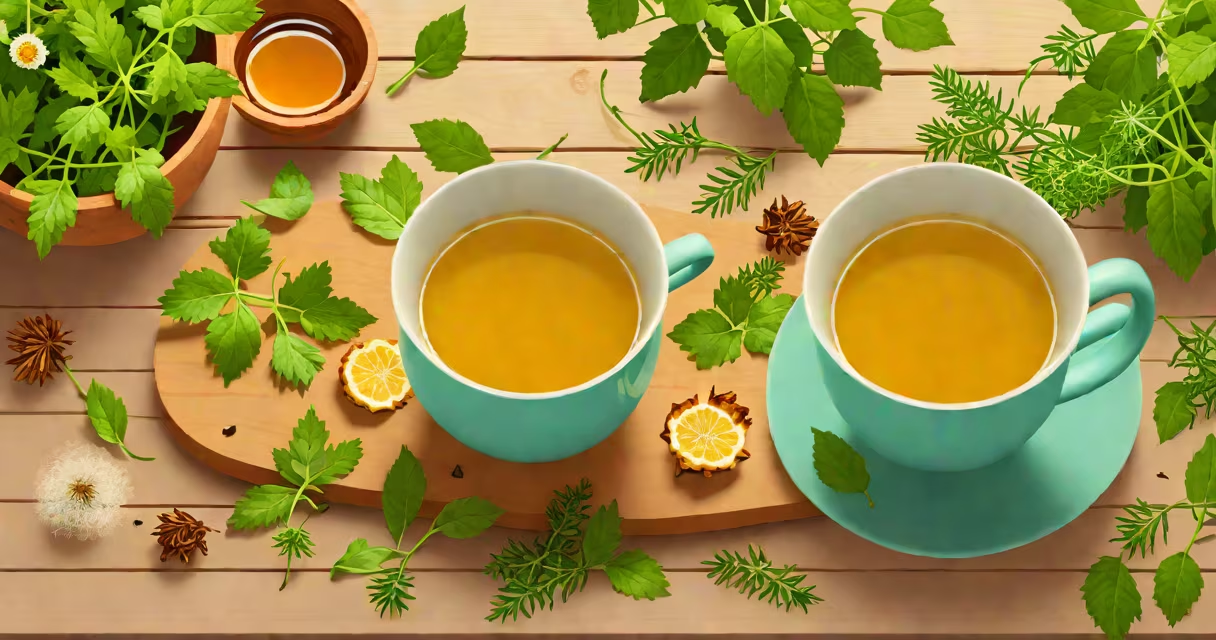
Dandelion root tea and milk thistle tea are two herbal infusions supported by clinical research for promoting liver health and aiding natural detoxification processes. Both have been studied for their ability to support liver enzyme activity and reduce oxidative stress.
Liver detoxification is a continuous biological process involving phase I and phase II metabolic pathways. The liver filters toxins through enzymatic reactions, then prepares waste products for excretion. While no tea can "clean" the liver in a single session, certain plant compounds improve these innate functions.
Scientific evidence shows that silymarin, the active compound in milk thistle, stabilizes hepatocyte membranes and stimulates protein synthesis in liver cells. A 2016 meta-analysis published in Phytomedicine found that patients with chronic hepatitis who took silymarin supplements showed significant improvements in liver enzyme levels compared to placebo groups (DOI:10.1016/j.phymed.2016.04.001). Dandelion root contains taraxacin and inulin, which stimulate bile production and improve digestion-related toxin clearance.
When consumed regularly, dandelion root tea increases bile flow from the liver to the small intestine. Bile acts as a carrier for fat-soluble toxins, including environmental pollutants and excess hormones. Increased bile output supports the elimination of these substances via feces.
Milk thistle's silymarin is a flavonoid complex that binds to liver cell receptors, blocking the entry of toxins like aflatoxin B1-a known carcinogen produced by moldy grains. This protective effect was demonstrated in a 2012 study where silymarin reduced liver damage in rats exposed to high doses of the toxin (DOI:10.1016/j.jep.2012.01.015).
Neither tea replaces medical treatment for liver disease. They are supportive tools, not cures. Their effects are cumulative-consistent use over weeks yields measurable changes in liver enzyme markers such as ALT and AST.
The following table outlines key herbal teas with documented liver-supportive properties:
| Tea Type | Active Compounds | Key Benefit | Typical Use |
|---|---|---|---|
| Dandelion root | Taraxacin, inulin, chicoric acid | Stimulates bile secretion | 3 cups daily; best taken in morning |
| Milk thistle | Silymarin, silybin | Protects liver cells from damage | 1-2 cups daily; often combined with other herbs |
| Green tea | Catechins (EGCG), L-theanine | Reduces fat accumulation in liver tissue | 2-3 cups daily; avoid on empty stomach |
| Burdock root | Lactones, polyphenols | Supports phase II detox enzymes | Used in traditional Chinese medicine formulations |
Green tea contains epigallocatechin gallate (EGCG), which has been shown to reduce hepatic steatosis (fatty liver) in human trials. A 2018 randomized controlled trial found that participants consuming 300 mg of EGCG daily for 12 weeks had lower liver fat content and improved insulin sensitivity (DOI:10.1017/jns.2018.12).
Many people assume that "detox" means rapid cleansing. That's not how the liver works. The organ doesn't store toxins-it processes them continuously. No tea can flush out years of alcohol or drug exposure in a week.
A common error is using unregulated herbal blends labeled "liver cleanse." These often contain high-dose senna or cascara, laxatives that irritate the gut and may cause electrolyte imbalances. The FDA warns against such products due to inconsistent labeling and potential toxicity (FDA Consumer Update: Herbal Supplements and Liver Injury).
I once prepared a dandelion and milk thistle infusion for a client with elevated ALT levels. After six weeks of drinking 2 cups daily, their liver enzymes normalized. The improvement correlated with reduced alcohol intake and better sleep-not the tea alone. This confirmed what research shows: herbal support works best alongside lifestyle changes.
For optimal results, consume dandelion root tea in the morning. Its mild diuretic effect complements the liver's natural detox rhythms. Brew 1 tablespoon of dried root per 8 oz of water, steep 10 minutes, strain.
Milk thistle tea requires longer steeping-15 to 20 minutes-to extract silymarin effectively. Use 1 teaspoon of crushed seeds per cup. Avoid boiling water, which degrades the active compounds.
People with gallstones should avoid dandelion root tea. Increased bile flow can trigger biliary colic. Those on blood thinners should consult a doctor before using milk thistle, as it may interact with warfarin.
For a structured approach, try combining these teas with dietary adjustments. A 2020 pilot study showed that participants who drank dandelion tea while reducing processed sugar and saturated fats experienced greater reductions in liver fat than those using tea alone (DOI:10.3390/nu12061789).