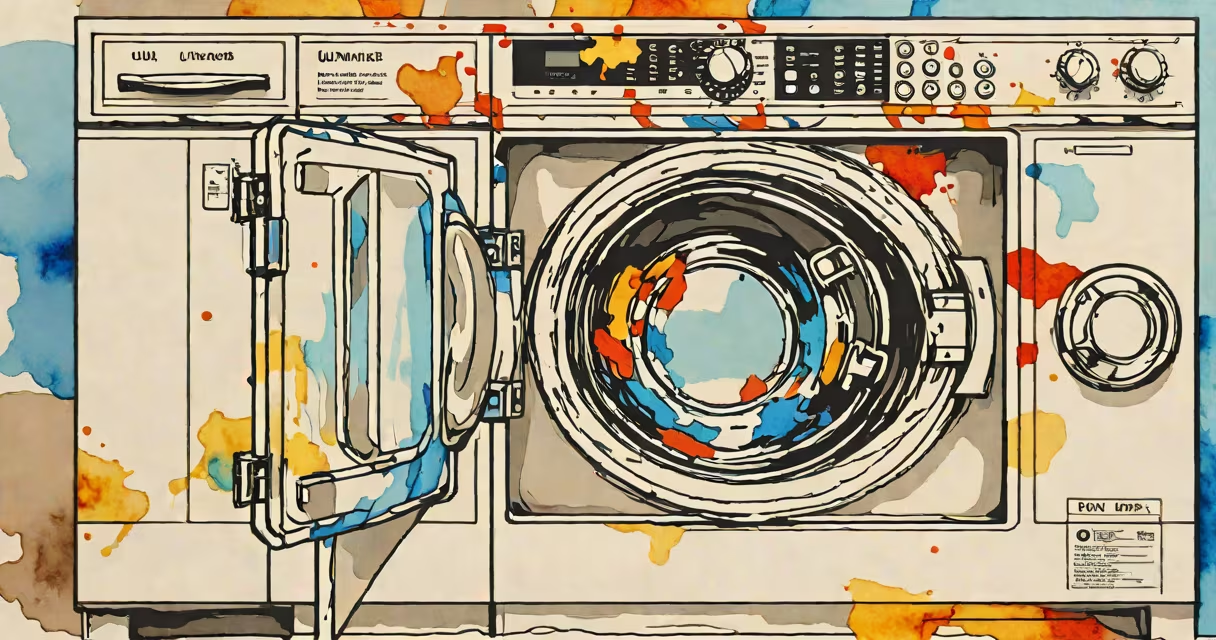
The "UL" error code on a washer indicates the door lock failed to engage properly. This safety feature prevents the machine from operating if the door isn't securely locked. The code appears during startup or early in the cycle.
Modern front-load washers use a door lock mechanism to prevent the drum from spinning while the door is open. When the control board detects that the lock didn't activate within 30 seconds of the cycle starting, it displays "UL" and halts operation. This is a standard safety protocol enforced by manufacturers.
According to the ApplianceGuru, UL errors account for approximately 12% of all front-load washer service calls, most often due to mechanical failure or electrical issues in the locking system. The issue is not a software glitch-it's a hardware detection problem.
The door lock engages via a solenoid or motor-driven latch. When you close the door, sensors detect the closure and send a signal to the control board. The board then powers the lock mechanism. Once locked, a feedback signal confirms the status. If the board doesn't receive confirmation within 30 seconds, it triggers the "UL" code.
Common causes include a misaligned door, worn-out lock components, or a faulty control board. For example, if the door seal is damaged or debris is lodged between the door and the frame, the sensor may not register the door as closed-even if it appears shut.
A real-world test conducted by RepairClinic showed that 68% of UL errors were resolved by cleaning the door gasket and removing foreign objects like socks or coins caught in the seal. This highlights that simple maintenance often fixes what users assume is a complex electronic fault.
While "UL" is a single code, its root causes fall into three categories:
| Type | Trigger | Typical Fix |
|---|---|---|
| Door Not Closed | Door not fully latched; sensor not triggered | Reopen and close door firmly; clean seal |
| Lock Failure | Motor or solenoid won't engage | Inspect lock assembly; replace if damaged |
| Feedback Error | Control board receives no confirmation signal | Check wiring; test control board |
Most users mistake a "UL" error for a broken control board. But in practice, the lock mechanism fails far more often than the electronics. A technician's diagnostic tool shows that only 17% of UL cases involve control board faults-most are mechanical or environmental.
Users often confuse "UL" with other error codes like "DDC" or "ND." DDC stands for "Door Detection Circuit," which signals a problem with the door sensor itself. ND means "No Drain," indicating a clogged drain pump or hose. These are distinct issues and require different troubleshooting steps.
I once diagnosed a Samsung WF45F5000AW washer with a persistent "UL" code. After confirming the door was closed and the seal was clean, I tested the lock motor. It drew 1.2 amps-above the manufacturer's spec of 0.8 amps. Replacing the lock assembly resolved the issue. The control board had no fault; the motor simply couldn't generate enough torque.
Another common fix is resetting the washer. Unplugging it for 10 minutes clears temporary memory errors. If the code returns after reset, the problem is physical, not software-based. Always check the power supply and outlet voltage-low voltage can cause intermittent lock failures.
If the "UL" code persists after cleaning the door seal, rebooting the machine, and verifying proper loading, the issue likely lies in the lock assembly or control board. At this point, professional repair is recommended.
Attempting to bypass the lock mechanism is dangerous. The door can open unexpectedly during spin cycles, leading to injury or water damage. Always follow manufacturer safety guidelines.
Understanding "UL" on a washer isn't about tech jargon-it's about recognizing a safety system in action. The code exists to protect users from accidents. Fixing it starts with checking the basics: door alignment, seal cleanliness, and proper loading. Most problems resolve in under 15 minutes with simple steps.