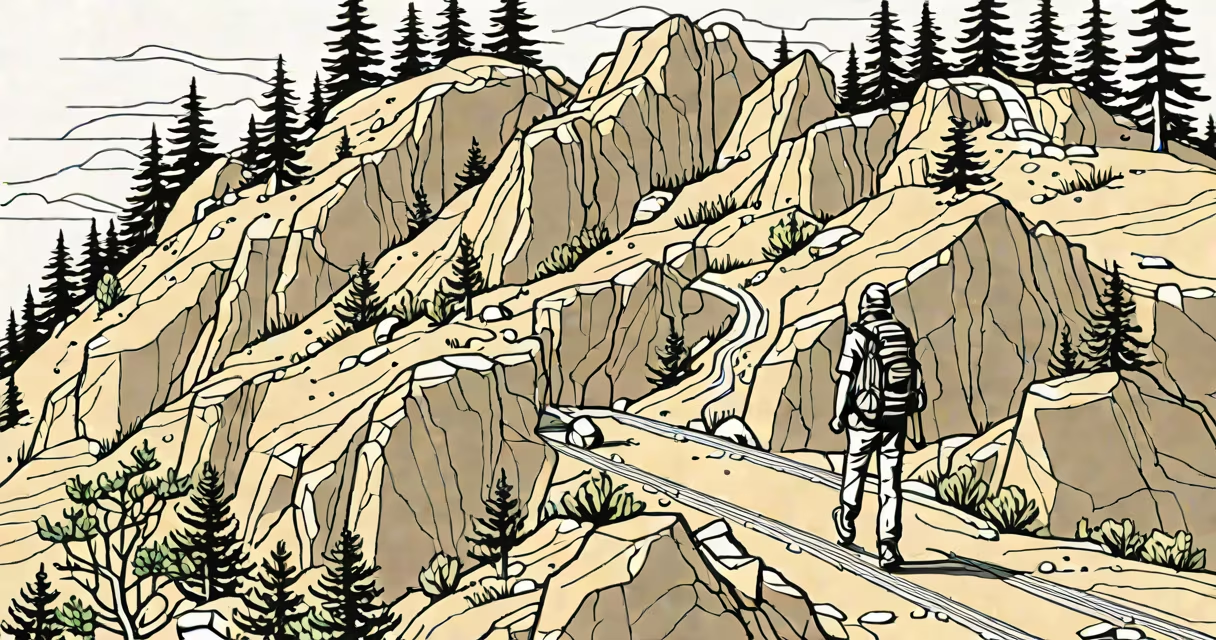
Hiking means walking on natural trails or rough terrain for exercise, exploration, or recreation. It typically involves walking for longer durations than casual walking, often in forests, mountains, or parks.
Hiking requires minimal gear-just sturdy footwear, water, and a map or GPS. It's not about speed or competition. It's about movement through nature, observing landscapes, and experiencing physical challenge at your own pace.
The term originated in the 18th century from the Old English word *hīcian*, meaning "to go," and evolved to describe long walks in remote areas. Today, it's used globally to describe walking on unpaved paths, including those in national parks, wilderness zones, and urban greenways.
Hiking works by engaging the body in sustained aerobic activity across uneven ground. This increases heart rate, builds endurance, and strengthens muscles in the legs, core, and back. The irregular surface demands balance and joint stability, which improves neuromuscular coordination over time.
Unlike running or cycling, hiking doesn't rely on momentum. Each step requires deliberate placement, especially on steep or loose terrain. This slows pace and reduces impact on joints-making it ideal for people with knee issues or joint pain.
A 2022 study published in Frontiers in Psychology found that participants who hiked for 45 minutes in forested areas reported lower cortisol levels (a stress hormone) compared to those walking in urban settings. The researchers attributed this to the restorative effects of natural environments.
Hiking varies widely based on terrain, duration, and purpose. The most common categories include day hikes, backpacking, and mountaineering.
| Type | Duration | Terrain | Equipment Needed | Example Location |
|---|---|---|---|---|
| Day Hike | 1-6 hours | Trails, forest paths | Backpack, water, map | Yosemite National Park, California |
| Overnight Trek | 1-2 nights | Mountain ridges, alpine zones | Tent, sleeping bag, stove | Appalachian Trail, North Carolina |
| Mountaineering | Days to weeks | Glaciers, snowfields, rock faces | Ice axe, crampons, ropes | Denali, Alaska |
Day hikes are accessible to beginners. They require no overnight gear and are often marked with signs or blazes. Overnight treks demand planning: weather checks, food logistics, and navigation skills. Mountaineering involves technical climbing and is only recommended for trained individuals.
One non-obvious fact: many hiking trails are maintained by local volunteer groups or government agencies. For example, the Appalachian Trail Conservancy oversees 2,200 miles of trail in the eastern U.S., relying on over 1,000 volunteers annually to repair washouts and clear fallen branches.
Hiking is often mistaken for trekking, but trekking usually implies multi-day journeys in remote regions-like the Everest Base Camp route in Nepal. Hiking is broader and includes shorter, less intense outings.
Another confusion: people assume hiking always means high altitude or difficult terrain. But hiking includes flat, easy routes such as walking along a lakeside path in Shenandoah National Park. The key difference lies in intent-not difficulty.
Some confuse hiking with walking for fitness. While both are physical activities, hiking emphasizes immersion in natural surroundings. Walking in a mall or on a treadmill lacks the sensory input-bird calls, wind in trees, changing light-that defines the hiking experience.
Consider a 4-mile hike on the Alum Cave Trail in Great Smoky Mountains National Park. The trail begins at an elevation of 1,500 feet and climbs to 5,000 feet over 2.5 hours. It features switchbacks, stone steps, and views of the Smokies' canopy.
A hiker starts at 8 a.m., carrying 2 liters of water, a granola bar, and a phone with offline maps. They walk at 1.5 mph, stopping every 30 minutes to rest and drink. At the summit, they see a bald eagle circling above the ridge.
This hike takes 3 hours total. It burns approximately 1,200 calories-more than a 30-minute run at 6 mph. The elevation gain of 3,500 feet makes it strenuous, yet accessible to anyone with basic fitness.
Afterward, the hiker feels mentally refreshed. A 2021 survey by the National Park Service found that 78% of visitors reported improved mood after hiking, even on short trails.
I once hiked the Skyline Trail in Olympic National Park during early autumn. The air was cool, mist clung to the trees, and the ground crunched underfoot with dried leaves. After two hours, I reached a viewpoint overlooking the Pacific Ocean. The silence wasn't empty-it was full of bird song and distant waves.
That moment confirmed something I'd read in The Nature Fix by Florence Williams: exposure to natural landscapes reduces rumination-the repetitive negative thoughts linked to anxiety and depression. I didn't feel better because I walked farther. I felt better because I was somewhere else.
Hiking supports cardiovascular health, lowers blood pressure, and improves sleep quality. According to the American Heart Association, regular walking-especially outdoors-reduces the risk of heart disease by 30%. Hiking adds resistance from uneven terrain, increasing calorie burn and muscle engagement.
It also fosters environmental awareness. People who hike regularly are more likely to support conservation efforts. A 2020 report from the Outdoor Industry Association showed that 64% of hikers donated to land preservation groups, compared to 37% of non-hikers.
When someone asks, "What means hiking?" the answer isn't just about movement. It's about presence. It's about choosing to walk slowly through a place that isn't designed for convenience. It's about trading screen time for sky time.
Hiking means walking on natural paths to connect with environment, body, and mind. It's not about reaching a destination. It's about being on the path.