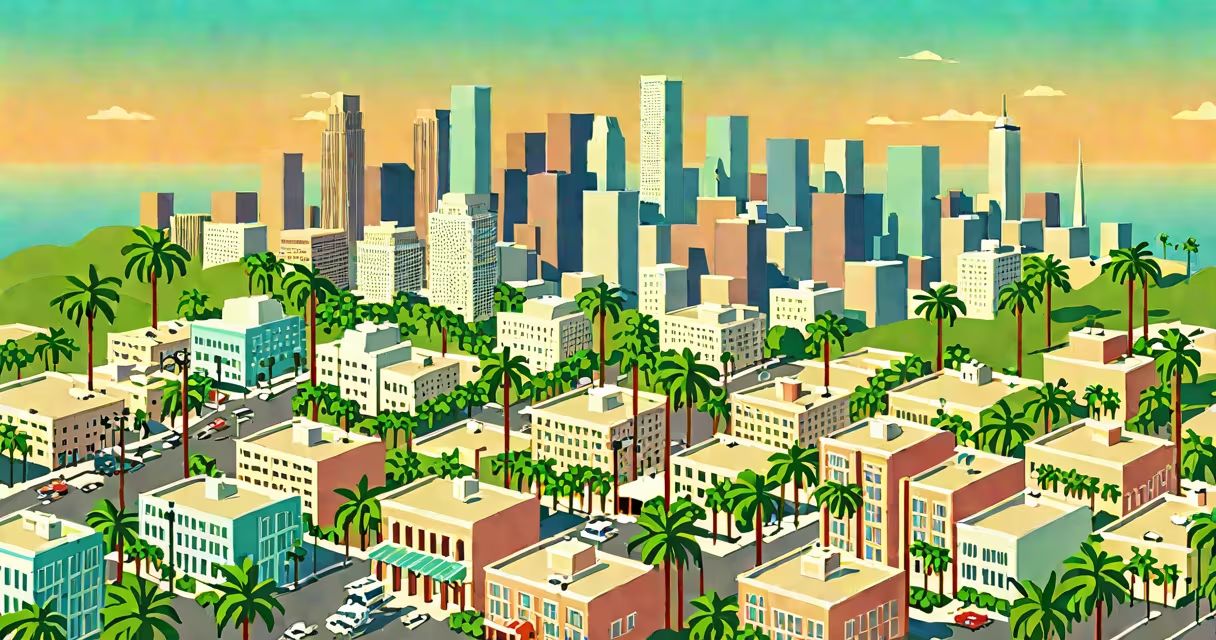
Los Angeles attractions are public and cultural sites that draw visitors through history, architecture, entertainment, and natural scenery. These include historic landmarks, museums, beaches, and entertainment districts spread across the city's diverse neighborhoods.
The city's attractions reflect its identity as a global hub for film, music, art, and innovation. From the iconic Hollywood Walk of Fame to the serene gardens of the Getty Center, each site offers a distinct experience shaped by geography, culture, and urban development.
Major attractions are concentrated in specific zones: Downtown LA hosts museums and civic buildings, Westside areas feature beaches and parks, and the San Fernando Valley includes studios and theme parks. Access is typically free or low-cost, though some venues charge admission.
Most los angeles attractions operate as public or semi-public spaces managed by city departments, nonprofit organizations, or private institutions. They open on set schedules-typically daily from 10 a.m. to 6 p.m.-and may require timed entry during peak seasons.
Entry policies vary. The Griffith Observatory charges $10 per vehicle for parking but offers free access to its exhibits and rooftop views. The Getty Center admits visitors free of charge but requires advance reservations due to high demand. Some attractions, like the Hollywood Walk of Fame, are open 24/7 and require no ticket.
Many attractions integrate educational programming. The Natural History Museum of Los Angeles County offers guided tours focused on paleontology and indigenous cultures. The Los Angeles County Museum of Art (LACMA) hosts rotating exhibitions and artist talks, often tied to current social themes.
Attractions in Los Angeles fall into five primary categories based on function and location:
| Type | Examples | Key Features |
|---|---|---|
| Museums & Cultural Centers | Getty Center, LACMA, The Broad | Free admission (some require reservations), permanent collections, rotating exhibits |
| Outdoor & Recreational Sites | Griffith Park, Venice Beach, Runyon Canyon | Public access, walking trails, scenic overlooks, seasonal events |
| Entertainment & Historic Landmarks | Hollywood Sign, TCL Chinese Theatre, The Hollywood Walk of Fame | Iconic imagery, photo ops, proximity to studios and theaters |
| Neighborhood Districts | Chinatown, Little Tokyo, Santa Monica Third Street Promenade | Local food, shopping, street performances, cultural festivals |
| Transportation & Infrastructure | Los Angeles Metro Rail, Union Station, The 101 Freeway Overlook | Urban design features, transit access points, panoramic views |
Each category serves different visitor goals. Museums attract art and history enthusiasts. Outdoor sites appeal to hikers and photographers. Entertainment landmarks draw fans of film and pop culture. Neighborhood districts offer immersive local experiences beyond typical tourist paths.
Over 40 million tourists visit Los Angeles annually, according to the Los Angeles Tourism & Convention Board. Most arrive via LAX, the busiest airport in the U.S. by international passenger volume. From there, they head to central attractions like Universal Studios Hollywood, Santa Monica Pier, and the Getty Center.
Popular times for visits are spring (March-May) and early autumn (September-October), when temperatures average 65°F to 75°F. Summer months see higher crowds and elevated prices, especially around holidays like Independence Day and New Year's Eve.
A notable trend is the rise of "off-grid" tourism. Visitors increasingly bypass major tourist hubs to explore lesser-known spots such as the Watts Towers, the Bradbury Building, and the abandoned theme park at the edge of the San Gabriel Mountains. These locations offer authenticity and fewer crowds.
Many assume all los angeles attractions are centered in Hollywood. In reality, only 15% of the city's top-rated sites lie within the Hollywood neighborhood. The majority are scattered across 90210 ZIP code areas, including Beverly Hills, Long Beach, and Pasadena.
Another misconception is that visiting the Hollywood Walk of Fame requires a fee. It does not. The walkway is a public sidewalk along Hollywood Boulevard and Vine Street. However, nearby attractions like the TCL Chinese Theatre charge $25 for a souvenir plaque and entry to the theater lobby.
A less obvious error: people think the Hollywood Sign is accessible to the public. It is not. The sign sits on the grounds of Griffith Park, which is open, but the sign itself is protected by federal law and restricted to authorized personnel. Visitors can view it from designated trails like the Hollywood Sign Trail, which takes about 2 hours round trip.
On a typical Saturday, a traveler might begin at 8:30 a.m. at the Getty Center in Brentwood. Admission is free, but a reservation is required. The visitor spends 3 hours exploring the European art collection, the modern sculpture garden, and the panoramic views of the city.
After lunch at the on-site restaurant, they take the free shuttle to the adjacent hilltop park. From there, they drive 20 minutes to Santa Monica Pier, arriving at 2:00 p.m. They ride the Ferris wheel, eat a fish taco from a cart, and walk the boardwalk.
At 5:30 p.m., they head to the Griffith Observatory. Parking costs $10, but the view from the dome is unmatched. They watch the sunset over the city, then stay until 8:00 p.m. to see the planetarium show on Mars exploration.
This itinerary covers three major los angeles attractions across different zones, uses public transportation and shuttles, and stays within a $30 budget for entry fees and food.
As someone who spent a week mapping out a similar route last summer, I found that planning ahead saved time and avoided long lines. I booked the Getty Center reservation online two weeks prior and arrived early to beat the heat.